Israel - Palestine Caricature

Israel - Palestine

This caricature reflects the hatred which the Zionists teach their children in the early stages of their children's lives.

Once upon the time in Rafah

The Israeli Child: My father told me that you Arabs are evil terrorists animal!

The Palestinian Child: My father told me nothing! He was murdered by yours...

این کاریکاتور بیانگر تنفری است صهیونیست ها در مراحل اولیه ی زندگی فرزندانشان به آن ها می آموزند.

روزی روزگاری در رفح

کودک يهودي: پدر من به من گفته شما شرور، تروريست و حيوان صفت هستيد!

کودک فلسطيني: ولي پدر من چيزي بهم نگفته! آخه پدر تو اون رو کشته...

متن و ترجمه برگرفته از English Center

Portmanteau Words

Portmanteau Words

A portmanteau (pronounced /pɔːrtˈmæntoʊ/ , plural: portmanteaus or portmanteaux) or portmanteau word is used broadly to mean a blend of two (or more) words or morphemes and their meanings into one new word.

Examples of "portmanteau" in this sense appeared in Lewis Carroll's book Through the Looking-Glass (1871), in which Humpty Dumpty explains to Alice the coinage of the unusual words in Jabberwocky, where "slithy" means "lithe and slimy" and "mimsy" is "flimsy and miserable". Humpty Dumpty tries to justify his habit of changing the meaning of words and combining them in various ways by telling Alice,

The word "portmanteau" itself was converted by Carroll to describe the concept. "Portmanteau" comes from French porter, to carry + manteau, cloak


Emoticon
Emoticon = Emotion + Icon
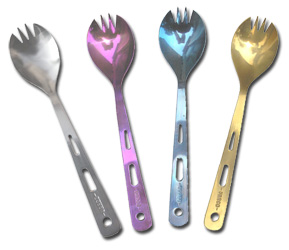
sporks
Spork = Spoon + Fork

ادامه نوشته

Cause and Effect Paragraphs

Cause and Effect Paragraphs (Lesson #4B)


Sometimes, assigned topics on the written portion of the TOEFL ask you to explain the reasons or causes of something. Other topics will ask you to discuss the results or effects of some cause. Here is an example of a writing topic asking for causes of a particular phenomenon (Note: this is not an actual TOEFL topic, but it is similar to one that may appear on a specific adminstration of the TOEFL):

In recent decades, cities have grown so large that now about 50% of the Earth's population lives in urban areas. Explain the causes of this phenomenon.

Be sure to give specific details and reasons in your explanation.

Cause/effect paragraphs generally follow basic paragraph format. That is, they begin with a topic sentence and this sentence is followed by specific supporting details.   (Click here if you wish to review Lesson 1, "Basic Paragraph Structure.")   For example, if the topic sentence introduces an effect, the supporting sentences all describe causes. Here is an example:

      In recent decades, cities have grown so large that now about 50% of the Earth's population lives in urban areas. There are several reasons for this occurrence. First, the increasing industrialization of the nineteenth century resulted in the creation of many factory jobs, which tended to be located in cities. These jobs, with their promise of a better material life, attracted many people from rural areas. Second, there were many schools established to educate the children of the new factory laborers. The promise of a better education persuaded many families to leave farming communities and move to the cities. Finally, as the cities grew, people established places of leisure, entertainment, and culture, such as sports stadiums, theaters, and museums. For many people, these facilities made city life appear more interesting than life on the farm, and therefore drew them away from rural communities.

Notice how each supporting sentence is a cause that explains the effect mentioned in the topic sentence. In the chart below are the main ideas of the above paragraph, to help you understand the relationships better:

EFFECT
(Topic Sentence)
CAUSES
(Supporting Sentences)
Cities have grown very large.
[There are several reasons for this.]
   Factory jobs attracted people.
(Cities have grown very large.)
   Better schools attracted families to move
to the city.
(Cities have grown very large.)
   Places of leisure, entertainment, and culture
made city life appear more interesting.

Notice also how the topic sentence is followed by the "focusing" or "prediction" sentence, There are several reasons for this. Such sentences help the reader anticipate the organization of the paragraph or essay.


Cause and Effect Conjunctions

Here are some common conjunctions that can be used to express cause and effect:

since as a result because of + noun phrase
because therefore due to + noun phrase
consequently for this reason so

There are two things you must be careful of when using these conjunctions. First, you must order the cause and the effect corerctly. For example, in the sentence

Sally closed the window because the weather outside was cold.

the CAUSE is the fact that the room was cold, and the EFFECT is Sally's closing the window. The conjunction because is placed in the correct position here, which is right before the cause. Similarly, in the sentence

Because the weather outside was cold, Sally closed the window.

the conjunction because is correctly placed before the part of the sentence that expresses the cause, even though the subordinate clause because the room was cold is now at the beginning of the sentence. (Note that the first letter of the conjunction is now capitalized.) However, in this sentence:

The weather outside was cold because Sally closed the window. (?)

even though it is grammatical, it does not make sense because a person's opening or closing a window does not influence the weather.

Second, you should be careful when using commas. Conjunctions such as therefore, consequently, as a result, and for this reason are usually followed by a comma, as in these examples:

The weather was cold; therefore, Sally closed the window.

The weather was cold. Therefore, Sally put on her coat.

The weather was cold. Consequently, Sally put on her scarf.

A blizzard hit the town. As a result, the schools were closed.

The adverbial clause conjunctions since and because are exceptions. These are attached directly at the beginning of CAUSE-sentence without a comma, as in the example above, Because the weather outside was cold, Sally closed the window. The comma here is placed at the end of the subordinate clause.

The coordinating conjunction so is also different from the ones above. This conjunction has a comma before it, as in this sentence:

The weather was warm, so Jim turned on the air conditioner.

However, in formal academic writing, so may not be used at the beginning of a sentence (although you will often see it in informal writing):

The weather was warm.   So Jim turned on the air conditioner.
(too informal -- avoid this usage)

Click here to go on to the first exercise.     Click here to go on to the second exercise

Adapted from TOEFL-Prep Writing Practice Site

See also:

Comparison and Contrast Paragraphs

Comparison and Contrast Paragraphs (Lesson #4A)


Some TOEFL writing topics will ask you to consider the relationship between two things, for example, your hometown (that is, the town where you were born or grew up) and your university town. Such topics may allow you to organize your essay either around the similarities between these two subtopics (for example, between your hometown and your university town) or around the differences between them. If you write about the similarities, the essay will be a comparison essay. On the other hand, if you want to write about the differences, your essay will be a contrast essay.

This lesson will show you some ways in which you can structure sentences to write a comparison or contrast paragraph. We will first look at comparison paragraphs and then briefly look at contrast paragraphs.

Comparison Paragraphs Organized by Similar Points

Consider the following paragraph:

      My hometown and my college town have several things in common. First, both are small rural communities. For example, my hometown, Gridlock, has a population of only about 10,000 people. Similarly, my college town, Subnormal, consists of about 11,000 local residents. This population swells to 15,000 people when the college students are attending classes. A second way in which these two towns are similar is that they are both located in rural areas. Gridlock is surrounded by many acres of farmland which is devoted mainly to growing corn and soybeans. In the same way, Subnormal lies in the center of farmland which is used to raise hogs and cattle ....

(Note: The four dots [ .... ] at the end of this paragraph mean that the paragraph contains more sentences that are not shown here.)

The passage above is from a comparison paragraph. that is, a paragraph which discusses the similarities between two subtopics. Notice how the ideas in this paragraph are organized. As usual, the topic sentence is at the beginning of the paragraph. (For more about topic sentences, click here.) After that, the paragraph continues by discussing one point of similarity between the towns of Gridlock and Subnormal, namely, their small population. Specific details are given to support the statment that "both are small rural communities." (For more about supporting details, click here.) Following this, the paragraph briefly discusses a second point of similarity between the two towns, that is, their geographic surroundings. Here, the paragraph also gives supporting details to illustrate their similarity, namely, that they are "both located in rural areas."

As you can see, therefore, this comparison paragraph is structured (organized) according to the points of similarity between the two towns. This particular paragraph discusses only two points of similarity, but of course we can imagine a paragraph that gives three, four, or even more points of similarity. This paragraph, for example, might continue in this way:

      ... Thirdly, both of these towns are similar in that both contain college campuses. Gridlock, for example, is home to Neutron College, which is famous for its Agricultural Economics program as well as for its annual Corn-Watching Festival. Likewise, the town of Subnormal boasts the beautiful campus of Quark College, which is well known for its Agricultural Engineering department and also for its yearly Hog-Calling Contest.

(Note: The three dots [ ... ] at the beginning of the above paragraph indicate that the paragraph contains previous sentences that are not shown here.)

We can place the points of similarity and their supporting details in a table in order to see more clearly how this short paragraph is organized:

TOPIC SENTENCE My (a) hometown and (b) college town are similar.
POINT #1 Both are small rural communities.
DETAIL (a)
  • Gridlock has about 10,000 people.
DETAIL (b)
  • Subnormal has about 11,000 local residents.
  • It has about 4000 college students.
POINT #2 Both are located in rural areas.
DETAILS (a)


  • Gridlock is surrounded by many acres of farmland.
  • This farmland is devoted to growing corn.
  • The land is also used to grow soybeans.
DETAILS (b)

  • Subnormal is in the center of land used for raising hogs.
  • This land is also used to raise cattle.
POINT #3 Both towns contain college campuses.
DETAILS (a)


  • Gridlock is home to Neutron College.
  • This college is famous for its Agricultural Economics program.
  • It is also famous for its annual Corn-Watching Festival.
DETAILS (b)


  • Subnormal contains Quark College.
  • This campus is famous for its Agricultural Engineering department.
  • It is also famous for its yearly Hog-Calling Contest.


Comparison Paragraphs Organized by Subtopic

Another way of organizing a comparison is not according to supporting details that are similar, but according to subtopic. (A subtopic is a main example, or main supporting idea, that illustrates the topic sentence of a paragraph. For more about supporting details, click here.) That is, we can organize the paragraph by first discussing all the relevant points associated to one subtopic, then discussing those of the second subtopic. Look at the following example, based on the above paragraph:

      My hometown and my college town have several things in common. First, my hometown, Gridlock, is a small town. It has a population of only about 10,000 people. Located in a rural area, Gridlock is surrounded by many acres of farmland which are devoted mainly to growing corn and soybeans. Gridlock also contains a college campus, Neutron College, which is famous for its Agricultural Economics program as well as for its annual Corn-Watching Festival. As for my college town, Subnormal, it too is small, having a population of about 11,000 local residents, which swells to 15,000 people when students from the nearby college are attending classes. Like Gridlock, Subnormal lies in the center of farmland which is used to raise hogs and cattle. Finally, Subnormal is similar to Gridlock in that it also boasts a beautiful college campus, called Quark College. This college is well known for its Agricultural Engineering department and also for its yearly Hog-Calling Contest.

As you can see, after the topic sentence, this paragraph first discusses the relevant details about Gridlock and then presents the details about Subnormal. As with the paragraph above, we can illustrate this paragraph's structure in the following way:

TOPIC SENTENCE
My hometown and college town are similar.
SUBTOPIC #1:
GRIDLOCK
DETAILS ABOUT GRIDLOCK:
  • Gridlock is a small town.
    • It has about 10,000 people.
  • Gridlock is in a rural area.
    • It is surrounded by many acres of farmland.
    • This farmland is devoted to growing corn.
    • The land is also used to grow soybeans.
  • Gridlock is home to Neutron College.
    • This college is famous for its Agricultural Economics program.
    • It is also famous for its annual Corn-Watching Festival.
SUBTOPIC#2:
SUBNORMAL
DETAILS ABOUT SUBNORMAL:
  • Subnormal is a small town.
    • Subnormal has about 4000 college students.
    • It has about 11,000 local residents.
  • Subnormal is in a rural area.
    • Subnormal is in the center of land used for raising hogs.
    • This land is also used to raise cattle.
  • Subnormal contains Quark College.
    • This campus is famous for its Agricultural Engineering department.
    • It is also famous for its yearly Hog-Calling Contest.


Comparison Conjunctions

In the above paragraphs you will see various conjunctions that contribute to paragraph coherence. (For more on coherence, click here.) We can look at the above paragraphs again to see how the conjunctions are used:

      My hometown and my college town have several things in common. First, both are small rural communities. For example, my hometown, Gridlock, has a population of only about 10,000 people. Similarly, my college town, Subnormal, consists of about 11,000 local residents. This population swells to 15,000 people when the college students are attending classes. A second way in which these two towns are similar is that they are both located in rural areas. Gridlock is surrounded by many acres of farmland which is devoted mainly to growing corn and soybeans. In the same way, Subnormal lies in the center of farmland which is used to raise hogs and cattle. Thirdly, these towns are similar in that they contain college campuses. Gridlock, for example, is home to Neutron College, which is famous for its Agricultural Economics program as well as for its annual Corn-Watching Festival. Likewise, the town of Subnormal boasts the beautiful campus of Quark College, which is well known for its Agricultural Engineering department and also for its yearly Hog-Calling Contest.

This paragraph, of course, is organized according to similarities. Notice how the ORDER of the similarities is the same throughout the paragraph. That is, at each similar point, the paragraph first discusses Gridlock and then it discusses Subnormal. Keeping the same order throughout the paragraph prevents the reader from getting confused.   Also notice how the conjunctions (for example, similarly, and ...X are similar in that...) are placed near each similar point.   Now examine the following paragraph, which is organized by subtopic:

      My hometown and my college town are similar in several ways. First, my hometown, Gridlock, is a small town. It has a population of only about 10,000 people. Located in a rural area, Gridlock is surrounded by many acres of farmland which are devoted mainly to growing corn and soybeans. Gridlock also contains a college campus, Neutron College, which is famous for its Agricultural Economics program as well as for its annual Corn-Watching Festival. As for my college town, Subnormal, it too is small, having a population of about 11,000 local residents, which swells to 15,000 people when students from the nearby college are attending classes. Like Gridlock, Subnormal lies in the center of farmland which is used to raise hogs and cattle. Finally, Subnormal is similar to Gridlock in that it also boasts a beautiful college campus, called Quark College. This college is well known for its Agricultural Engineering department and also for its yearly Hog-Calling Contest.

These are not the only ways to give coherence to a comparison paragraph. There are other conjunctions, too. Here is a list of comparison conjunctions you can use:

Short Conjunctions
Longer Expressions
Similarly,
Likewise,
...the same...
...the same as...
...also...
..., too.
both
In the same way,
X is similar to Y in that (they)...
X and Y are similar in that (they)...
Like X, Y [verb]...
In like manner,
One way in which X is similar to Y is (that)...
Another way in which X is similar to Y is (that)...


Contrast Paragraphs

As mentioned above, a contrast paragraph discusses the differences between (at least) two things. You can organize contrast paragraphs in much the same way that you can organize comparison paragraphs. That is, you can organize them either according to points of similarity or according to subtopic. Here is an example of such a paragraph organized by subtopic. Notice the contrastive expressions in bold letters:

      Even though Arizona and Rhode Island are both states of the U.S., they are strikingly different in many ways. For example, the physical size of each state is different. Arizona is large, having an area of 114,000 square miles, whereas Rhode Island is only about a tenth the size, having an area of only 1,214 square miles. Another difference is in the size of the population of each state. Arizona has about four million people living in it, but Rhode Island has less than one million. The two states also differ in the kinds of natural environments that each has. For example, Arizona is a very dry state, consisting of large desert areas that do not receive much rainfall every year. However, Rhode Island is located in a temperate zone and receives an average of 44 inches of rain per year. In addition, while Arizona is a landlocked state and thus has no seashore, Rhode Island lies on the Atlantic Ocean and does have a significant coastline.

Here are some contrast conjunctions that you can use:

Short Conjunctions
Subordinating Conjunctions
However,
In contrast,
By contrast,
..., but
..., yet
On the other hand,
even though + [sentence]
although + [sentence]
whereas + [sentence]
unlike + [sentence]
while + [sentence]
nevertheless,

If you feel you have understood this lesson, click here to go on to the Exercises.

Adapted from TOEFL-Prep Writing Practice Site

See also:

Basic Essay Structure

Basic Essay Structure (Lesson #3)


On the Written portion of the TOEFL, you will be asked to write an essay that is more than one paragraph long. The reason for this is that in U.S. academic culture, essays need to be several paragraphs long in order for students to express their ideas clearly and for instructors to determine whether or not students understand the material.

Knowing how to organize your ideas in such long essays is very important for academic success.

Generally, academic essays have a similar format.   They are at least five paragraphs long, although often they are much longer.   Also, the basic structure of each of these paragraphs is the same as that which we have already studied.   In addition, the paragraphs in the U.S. academic essay can be divided into three basic kinds: (1) the introductory paragraph,  (2) the body paragraphs, and  (3) the concluding paragraph.

The Introduction

The first paragraph of the academic essay is the one that is usually the most different from the basic paragraph that we have studied. In Lessons #1 and #2, we saw that a basic paragraph had a topic sentence as its first sentence, followed by supporting sentences with supporting details, and these (sometimes) followed by a concluding sentence.

In the multi-paragraph academic essay, however, the structure is a little different. Like the basic paragraph, the introductory paragraph opens with a very general statement about the topic, and is often followed by some supporting examples, but the paragraph then finishes with a narrow statement about the topic. This narrow statement is called the main thesis. Here is a short example of an introductory paragraph:

      Throughout human history, the physical universe has often presented dangers to explorers. For example, when primitive humans left their tribal villages to search for food and water, they risked death or injury from dangerous animals. Later, when people sailed the oceans in search of new lands for settlement or trade, many died in terrible storms. Similarly, the ocean of outer space has many dangers, but it also has several unique challenges for explorers.

Notice how the first sentence, Throughout human history, nature has often presented dangers to explorers,is a very general statment about the topic, which is dangers in exploration. The next two sentences give some supporting examples of this intital sentence. However, the third sentence of the paragraph gives an example that contrasts in some way with the previous two sentences. Then, the final sentence does something new:    It introduces a specific example of the general topic. This specific topic is the main thesis of the entire essay; that is, the rest of the essay will focus on this specific topic, which in this case is several unique challenges for explorers.

This main thesis functions like the topic sentence of the basic paragraph, which we have studied in Lessons #1 and #2. It is the most important sentence of the essay.

Notice how the main thesis is worded. It includes the phrase, several unique challlenges.This raises a question in the reader's mind, namely: "What are these challenges?" The reader will find out what some of the challenges are in the body of the essay, which we will study next.


The Body

The body portion of the essay is the largest portion. Typically, it has three paragraphs, but it might have two paragraphs and of course it can have many more than three. Each of these paragraphs usually has a topic sentence and several supporting sentences, just like the basic paragraph we have studied. Here is an example of three body paragraphs (which together continue the essay that we have started studying above):

      One of the challenges that is unique to space is the fact that space is a vacuum, which is a risk for various reasons. First, in a vacuum there is no atmosphere and therefore no air pressure. Without air pressure, the human body has no oxygen to sustain itself. After too many minutes without oxygen, a person would lose consciousness and eventually die. Also, in a vacuum a person's blood will gradually begin to boil. Finally, without an atmosphere, the rays of the Sun can cause radiation poisoning.

      Another difficulty that is unique to outer space is the presence of meteors and micrometeors. These are pieces of rock and metal that are left over from the formation of the solar system. Many of these objects travel at very high speeds. Under the Earth's blanket of air, people are usually protected from metor impacts. However, in space, people and spaceships are vulnerable to collisions with meteors. It is true that the chance of metor impacts is relatively small, but if even a small micrometeor happens to collide with a spacecraft, it could cause serious damage.

      A third special challenge involved with the environment of space involves the fact that it is very difficult to find life-sustaining water off the Earth. For example, the planet Mercury, which is closest to the Sun, is too hot to have water, so space travelers must take water from Earth if they want to visit Mercury. A similar situation exists on the planet Venus, second from the Sun. This planet is likewise too hot for water to exist. Similarly, the fourth planet, Mars, is too cold and dry, although there may be some water frozen at the north and south poles of the planet.

(Note that usually we do not put extra spaces between individual paragraphs, as has been done above. The spaces between the paragraphs above are only for study purposes.)

Recall that the main thesis statement of this essay said, Similarly, the ocean of outer space has many dangers, but it also has several unique challenges for explorers. You can see how the body of the essay is organized according to the challenges that are mentioned in the main thesis. The first body paragraph discusses the dangers of space vacuum, the second body paragraph gives information about meteors, and the third paragraph mentions the fact that water is very difficult to find on other planets.


The Conclusion

The concluding paragraph does not always appear in an academic essay. In particular, on the Written portion of the TOEFL, which lasts 30 minutes, there may not be enough time for you to include a formal concluding paragraph. However, here is an example of a concluding paragraph for you. Notice how it summarizes the main points of the preceding body paragraphs:

      There are other difficulties involved with space exploration, but these are three of the most important ones. In summary, without adequate air pressure, the unprotected human body may be seriously harmed in a vacuum. In addition, meteors can threaten human life and damage spacecraft. Finally, the lack of water in space means that human life may have a difficult time surviving on other planets. As one can see, the challenges of space travel are rather different from terrestrial dangers.

Here is another example of a concluding paragraph:

      As mentioned above, the Earth's natural environment has often presented dangers to explorers. Dangerous animals, vast oceans, and violent weather have presented risks to humans. However, the new frontier of outer space, with its vacuum, meteors, and lack of water, presents unique challenges to people who desire to explore it.

If you feel you have understood this lesson, click here to go on to Exercise #3

Adapted from TOEFL-Prep Writing Practice Site

See also:

Coherence and Unity

Coherence and Unity (Lesson #2)


Coherence

Coherence refers to a certain characteristic or aspect of writing. Literally, the word means "to stick together." Coherence in writing means that all the ideas in a paragraph flow smoothly from one sentence to the next sentence. With coherence, the reader has an easy time understanding the ideas that you wish to express.

Consider the paragraph that we studied in Lesson #1:

      My hometown is famous for several amazing natural features.  First, it is noted for the Wheaton River, which is very wide and beautiful. On either side of this river, which is 175 feet wide, are many willow trees which have long branches that can move gracefully in the wind.  In autumn the leaves of these trees fall and cover the riverbanks like golden snow.  Second, on the other side of the town is Wheaton Hill, which is unusual because it is very steep.  Even though it is steep, climbing this hill is not dangerous, because there are some firm rocks along the sides that can be used as stairs.  There are no trees around this hill, so it stands clearly against the sky and can be seen from many miles away.  The third amazing feature is the Big Old Tree. This tree stands two hundred feet tall and is probably about six hundred years old.  These three landmarks are truly amazing and make my hometown a famous place.

Major Connectors

Look at the words in bold font. Do you see how they help guide the reader? For example, consider the words, First, Second, and The third amazing feature. We can call these words major connectors. Major connectors help organize the main parts of your paragraph. This paragraph has three main parts: (1) a part about the Wheaton River, (2) a part about Wheaton Hill, and (3) a part about the Big Old Tree. Another way of saying this is that this paragraph has three main points which are indicated by the major connectors. Using such major connectors is an important way of providing coherence in a paragraph.


Minor Connectors

What about the other words in bold, such as those appearing in the phrases "these trees" and "this hill"? We can call these minor connectors. Minor connectors provide coherence to a paragraph by connecting sentences within each of the main parts of your paragraph. That is, when you write about your main points, you can use minor connectors to link your details to each main point.

Now, look at this paragraph. Can you identify the main points?

      Each of the U.S. manned space exploration projects had specific major goals. The Mercury project was designed to test whether or not human beings could survive and function in outer space. The Mercury project tested rockets with the new Mercury space capsule, which could hold one person. The Gemini project was intended to find out whether two people could work in the weightless environment of space. Gemini astronauts took "spacewalks." They floated outside their spacecraft in a spacesuit, connected to it by a tether. Gemini astronauts tried out new flying skills. Some astronauts flew two spacecraft extremely close together; this procedure was called "rendezvous." On some Gemini flights, astronauts physically linked two spacecraft together. Linking, or "space docking," was a major goal of the Gemini program. The Apollo project, with three astronauts, was intended to test spacecraft and skills so that people could actually fly to the Moon and land on it. Performing scientific experiments on the lunar surface and collecting rocks for study on Earth were goals.

Was this paragraph a little confusing to read? Now consider the same paragraph with a few changes:

      Each of the U.S. manned space exploration projects had specific major goals. For example, the Mercury project was designed to test whether or not human beings could survive and function in outer space. In addition, the Mercury project tested rockets with the new Mercury space capsule, which could hold one person. As another example, the Gemini project was intended to find out whether two people could work in the weightless environment of space. One way of doing this was by having Gemini astronauts take "spacewalks." That is, they floated outside their spacecraft in a spacesuit, connected to it by a tether. Gemini astronauts alsotried out new flying skills. For example, some astronauts flew two spacecraft extremely close together; this procedure was called "rendezvous." On some Gemini flights, astronauts physically linked two spacecraft together. This linking, or "space docking," was a major goal of the Gemini program. Finally, the Apollo project, with three astronauts, had the goal of testing spacecraft and skills so that people could actually fly to the Moon and land on it. Other goals included performing scientific experiments on the lunar surface and collecting rocks for study on Earth.

Do you see which of the connectors above are major and which are minor? The major ones are For example in the second sentence, which introduces the first supporting point (the Mercury program); As another example, which begins the second main point (the Gemini program); and the word Finally, which introduces the third and last main point (the Apollo moon program). (In the paragraph above, all of the major connectors are underlined.)

As for the minor connectors, we can divide them into three groups. The first group of minor connectors provides coherence for the first main point (the Mercury program). There is only one minor connector in this first group, In addition, although it is possible to have more than one, depending on how many details you have to support your first main point.

The second group of minor connectors consists of That is, also, and also the phrase For example in the sentence, "For example, some astronauts..." Notice that this last minor connector is the same as the major connector at the beginning of the paragraph. However, the function of each is different, depending on the meaning of the sentences.

The third group of minor connectors in this particular paragraph also has one member, which is Other goals included....

Here is a table of a few common connectors (also called transitions):

For example,In conclusion,
For instance,To summarize,
One example of (this) isOn the one hand,
As another example,On the other hand,
Another example of ... is (that)However,
First, Second, Third, etc...., but...
Finally,also


Paragraph Unity

Unity is a very important characteristic of good paragraph writing. Paragraph unity means that one paragraph is about ONLY ONE main topic. That is, all the sentences -- the topic, supporting sentences, the detail sentences, and (sometimes) the concluding sentence -- are all telling the reader about ONE main topic. If your paragraph contains a sentence or some sentences that are NOT related to the main topic, then we say that the paragraph "lacks unity," or that the sentence is "off-topic."

Look at the following paragraph, which is similar to the paragraph that we have studied above. Does it have perfect unity? Try to find the sentence that is off-topic:

      Each of the Russian manned space exploration projects had specific major goals. For example, the Vostok project was designed to test whether or not human beings could survive and function in outer space. For another example, the Voshkhod project was intended to find out whether people could work in the weightless environment of space. One Voshkhod cosmonaut experimented with weightlessness by taking a "spacewalk." That is, he floated in a spacesuit outside his Voshkhod spacecraft, connected to it by a tether. The cosmonaut to do this was Alexei Leonov. Several weeks later, Leonov's spacewalk was followed by that of U.S. astronaut Ed White. Finally, the Soyuz project, with three cosmonauts, had goals of testing spacecraft and spaceflight skills so that people could fly long missions in Earth orbit.

This paragraph is generally good, but the sentence, Several weeks later, Leonov's spacewalk was followed by that of U.S. astronaut Ed White, does not have anything to do with the major goals of the various Russian space projects. That is, it is an "off-topic" sentence, so we can say that the paragraph somewhat lacks unity. In order to improve the paragraph, we should omit this sentence, even though it is historically accurate.


If you feel you have understood this lecture, click here to go to Exercise #2a

Adapted from TOEFL-Prep Writing Practice Site

See also:

Basic Paragraph Structure

Basic Paragraph Structure (Lesson #1)


In many languages, the fundamental unit of composition is the paragraph.  A paragraph consists of several sentences that are grouped together.  This group of sentences together discuss one main subject.   In U.S. formal academic English, paragraphs have three principal parts.  These three parts are the topic sentence, body sentences, and the concluding sentence.  We will also talk briefly about details in paragraphs.

The Topic Sentence

A topic sentence usually comes at the beginning of a paragraph; that is, it is usually the first sentence in a formal academic paragraph. (Sometimes this is not true, but as you practice writing with this online lesson site, please keep to this rule unless you are instructed otherwise.) Not only is a topic sentence the first sentence of a paragraph, but, more importantly, it is the most general sentence in a paragraph. What does "most general" mean? It means that there are not many details in the sentence, but that the sentence introduces an overall idea that you want to discuss later in the paragraph.

For example, suppose that you want to write a paragraph about the natural landmarks of your hometown. The first part of your paragraph might look like this:

      My hometown is famous for several amazing natural features. First, it is noted for the Wheaton River, which is very wide and beautiful. Also, on the other side of the town is Wheaton Hill, which is unusual because it is very steep.

(Notice how the first sentence begins with "My hometown..." a few spaces to the left of the paragraph edge.  This is an indentation.  All paragraphs in English MUST begin with an indentation.)

Note how the first sentence, My hometown, Wheaton, is famous for several amazing geographical features,is the most general statement. This sentence is different from the two sentences that follow it, since the second and third sentences mention specific details about the town's geography, and are not general statements.

Here are some examples of sentences that cannot be used as topic sentences. Can you figure out why they are inappropriate?

1. My hometown is famous because it is located by Wheaton River, which is very wide, and because it is built near an unusually steep hill called Wheaton Hill.

2. There are two reasons why some people like to buy cars with automatic transmission and two reasons why others like cars with manual transmission.

3. Clouds are white.

The problem with sentence #1 is that it contains too many details. Topic sentences are general, and details should appear later in the paragraph. A better topic sentence would be like the one mentioned above, My hometown is famous for several amazing geographical features.

Sentence #2 is not appropriate as a topic sentence because it mentions two topics, not just one. Paragraphs are usually about one main thing and so their topic sentences should also be about only one main thing.

The problem with sentence #3 is that it is too general. It is also very boring! Would you like to read a paragraph with this topic sentence? Most people would not.

We can rewrite sentences #2 and #3 in the following ways to make it better:

There are two reasons why some people like to buy cars with automatic transmission.

OR

There are two reasons why some people like to buy cars with automatic transmission.


The shapes of clouds are determined by various factors.


Supporting Sentences

Consider again the above-mentioned, short paragraph:

      My hometown, Wheaton, is famous for several amazing natural features. First, it is noted for the Wheaton River, which is very wide and beautiful. Also, on the other side of the town is Wheaton Hill, which is unusual because it is very steep.

(Again, note how this paragraph is indented on the first line, about five or seven spaces in from the left-hand edge of the paragraph. Always remember to indent your paragraphs!)

When a reader reads a topic sentence, such as My hometown, Wheaton, is famous for several amazing natural features,a question should usually appear in the reader's mind.  In this case, the question should be like, "What are the natural features that make Wheaton famous?"   The reader should then expect that the rest of the paragraph will give an answer to this question. 

Now look at the sentences after the topic sentence.  We can see that the second sentence in the paragraph,  First, it is noted for the Wheaton River, which is very wide and beautiful,indeed gives an answer to this question. That is, the second sentence gives some explanation for the fact that Wheaton is a famous town. Similarly, we can see that the third sentence also gives some explanation for the fact that Wheaton is famous by giving another example of an "amazing natural feature," in this case, Wheaton Hill.

The second and third sentences are called supporting sentences.  They are called "supporting" because they "support," or explain, the idea expressed in the topic sentence.  Of course, paragraphs in English often have more than two supporting ideas.   The paragraph above is actually a very short paragraph.  At minimum, you should have at least five to seven sentences in your paragraph.  Here we can see our paragraph about Wheaton with a few more supporting sentences in bold font:

      My hometown is famous for several amazing natural features.  First, it is noted for the Wheaton River, which is very wide and beautiful. Also, on the other side of the town is Wheaton Hill, which is unusual because it is very steep. The third amazing feature is the Big Old Tree. This tree stands two hundred feet tall and is probably about six hundred years old.

In this lesson, we will talk about supporting sentences again in the section, "Details in Paragraphs," below.


The Concluding Sentence

In formal paragraphs you will sometimes see a sentence at the end of the paragraph which summarizes the information that has been presented. This is the concluding sentence. You can think of a concluding sentence as a sort of topic sentence in reverse.

You can understand concluding sentences with this example.  Consider a hamburger that you can buy at a fast-food restaurant.  A hamburger has a top bun (a kind of bread), meat, cheese, lettuce, and other elements in the middle of the hamburger, and a bottom bun. Note how the top bun and the bottom bun are very similar.  The top bun, in a way, is like a topic sentence, and the bottom bun is like the concluding sentence.  Both buns "hold" the meat, onions, and so on.  Similarly, the topic sentence and concluding sentence "hold" the supporting sentences in the paragraph.  Let's see how a concluding sentence (in bold font) might look in our sample paragraph about Wheaton:

      My hometown is famous for several amazing natural features.  First, it is noted for the Wheaton River, which is very wide and beautiful. Also, on the other side of the town is Wheaton Hill, which is unusual because it is very steep. The third amazing feature is the Big Old Tree. This tree stands two hundred feet tall and is probably about six hundred years old. These three landmarks are truly amazing and make my hometown a famous place.

(Notice how the concluding sentence, These three landmarks are truly amazing and make my hometown a famous place,summarizes the information in the paragraph.  Notice also how the concluding sentence is similar to, but not exactly the same as, the topic sentence. 

Not all academic paragraphs contain concluding sentences, especially if the paragraph is very short. However, if your paragraph is very long, it is a good idea to use a concluding sentence.


Details in Paragraphs

The short paragraph in this lesson is a fairly complete paragraph, but it lacks details.  Whenever possible, you should include enough details in your paragraphs to help your reader understand exactly what you are writing about.  In the paragraph about Wheaton, three natural landmarks are mentioned, but we do not know very much about them.  For example, we could add a sentence or two about Wheaton river concerning HOW wide it is or WHY it is beautiful.  Consider this revision (and note the additional details in bold):

      My hometown is famous for several amazing natural features.  First, it is noted for the Wheaton River, which is very wide and beautiful. On either side of this river, which is 175 feet wide, are many willow trees which have long branches that can move gracefully in the wind.  In autumn the leaves of these trees fall and cover the riverbanks like golden snow.  Also, on the other side of the town is Wheaton Hill, which is unusual because it is very steep.  Even though it is steep, climbing this hill is not dangerous, because there are some firm rocks along the sides that can be used as stairs.  There are no trees around this hill, so it stands clearly against the sky and can be seen from many miles away.  The third amazing feature is the Big Old Tree. This tree stands two hundred feet tall and is probably about six hundred years old.  These three landmarks are truly amazing and make my hometown a famous place.

If we wished, we could also add more details to the paragraph to describe the third natural feature of the area, the Big Old Tree.

Why are details important?  Consider the example of the hamburger, mentioned above.*  If the hamburger buns are the topic and concluding sentences, then the meat, the cheese, the lettuce, and so on are the supporting details.  Without the food between the hamburger buns, your hamburger would not be very delicious!  Similarly, without supporting details, your paragraph would not be very interesting. 


A Note on Formality

In addition to having a particular kind of structure, academic paragraphs (and multi-paragraph essays, which will be topic of another lesson) are different from "ordinary writing" (such as letter writing) in that certain kinds of expressions are not allowed. For example, in formal essays, you should not use contractions such as don't or aren't. Instead, you should write out the words in full, for example, do not and are not.

Also, in formal essays you should avoid the first and second person.  That is, do not use the pronouns I or you.  The pronouns we and us are sometimes used in formal essays in some major fields, but in general you should not use these unless you are certain that they are customary in your field  and/or your professor allows them.  It is safer simply to use the third person.


Now, if you have understood this lecture, click here to go to Exercise #1.

Adapted from TOEFL-Prep Writing Practice Site

See also:

Colors

Colors


Color or colour is the visual perceptual property corresponding in humans to the categories called red, green, blue and others. Color derives from the spectrum of light (distribution of light energy versus wavelength) interacting in the eye with the spectral sensitivities of the light receptors. Color categories and physical specifications of color are also associated with objects, materials, light sources, etc., based on their physical properties such as light absorption, reflection, or emission spectra. By defining a color space, colors can be identified numerically by their coordinates.
Beige
Black
Blue
Brown
Burgundy
Charcoal
Cream
Cyan
Beige
/beɪʒ/
Black **
/blæk/
Blue **
/bluː/
Brown **
/braʊn/
Burgundy
/ˈbɝːgəndi RP ˈbɜːg-/
Charcoal
/ˈtʃɑːrkoʊl RP ˈtʃɑːkəʊl/
Cream *
/kriːm/
Cyan
/ˈsaɪən, -æn/
Gold
Gray
Green
Lime
Maroon
Navy
Orange
Pink
Gold *
/goʊld RP gəʊld/
Gray (BrE Grey) **
/greɪ/
Green **
/griːn/
Lime *
/laɪm/
Maroon
/məˈruːn/
Navy Blue *
/ˈneɪvi/
Orange **
/ˈɔːrɪndʒ RP ˈɒr-/
Pink **
/pɪŋk/
Purple
Red
Silver
Teal
Turquoise
Violet
White
Yellow
Purple *
/ˈpɝːpl RP ˈpɜː-/
Red **
/red/
Silver *
/ˈsɪlvəʳ/
Teal
/tiːl/
Turquoise
/ˈtɝːkwɔɪz RP ˈtɜː-/
Violet
/ˈvaɪələt/
White **
/waɪt, hwaɪt/
Yellow **
/ˈjeloʊ RP -əʊ/

A Good Study Place

Preparing to Study: A Good Study Place

You need a good study place to be prepared to study. You should be able to answer YES to all of the following questions:

  1. Is my Study Place available to me whenever I need it?
    Your Study Place does you little good if you cannot use it when you need it. If you are using a Study Place that you must share with others for any reason, work out a schedule so that you know when you can use it.
  2. Is my Study Place free from interruptions?
    It is important to have uninterrupted study time. You may have to hang a DO NOT DISTURB sign on the door or take the phone off the hook.
  3. Is my Study Place free from distractions?
    Research shows that most students study best in a quiet environment. If you find that playing a stereo or TV improves your mood, keep the volume low.
  4. Does my Study Place contain all the study materials I need?
    Be sure your Study Place includes reference sources and supplies such as pens and pencils, paper, ruler, calculator, and whatever else you might need. If you use a computer for your schoolwork, it should be in your Study Place .
  5. Does my Study Space contain a large enough desk or table?
    While working on an assignment or studying for a test, use a desk or table that is large enough to hold everything you need. Allow enough room for writing and try to avoid clutter.
  6. Does my Study Place have enough storage space?
    You need enough room to store your study materials. Be sure you have enough storage space to allow you to keep your desktop or other work surface clear of unnecessary materials that can get in the way.
  7. Does my Study Place have a comfortable chair?
    A chair that is not comfortable can cause discomfort or pain that will interfere with your studying. A chair that is too comfortable might make you sleepy. Select a chair in which you can sit for long periods while maintaining your attention.
  8. Does my Study Place have enough light?
    The amount of light you need depends on what you are doing. The important thing is that you can clearly see what you need to see without any strain or discomfort.
  9. Does my Study Place have a comfortable temperature?
    If your Study Place is too warm, you might become sleepy. If it is too cold, your thinking may slow down and become unclear. Select a temperature at which your mind and body function best.

Having a good Study Place is important for good studying.

Adapted from http://www.how-to-study.com/

Using Reference Sources

Using Reference Sources

As you go through school, you will need to use reference sources to find information about topics, locate facts, and answer questions. Here are five types of reference sources you should use. Each type is available in print forms, on CD-ROMs, and on the Internet.

  1. Dictionary

    A dictionary provides information about the meaning, pronunciation, and spelling of words. Unabridged dictionaries attempt to be complete by including all words currently in use in a language. They provide extensive information about the words included. Abridged dictionaries omit words that do not regularly appear in books, magazines, and newspapers. Specialized dictionaries provide detailed information about the words that apply to a particular subject such as space, math, biology, psychology, and many more. They include technical words that are rarely used outside of the subject.
  2. Thesaurus

    A thesaurus contains synonyms for commonly used words. A synonym is a word that has the same meaning or nearly the same meaning as another word. For example, "simple" is a synonym for "easy." A thesaurus contains many more synonyms for a word than does a dictionary. A thesaurus can help you precisely express your ideas when writing.
  3. Encyclopedia

    An encyclopedia contains articles on a variety of subjects. The articles are written by experts on each of the subjects. In addition to articles, encyclopedias may include illustrations and diagrams, definitions of some words, and references to additional information. A general encyclopedia includes overview articles on a wide range of topics. A subject encyclopedia contains longer and more detailed articles on specific topics, events, or fields of study.
  4. Almanac

    An almanac is an annual single-volume reference source that contains useful facts about a wide range of topics. You can learn about countries of the world, government, historical events, and many other topics. Because almanacs are revised each year, the information is current.
  5. Atlas

    An atlas is a collection of maps. The most common atlas contains maps that show the political and physical features of countries throughout the world. A political map shows government boundaries. A physical map shows the features of the earth's surface such as mountains, deserts, and bodies of water. You may also use a road map to learn how to get from place to place. There are also specialized atlases for such things as weather across the world, oceans of the world, and even the anatomy of the human body.

Wherever you study, be sure you have access to each of these important reference sources.

Adapted from http://www.how-to-study.com/

Procrastination

What is Procrastination?

Procrastination is putting off or avoiding doing something that must be done. It is natural to procrastinate occasionally. However, excessive procrastination can result in guilt feelings about not doing a task when it should be done. It can also cause anxiety since the task still needs to be done. Further, excessive procrastination can cause poor performance if the task is completed without sufficient time to do it well. In short, excessive procrastination can interfere with school and personal success.

Why Do Students Procrastinate?

There are many reasons why students procrastinate. Here are the most common reasons:

1.     Perfectionism. A student’s standard of performance may be so high for a task that it does not seem possible to meet that standard.

2.     Fear of Failure. A student may lack confidence and fear that he/she will be unable to accomplish a task successfully.

3.     Confusion. A student may be unsure about how to start a task or how it should be completed.

4.     Task Difficulty. A student may lack the skills and abilities needed to accomplish a task.

5.     Poor Motivation. A student may have little or no interest in completing a task because he/she finds the task boring or lacking in relevance.

6.     Difficulty Concentrating. A student may have too many things around that distract him/her from doing a task.

7.     Task Unpleasantness. A student may dislike doing what a task requires.

8.     Lack of Priorities. A student may have little or no sense about which tasks are most important to do.


How Do I Know if I Procrastinate Excessively?

You procrastinate excessively if you agree with five or more of the following statements:

1.     I often put off starting a task I find difficult

2.     I often give up on a task as soon as I start to find it difficult.

3.     I often wonder why I should be doing a task.

4.     I often have difficulty getting started on a task.

5.     I often try to do so many tasks at once that I cannot do any of them.

6.     I often put off a task in which I have little or no interest.

7.     I often try to come up with reasons to do something other than a task I have to do.

8.     I often ignore a task when I am not certain about how to start it or complete it.

9.     I often start a task but stop before completing it.

10. I often find myself thinking that if I ignore a task, it will go away.

11. I often cannot decide which of a number of tasks I should complete first.

12. I often find my mind wandering to things other that the task on which I am trying to work.


What Can I Do About Excessive Procrastination?

Here are some things you can do to control excessive procrastination.

1.     Motivate yourself to work on a task with thoughts such as “There is no time like the present,” or “Nobody’s perfect.”

2.     Prioritize the tasks you have to do.

3.     Commit yourself to completing a task once started.

4.     Reward yourself whenever you complete a task.

5.     Work on tasks at the times you work best.

6.     Break large tasks into small manageable parts.

7.     Work on tasks as part of a study group.

8.     Get help from teachers and other students when you find a task difficult.

9.     Make a schedule of the tasks you have to do and stick to it.

10. Eliminate distractions that interfere with working on tasks.

11. Set reasonable standards that you can meet for a task.

12. Take breaks when working on a task so that you do not wear down.

13. Work on difficult and/or unpleasant tasks first.

14. Work on a task you find easier after you complete a difficult task.

15. Find a good place to work on tasks.

Above all, think positively and get going. Once you are into a task, you will probably find that it is more interesting than you thought it would be and not as difficult as you feared. You will feel increasingly relieved as you work toward its accomplishment and will come to look forward to the feeling of satisfaction you will experience when you have completed the task.

Adapted from http://www.how-to-study.com/

floor, storey

floor  storey

 Floor is used mainly to talk about which particular level in the building someone lives on, goes to, etc.: His office is on the fifth floor.

 You use storey (BrE)/story (NAmE) mainly when you are talking about the number of levels a building has: a five-storey house The office building is five storeys high.

floor

 In BrE the floor of a building at street level is the ground floor, the one above it is the first floor and the one below it is the basement, or lower ground floor in a public building.

 In NAmE the floor at street level is usually called the first floor, the one above it is the second floor and the one below it is the basement. In public buildings the floor at street level can also be called the ground floor.

Participial Adjectives

Participial Adjectives


Introduction

Most present and past participle forms of verbs that describe emotion or feelings can be used as adjectives, but the meanings of the participles are not the same. For example:

A fresh ocean breeze on a hot summer day is refreshing, so I feel refreshed.

The present participle (-ing form of the verb) refers to something or somebody that causes the feeling:

The breeze is refreshing. (The breeze causes this feeling.)

The past participle (-ed form of the verb) is used to express how a person is affected by something.

I feel refreshed. (I am experiencing this feeling as a result of the breeze.)

Note that you cannot use the past participle/–ed form with things because things do not have emotions.

The following are some of the most common verbs expressing feelings and emotions and their present and past particpial forms.

Verb
Present Participle (-ing)
Past Participle (-ed)
astonish astonishing astonished
bore boring bored
challenge challenging challenged
comfort comforting comforted
compel compelling compelled
depress depressing depressed
devastate devastating devastated
disappoint disappointing disappointed
excite exciting excited
inspire inspiring inspired
 
Verb
Present Participle (-ing)
Past Participle (-ed)
intimidate intimidating intimidated
interest interesting interested
mystify mystifying mystified
puzzle puzzling puzzled
satisfy satisfying satisfied
shock shocking shocked
surprise surprising surprised
tempt tempting tempted
threaten threatening threatened
tire tiring tired

Here are some other common verbs which follow the same pattern to express feelings and emotions:

amaze, amuse, annoy, calm, confuse, disgust , distract, disturb, embarrass, encourage, entertain, fascinate, frighten , frustrate, infuriate, insult , please, refresh, relax, sicken, stimulate, surprise, terrify , thrill, worry


Exercises

When you are sure you understand clearly, you can click on exercises to continue.


Adapted from English Language Centre

Adverb Phrases

Adverb Phrases


Introduction

An adverb may be a single word, such as quickly, here or yesterday. However, adverbs can also be phrases, some made with prepositions, others made with infinitives. This page will explain the basic types of adverb phrases (sometimes called "adverbial phrases") and how to recognize them.

Basic types of adverbs

You know three basic types of adverb: manner, place and time adverbs. There are at least two more that are important. Frequency adverbs answer the question "How often?" about an action. Purpose adverbs answer the question "Why?". Here are some examples:

Type
Adverb
Example
Frequency
usually
Mika usually gets up early.
Purpose
for fun
I write computer programs for fun.

While the first example, usually, is a single word, the second example (for fun) is a phrase consisting of a preposition and a noun -- in other words, it is a prepositional phrase which functions as an adverb phrase.


Adverb phrases made with prepositions

All kinds of adverb phrases can be made with prepositions. Here are some examples:

Type
Adverb Phrase
Example
Manner
with a hammer
The carpenter hit the nail with a hammer.
Place
next door
The woman who lives next door is a doctor.
Time
before the holidays
We must finish our project before the holidays.
Frequency
every month
Jodie buys two CDs every month.
Purpose
for his mother
Jack bought the flowers for his mother.


Adverb phrases made with infinitives

Another kind of adjective phrase can be made with the infinitive form of a verb. Most of these phrases express purpose, as in these examples:

Type
Adverb Phrase
Example
Purpose
to buy a car
I'm saving my money to buy a car.
Purpose
to support the team
The students all showed up to support the team.
Purpose
to show to her mother
ally brought a painting home from school to show to her mother.


Exercises

When you are sure you understand clearly, you can click on exercises to continue.


Adapted from English Language Centre

Compounds and Phrases

Compounds and Phrases
Adapted from Longman Pronunciation Dictionary

Stress Shift

Stress Shift
See also:
Lexical Stress
Compounds and Phrases
Adapted from Longman Pronunciation Dictionary

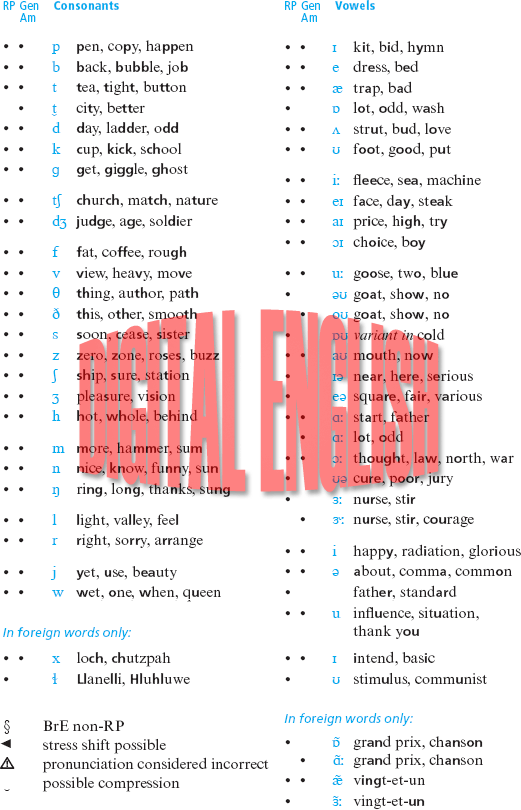
Key to IPA

Key to International Phonetic Alphabet (IPA)
IPA
See also:
Stress Shift
Adapted from Longman Pronunciation Dictionary

Personality Types

What’s Your Personality Type?

We are all unique in every sense of the word. We are unique in our looks, our likes and dislikes, and definitely in our ways of thinking and behavior. It is this very difference in our personal characteristics which can make interaction with others both so much fun – and quite challenging at the same time.

As a person chooses to take more time towards better understanding themselves as to why they think the way they think, feel the way they feel, and do what they do, something quite amazing happens… One finds that just as this information is applicable to better understanding oneself; it can also be effectively used to better understand others.

For example, as you go out and learn more about Astrology and your own particular Astrological blueprint, you will naturally have an easier time understanding where another person is coming from through the Astrology lens.

I believe what makes a person who they are is a composite of many different aspects. As I have taken the time to better research and understand these aspects, I am fascinated by the idea of how helpful this information can be in understanding where our biggest challenges are in life. But more importantly, we can use this same information to decide what we need to do to overcome challenges and thus benefit from living happier lives.

Of the many aspects to what makes an individual who they are, a main part is their culture and more specifically, how they were programmed and conditioned while they were raised. Simply put, if you were raised by parents who were rich, you will be affected a certain way, very differently than if you were raised by parents who were considered poor by society’s standards. So, how our parents think and how we are raised will most certainly affect who we are and to some extent always shed light on certain thinking traits we regularly practice.

Another major aspect to a person is their education. Not just the education they received at school but the education conducted by any religious institutions, family and friends, and that which a person acquired on their own. What we take in through our five senses over a period of time forever become a part of us and will affect us one way or another whether we like it or not.

Some other lesser known aspects to better understanding ourselves are Numerology, Astrology, and MBTI (Myers-Briggs Type Indicator) system. Both Numerology and Astrology are fascinating subjects which I have found to be very helpful in understanding parts of who I am. However the intention in this article is to discuss Personality Types as outlined by the MBTI system. I will simply layout the background information behind Personality Types and introduce you to a foundational understanding on how the MBTI system works.

The MBTI system was developed by Katharine Briggs and her daughter Isabel Myers. It is a system which can be reliably used to identify a person’s behavior in four distinct areas of life. These four areas have a so called “umbrella effect” on our life. They influence all aspects of our personality in a broad way.

The basic philosophy behind Personality Types goes as far back as Carl Jung who talked about the differences in the psychology and behavior of people in great depth.

It was these two women however who took the existing knowledge on human behavior and personalities, and developed a system around it which can be used to accurately identify a person’s unique Personality Type. Thus, following a person’s response to a specific set of questions and scenarios, an individual can be categorized in such a manner that their natural tendencies are clearly identified by a particular Personality Type.

The four areas, which allow for a combination of 16 unique Personality Types, are as follows:

How do we obtain our energy?
Extraverts (E) or Introverts (I)

Extraverts obtain their energy in life by interacting with other people. They focus their energy on the outer world of people and things. Extraverts are constantly paying attention to the world around them and how they can become a part of it. These folks are naturally outgoing and ready to spark up a conversation about, well, anything. Extraverts prefer to spend more time with others than by themselves.

Introverts obtain their energy by being by themselves. They focus their energy in the inner world of ideas and thoughts. Introverts prefer to immerse themselves in their own world, in anything that is of interest to them. They are considered shy or “keeping to themselves” from an outsider’s view looking into their lives. Introverts prefer to spend more time by themselves than with others.

What kind of information do we naturally pay attention to?
Sensor (S) or Intuitive (N)

Sensors pay more attention to facts and details. They are down-to-earth and generally sensible. They trust their direct experiences and lessons learned over time in life more than their gut instinct. Sensing individuals prefer to use established skills and ways of thinking. They are systematic people in their thought and life.

Intuitive people typically try to understand the connections, underlying meanings, and implications more than facts. These individuals are typically more creative than Sensors and possibly practice their imagination to a higher degree as well. They trust their gut instinct more than Sensors and can seem to make decisions without the support of facts and details, simply following feelings and vibes.

How do we make our decisions?
Thinkers (T) or Feelers (F)

Thinkers make decisions objectively weighing pros and cons. They are logical and analytical in their approach to life and its many scenarios. Thinkers are more likely to shoot straight and may be charged with hurting feelings because of their blunt delivery. They are more in touch with logic than emotions.

Feelers make decisions based on how they feel about a given issue by looking at its affect on themselves and others. They are more sensitive and empathetic in their view of life. Feelers are prone to watch what they say and what they do such that they do not hurt other people’s feelings. They are far more in touch with their emotions than logic.

How do we organize our world?
Judgers (J) or Perceivers (P)

Judgers like to live their lives by making most decisions quickly and easily. They would rather have things settled and agreed upon. They very much like to be in control on a given situation and like to know what to expect when going into a scenario. They are very conscious of their time and are punctual, habitual people. Judgers are typically very organized in all aspects of their life.

Perceivers are more apt to take their time making decisions, often anxious and unsure about exactly what they would like to do. They have a tendency to keep their options open in case something unexpected comes up. They are comfortable with letting other people run the show and call the shots. It is more likely for Perceivers to run late and find time just slipping away. Perceivers typically find organization a challenge and often have a hard time finding things when in need of them.

In conclusion, it is crucial to realize that these four different Personality Type indicators are not black and white, but rather a scale with each side on opposite ends. A person can very well be totally leaning on one side, be somewhere in the middle, or be totally on the other side depending on their specific situation.

Given these four essential dimensions of our personality, there are 16 different possible combinations of Personality Types. Each of these types is unique in their strengths and weaknesses, and thus equally unique in their challenges and opportunities.

By identifying your own personality type, i.e., ESFJ (Extravert Sensor Feeler Judger), you can better understand why you behave a certain way and enjoy it, while someone else behaves in an exactly opposite way and finds it just an enjoyable. You can also use this information to better relate to other individuals creating for a more friendly and effective interaction.

too proud

theory  conceited/big-headed  arrogant  vain  smug  self-satisfied  be full of yourself  think you’re it/fancy yourself  let sth go to your head  get too big for your boots/too big for your britches

conceited/big-headed / kənˈsiːţɪd, kənˈsiːţəd, ˌbɪg ˈhedɪd◂ / [ adjective ] someone who is conceited or big-headed is too proud of their own achievements or abilities, in a way that annoys other people :
You’re the most conceited, selfish person I’ve ever met!
I know this sounds big-headed, but I’ve always been good at French.
arrogant / ˈærəgənt / [ adjective ] someone who is arrogant behaves as if their opinions are more important than other people’s, and thinks that they are always right :
You are a rude and arrogant young man.
his arrogant disregard for other people’s opinions
arrogantly [ adverb ]
They arrogantly assumed that their form of democracy was better than anyone else’s.
vain / veɪn / [ adjective ] someone who is vain thinks they are very good-looking, special, or intelligent :
She’s a vain girl who is always thinking about her figure.
I am vain enough to want to look good, but not to style my hair and paint my toenails.
smug / smʌg / [ adjective ] quietly pleased with yourself in an unpleasant and annoying way, because you think you are in a better position than other people :
Lawson comes over as smug and arrogant, but in fact he’s quite a decent man.
If you knew, which I’m sure you did judging from your smug expression, why didn’t you tell me?
smug about
I felt very smug about not wasting paper.
smugly [ adverb ]
‘I’m getting a motorcycle soon,’ he announced smugly. ‘My dad’s buying me one for my eighteenth birthday.’
self-satisfied / self ˈsæţɪsfaɪd / [ adjective ] someone who is self-satisfied thinks that they are very clever, very successful etc, often without good reason, and shows this in an annoying way :
Doyle’s self-satisfied smile irritated Haworth.
He was in his early 40s and had the self-satisfied air of someone who has achieved fame and success.
What makes a second-rate actress like Jean so self-satisfied, so over-confident?
be full of yourself / biː ˈfʊl əv jɔːʳˌself / [ verb phrase ] spoken to be always talking about your abilities and achievements and never show any interest in those of other people :
She’s a good-looking woman, but too full of herself for my liking.
He was too full of himself to care about anyone else.
pleased with yourself / ˈpliːzd wɪð jɔːʳself / [ adjective phrase ] feeling unreasonably proud of yourself, especially because you think you have done something clever :
I had made a big profit on the deal and was feeling inordinately pleased with myself.
After deceiving us all like that, she went away, no doubt very pleased with herself.
think you’re it also fancy yourself British / ˌθɪŋk jɔːr ˈɪt, ˈfæntsi jɔːʳself / [ verb phrase ] spoken informal use this when you think someone is too proud of their abilities or appearance :
You think you’re it, don’t you? Well you’re not!
Like most young professional footballers, he really fancied himself.
let something go to your head / let something ˌgoʊ tə jɔːʳ ˈhed / [ verb phrase ] to start behaving as if you are very important as a result of something, for example a success or being praised by someone :
It’s not surprising that young rock bands let success go to their heads.
I know you did well, but don’t let it go to your head -- the hardest part’s still to come.
get too big for your boots British /too big for your britches American / get tuː ˌbɪg fəʳ jɔːʳ ˈbuːts, tuː ˌbɪg fəʳ jɔːʳ ˈbrɪtʃɪz / [ verb phrase ] informal to start thinking you are more important than you really are, especially because you have been successful in something :
Bonaparte wasn’t all that bad. He was just a soldier who got too big for his boots.

holiday, vacation

holiday  vacation

 You use holiday (or holidays) in BrE and vacation in NAmE to describe the regular periods of time when you are not at work or school, or time that you spend travelling or resting away from home: I get four weeks' holiday/vacation a year. He's on holiday/vacation this week. I like to take my holiday/vacation in the winter. the summer holidays/vacation.

  In NAmE a holiday (or a public holiday) is a single day when government offices, schools, banks and businesses are closed: The school will be closed Monday because it's a holiday. This is called a bank holiday in BrE.

 The holidays is used in NAmE to refer to the time in late December and early January that includes Christmas, Hanukkah and the New Year.

 Vacation in BrE is used mainly to mean one of the periods when universities are officially closed for the students.

Academic Word List

Academic Word List
What is the Academic Word List?

How is the AWL organized?

Why is the AWL important?

How can the AWL help me with my academic studies?

What strategies can I use to help learn the AWL words?

Download Link

Stress in Phrasal Verbs

Stress in Phrasal Verbs
Adapted from Longman Pronunciation Dictionary

Mobile Dictionaries (MSDict)

Mobile Dictionaries (MSDict)

Cambridge Advanced Learner's Dictionary, Concise Oxford Thesaurus, Concise Oxford English Dictionary, English Phrases, Oxford Dictionary of Idioms, Oxford Dictionary of Business, Concise Oxford American Thesaurus, Synonymous, Irregular Verbs

ادامه نوشته

Mobile Dictionaries (MobiReader)

Longman Dictionary of Contemporary English

  • 155,000 natural examples bring English to life
  • 3000 most frequent words in spoken and written English highlighted
  • 207,000 words, phrases and meanings - including free encyclopedia
  • Clear definitions written using only 2000 common words
  • Encyclopedia included
Details:
File type: PRC
Size: 13 MB
Compressed size: 7 MB

Oxford Advanced Learner's Dictionary

  • 183,500 British and American words, phrases and meanings
  • 100,000 example sentences, 15,000 more than the paper edition
  • British and American pronunciations for all words
  • Hundreds of usage notes on synonyms, grammar and usage
  • Color illustrations to help you understand difficult words
  • Links within entries to help you move to the right place quickly
  • Explanations of grammar codes, for example click on the grammar code '[C]' and see the explanation 'countable noun'
  • Reference pages, including on the Oxford 3000™ keywords (the most important words you need to know in English), sayings and proverbs, and common first names
Details:
File type: PRC
Size: 22 MB
Compressed size: 15 MB

MobileReference Encyclopedia v9.6

Over 70,000 articles carefully checked for accuracy and completeness by a team of experts. People, History, Literature, Business, Biology, Engineering, Chemicals, Animals and plants, Actors and Actresses, Music bands and albums, Movies, Military equipment, Medical terminology – we would not be able to list all subjects covered by this encyclopedia. Intuitive navigation: just start typing in the word - the list of available articles is updated automatically. The Encyclopedia is based on Wikipedia, the largest collection of reference work in the history of human knowledge. To keep the file size manageable we have only included the abstracts from each article.

Details:
File type: PRC
Size: 204 MB
Compressed size: 175 MB
ادامه نوشته

Quotations from George Orwell

1. “Advertising is the rattling of a stick inside a swill bucket.”
2. “All animals are equal, but some animals are more equal than others.”
3. “All people who have reached the point of becoming nations tend to despise foreigners, but there is not much doubt that the English-speaking races are the worst offenders. One can see this from the fact that as soon as they become fully aware of any foreign race they invent an insulting nickname for it.”
4. “All writers are vain, selfish and lazy, and at the very bottom of their motives lies a mystery. Writing a book is a long, exhausting struggle, like a long bout of some painful illness. One would never undertake such a thing if one were not driven by some demon whom one can neither resist nor understand.”
5. “Big Brother is watching you.”
6. “But if thought corrupts language, language can also corrupt thought.”
7. “"Doublethink" means the power of holding two contradictory beliefs in one's mind simultaneously, and accepting both of them.”
8. “Each generation imagines itself to be more intelligent than the one that went before it and wiser than the one that comes after it.”
9. “Enlightened people seldom or never possess a sense of responsibility.”
10. ”For a creative writer possession of the "truth" is less important than emotional sincerity.”
11. ”He who controls the past commands the future. He who commands the future conquers the past.”
12. “If liberty means anything at all, it means the right to tell people what they do not want to hear.”
13. “If thought corrupts language, language can also corrupt thought.”
14. “In an age of universal deceit, telling the truth is a revolutionary act.”
15. ”i. Never use a metaphor, simile, or other figure of speech which you are used to seeing in print. ii. Never use a long word where a short one will do. iii. If it is possible to cut a word out, always cut it out. iv. Never use the passive where you can use the active. v. Never use a foreign phrase, a scientific word or a jargon word if you can think of an everyday English equivalent. vi. Break any of these rules sooner than say anything outright barbarous.
16. “Not to expose your true feelings to an adult seems to be instinctive from the age of seven or eight onwards.”
17. “On the whole human beings want to be good, but not to good and not quite all the time.”
18. ”Patriotism is usually stronger than class hatred, and always stronger than internationalism.”
19. “Political language...is designed to make lies sound truthful and murder respectable, and to give an appearance of solidity to pure wind.”
20. “Power is not a means; it is an end. One does not establish a dictatorship in order to safeguard a revolution; one makes the revolution in order to establish the dictatorship. The object of persecution is persecution. The object of torture is torture. The object of power is power.”
21. “The best books...are those that tell you what you know already.”
22. “The books one reads in childhood, and perhaps most of all the bad and good bad books, create in one's mind a sort of false map of the world, a series of fabulous countries into which one can retreat at odd moments throughout the rest of life, and which some cases can even survive a visit to the real countries which they are supposed to represent.”
23. "The choice before human beings is not between good and evil but between two evils. You can let the Nazis rule the world, that is evil; or you can overthrow them by war, which is also evil. Whatever you choose you will not come out of it with clean hands"
24. “The history of any nation follows an undulatory course. In the trough of the wave we find more or less complete anarchy; but the crest is not more or less complete Utopia, but only, at best, a tolerably humane, partially free and fairly just society that invariably carries within itself the seeds of its own decadence.”
25. “The nationalist not only does not disapprove of atrocities committed by his own side, but he has a remarkable capacity for not even hearing about them.”
26. ”The quickest way of ending a war is to lose it.”
27. “Throughout recorded time, and probably since the end of the Neolithic Age, there have been three kinds of people in the world, the High, the Middle, and the Low. They have been subdivided in many ways, they have borne countless different names, and their relative numbers, as well as their attitude toward one another, have varied from age to age; but the essential structure of society has never altered. Even after enormous upheavals and seemingly irrevocable changes, the same pattern has always reasserted itself, just as a gyroscope will always return to equilibrium, however far it is pushed one way or the other. The aims of these three groups are entirely irreconcilable. The aim of the High is to remain where they are. The aim of the Middle is to change places with the High. The aim of the Low, when they have an aim -- for it is an abiding characteristic of the Low that they are too much crushed by drudgery to be more than intermittently conscious of anything outside their daily lives -- is to abolish all distinctions and create a society in which all men shall be equal. Thus throughout history a struggle which is the same in its main outlines recurs over and over again. For long periods the High seem to be securely in power, but sooner or later there always comes a moment when they lose either their belief in themselves, or their capacity to govern efficiently, or both. They are then overthrown by the Middle, who enlist the Low on their side by pretending to them that they are fighting for liberty and justice. As soon as they have reached their objective, the Middle thrust the Low back into their old position of servitude, and themselves become the High. Presently a new Middle group splits off from one of the other groups, or from both of them, and the struggle begins over again. Of the three groups, only the Low are never even temporarily successful in achieving their aims. It would be an exaggeration to say that throughout history there has been no progress of a material kind. Even today, in a period of decline, the average human being is physically better off than he was a few centuries ago. But no advance in wealth, no softening of manners, no reform or revolution has ever brought human equality a millimeter nearer. From the point of view of the law, no historic change has ever meant much more than a change in the name of the masters.”
28. "To know and not to know, to be conscious of complete truthfulness while telling carefully constructed lies, to hold simultaneously two opinions which canceled out, knowing them to be contradictory and believing in both of them, to use logic against logic..."
29. “To see what is in front of one's nose requires a constant struggle.”
30. "...Two and two are four . Sometimes, Winston. Sometimes they are five. Sometimes they are three. Sometimes they are all of them at once. You must try harder. It is not easy to become sane."
31. “War is peace. Freedom is slavery. Ignorance is strength.”
32. “War against a foreign country only happens when the moneyed classes think they are going to profit from it. Every war when it comes, or before it comes, is represented not as a war but as an act of self-defense against a homocidal maniac."
33. "What does it matter to be laughed at? The big public, in any case, usually doesn't see the joke, and if you state your principles clearly and stick to them, it's wonderful how people come around to you in the end."
34. ”Who controls the past controls the future: who controls the present controls the past.”

Ferdowsi's Biography

FerdowsiFerdowsi's Biography

Also spelled Firdawsi, Firdusi, or Firdousi, pseudonym of Abu Ol-qasem Mansur b.c. 935, near Toos, Iran d.c. 1020-26, Toos

Persian poet, author of the Shah-nameh ("Book of Kings"), the Persian national epic, to which he gave its final and enduring form, although he based his poem mainly on an earlier prose version.

Ferdowsi was born in a village on the outskirts of the ancient city of Toos In the course of the centuries many legends have been woven around the poet's name but very little is known about the real facts of his life. The only reliable source is given by Nezami-ye 'Aruzi, a 12th-century poet who visited Ferdowsi's tomb in 1116 or 1117 and collected the traditions that were current in his birthplace less than a century after his death.

According to Nezami, Ferdowsi was a dehqan ("landowner"), deriving a comfortable income from his estates. He had only one child, a daughter, and it was to provide her with a dowry that he set his hand to the task that was to occupy him for 35 years. The Shahnameh of Ferdowsi, a poem of nearly 60,000 couplets, is based mainly on a prose work of the same name compiled in the poet's early manhood in his native Toos. This prose Shahnameh was in turn and for the most part the translation of a Pahlavi (Middle Persian) work, the Khvatay-namak, a history of the kings of Persia from mythical times down to the reign of Khosro II (590-628), but it also contained additional material continuing the story to the overthrow of the Sasanians by the Arabs in the middle of the 7th century. The first to undertake the versification of this chronicle of pre-Islamic and legendary Persia was Daqiqi, a poet at the court of the Samanids, who came to a violent end after completing only 1,000 verses. These verses, which deal with the rise of the prophet Zoroaster, were afterward incorporated by Ferdowsi, with due acknowledgments, in his own poem.

The Shahnameh, finally completed in 1010... Nezami does not mention the date of Ferdowsi's death. The earliest date given by later authorities is 1020 and The latest 1026; it is certain that he lived to be more than 80.

The Persians regard Ferdowsi as the greatest of their poets. For nearly a thousand years they have continued to read and to listen to recitations from his masterwork, the Shahnameh, in which the Persian national epic found its final and enduring form. Though written about 1,000 years ago, this work is as intelligible to the average, modern Iranian as the King James version of the Bible is to a modern English-speaker.
The language, based as the poem is on a Pahlavi original, is pure Persian with only the slightest admixture of Arabic. European scholars have criticized this enormous poem for what they have regarded as its monotonous metre, its constant repetitions, and its stereotyped similes; but to the Iranian it is the history of his country's glorious past, preserved for all time in sonorous and majestic verse.

Paragraphs

Paragraphs

Summary: The purpose of this handout is to give some basic instruction and advice regarding the creation of understandable and coherent paragraphs.

What is a paragraph?

A paragraph is a collection of related sentences dealing with a single topic. Learning to write good paragraphs will help you as a writer stay on track during your drafting and revision stages. Good paragraphing also greatly assists your readers in following a piece of writing. You can have fantastic ideas, but if those ideas aren't presented in an organized fashion, you will lose your readers (and fail to achieve your goals in writing).

The Basic Rule: Keep One Idea to One Paragraph

The basic rule of thumb with paragraphing is to keep one idea to one paragraph. If you begin to transition into a new idea, it belongs in a new paragraph. There are some simple ways to tell if you are on the same topic or a new one. You can have one idea and several bits of supporting evidence within a single paragraph. You can also have several points in a single paragraph as long as they relate to the overall topic of the paragraph. If the single points start to get long, then perhaps elaborating on each of them and placing them in their own paragraphs is the route to go.

Elements of a Paragraph

To be as effective as possible, a paragraph should contain each of the following: Unity, Coherence, A Topic Sentence, and Adequate Development. As you will see, all of these traits overlap. Using and adapting them to your individual purposes will help you construct effective paragraphs.

Unity

The entire paragraph should concern itself with a single focus. If it begins with a one focus or major point of discussion, it should not end with another or wander within different ideas.

Coherence

Coherence is the trait that makes the paragraph easily understandable to a reader. You can help create coherence in your paragraphs by creating logical bridges and verbal bridges.

Logical bridges

  • The same idea of a topic is carried over from sentence to sentence
  • Successive sentences can be constructed in parallel form

Verbal bridges

  • Key words can be repeated in several sentences
  • Synonymous words can be repeated in several sentences
  • Pronouns can refer to nouns in previous sentences
  • Transition words can be used to link ideas from different sentences

A topic sentence

A topic sentence is a sentence that indicates in a general way what idea or thesis the paragraph is going to deal with. Although not all paragraphs have clear-cut topic sentences, and despite the fact that topic sentences can occur anywhere in the paragraph (as the first sentence, the last sentence, or somewhere in the middle), an easy way to make sure your reader understands the topic of the paragraph is to put your topic sentence near the beginning of the paragraph. (This is a good general rule for less experienced writers, although it is not the only way to do it). Regardless of whether you include an explicit topic sentence or not, you should be able to easily summarize what the paragraph is about.

Adequate development

The topic (which is introduced by the topic sentence) should be discussed fully and adequately. Again, this varies from paragraph to paragraph, depending on the author's purpose, but writers should beware of paragraphs that only have two or three sentences. It's a pretty good bet that the paragraph is not fully developed if it is that short.

Some methods to make sure your paragraph is well-developed:

  • Use examples and illustrations
  • Cite data (facts, statistics, evidence, details, and others)
  • Examine testimony (what other people say such as quotes and paraphrases)
  • Use an anecdote or story
  • Define terms in the paragraph
  • Compare and contrast
  • Evaluate causes and reasons
  • Examine effects and consequences
  • Analyze the topic
  • Describe the topic
  • Offer a chronology of an event (time segments)

How do I know when to start a new paragraph?

You should start a new paragraph when:

  • When you begin a new idea or point. New ideas should always start in new paragraphs. If you have an extended idea that spans multiple paragraphs, each new point within that idea should have its own paragraph.
  • To contrast information or ideas. Separate paragraphs can serve to contrast sides in a debate, different points in an argument, or any other difference.
  • When your readers need a pause. Breaks in paragraphs function as a short "break" for your readers—adding these in will help your writing more readable. You would create a break if the paragraph becomes too long or the material is complex.
  • When you are ending your introduction or starting your conclusion. Your introductory and concluding material should always be in a new paragraph. Many introductions and conclusions have multiple paragraphs depending on their content, length, and the writer's purpose.

Transitions and Signposts

Two very important elements of paragraphing are signposts and transitions. Signposts are internal aids to assist readers; they usually consist of several sentences or a paragraph outlining what the article has covered and where the article will be going.

Transitions are usually one or several sentences that "transition" from one idea to the next. Transitions can be used at the end of most paragraphs to help the paragraphs flow one into the next.

Parallel Punctuation

All punctuation must be parallel.

This rule means that if you set off a free modifier that interupts a main clause with a comma at the beginning, you need to put one at the end of the free modifier as well. If you use a dash in one of those positions, you need to use it in the other too.

parallel: The athletes, marching in as a group, smiled excitedly as they looked up at the stadium full of spectators.

parallel: The athletes--marching in as a group--smiled excitedly as they looked up at the stadium full of spectators.

broken parallel: The athletes--marching in as a group, smiled excitedly as they looked up at the stadium full of spectators.

It also means that if you use a semicolon to set off one item in a list with a single sentence, then you must set off the other items in the list with semicolons as well.
parallel: We sent copies of the memo to Walla Walla, Washington; Traverse City, Michigan; and New Brunswick, New York.

broken parallel: We sent copies of the memo to Walla Walla, Washington, Traverse City, Michigan; and New Brunswick, New York.

Dash

A dash (--) is like a strong comma, but it cannot separate all the items in a list--only the last--and it cannot set off initial-position free modifiers.

4a. Since it is like a comma, it can do the things that a comma can do, such as setting off free modifiers from the main clause and joining two main clauses with the help of a coordinate conjunction. It is a MORE EMPHATIC piece of punctuation than a comma, and so it is used to produce emphasis.

The athletes--marching in as a group--smiled excitedly as they looked up at the stadium full of spectators.

They drove to Ottawa that Tuesday morning--and, when they arrived at the courthouse, they nervously sought a parking place.

Notice that a dash is two hyphens typed without spaces before, after, or between them.

4b. A dash can't separate all the items in a list; however, it can set off the last item in a list for emphasis.

On our farm we grow wheat, soybeans, alfalfa, corn--and bamboo!
4c. A dash can't set off an initial-position free modifier.
wrong: When we could stand it no longer--we called to find out when they were coming.
The only time you can do that is when the main clause following the initial-position free modifier begins with "these."
okay: Hot dogs, apple pie, and Mom--these are the traditional American symbols.

Overview of Punctuation Marks

types of punctuation mark
ampersand the sign & that means ‘and’
apostrophe the sign ' that is used to show that one or more letters or numbers have been left out, as in don’t, or used before ‘s’ to show that something belongs to someone or something, as in Mark’s dog
angle brackets British English a pair of signs < > used for enclosing information
asterisk the sign * that is placed next to a particular word or phrase to make people notice it or to show that more information is given in another place
at sign the sign @ that is used especially in email addresses
backslash a line \ that is used to separate words, numbers, or letters and also used in computer commands
brackets (also round brackets) British English, parentheses AmE and BrE formal a pair of signs () used for enclosing information that interrupts a sentence
colon the sign : that is used to introduce an explanation, example, quotation etc
comma the sign , that is used to separate things in a list, or between two clauses in a sentence
dash the sign that is used to separate two closely related parts of a sentence, especially in more informal English
exclamation mark British English, exclamation point American English the sign ! that is used after a sentence or word that expresses surprise, anger, or excitement
full stop British English, period American English the sign . that is used to mark the end of a sentence or the short form of a word
hyphen the sign that is used to join words or syllables
question mark the sign ? that is used at the end of a question
quotation marks (also inverted commas British English) a pair of signs ‘ ’ and “ ” that are put around words, especially to show that you are quoting what someone has said
semicolon the sign ; that is used to separate words in a list, or different parts of a sentence that can be understood separately
slash (also oblique British English) a line / that is used to separate words, numbers, or letters
square brackets British English, brackets American English a pair of signs [ ] placed at the beginning and end of extra information in a text, especially comments made by an editor
مطالب قدیمی‌تر