Why Are Cotton Bowl Rolex Watches So Special?

For generations of college football players and coaches, bowl gifts have been part of the postseason experience. Most are eventually forgotten. The Rolex watches presented at the Cotton Bowl Classic are a rare exception.

Unlike championship rings, which celebrate a single title, Cotton Bowl watches became lifelong keepsakes that many recipients wore every day. Others treated them as family heirlooms, passing them to children and grandchildren decades later. Their appeal wasn’t simply the Rolex name. The watches came to represent one of college football’s premier bowl games and the memories created there.

Former coaches, players, administrators, and historians consistently describe the Cotton Bowl Classic as setting a standard for hospitality. Their experiences help explain why these watches remain among the most recognizable bowl gifts in college football history.

A Bowl Experience That Left a Lasting Impression
Former Ole Miss, Duke, and Tennessee head coach David Cutcliffe coached in 11 bowl games, yet he says one destination consistently stands apart.

“Everything is always first-class with the Cotton Bowl. Anybody who thinks that’s just talk is wrong. That’s real.”

Cutcliffe led Ole Miss to a 31-28 victory over Oklahoma State in the 2004 Cotton Bowl Classic, where quarterback Eli Manning earned Offensive Most Valuable Player honors. Cutcliffe, who had also coached Peyton Manning as Tennessee’s offensive coordinator, was inducted into the Cotton Bowl Classic Hall of Fame in 2025.

Looking back, he says the Cotton Bowl is the postseason game former players and coaches still discuss most often.

“The only bowl game we talk about consistently is the Cotton Bowl. We had to use the equipment truck to take our gifts home with Ole Miss because we didn’t have room on the plane.”

The only exception was each player’s commemorative watch, which stayed on its owner’s wrist for the trip home.

How the Cotton Bowl Watch Tradition Began
The Cotton Bowl Classic has presented commemorative watches since its inaugural game between TCU and Marquette on January 1, 1937. Over the decades, several manufacturers supplied the watches, including Rolex and two companies associated with the brand, Tudor and Hamilton.

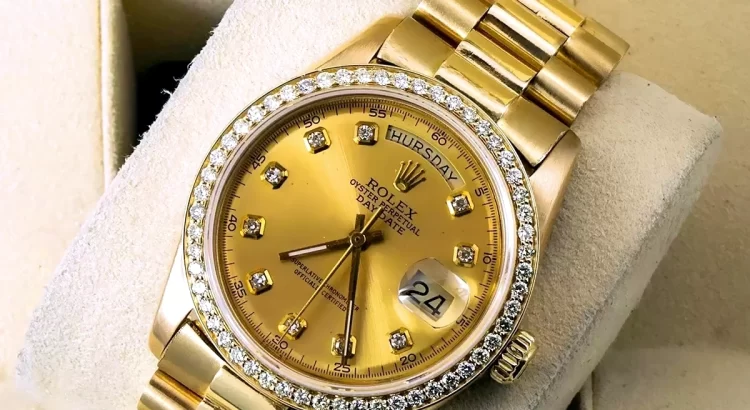
During several games played between the late 1960s and mid-1970s, participants received Rolex-branded watches featuring the Cotton Bowl Classic logo and game date. Each watch was individually engraved with the recipient’s name, making it both a luxury timepiece and a personalized record of participation.

The combination proved unusually durable. Unlike many bowl gifts tied to changing technology or fashion, a mechanical Rolex remained practical long after a player’s college career ended.

Kent Lawrence Didn’t Know What a Rolex Was
One of the earliest Rolex recipients was Georgia running back Kent Lawrence after the Bulldogs defeated SMU 24-9 in the 1966 Cotton Bowl Classic. Lawrence rushed for 149 yards and a touchdown and was named the game’s Outstanding Offensive Player.

His first reaction was unexpected.

“At that time, I had never heard the word ‘Rolex.'”

His widow, Karlene Lawrence, later recalled that he was initially disappointed because he had hoped for a Timex—the only watch brand he really knew.

That skepticism didn’t last long.

Lawrence wore the Rolex every day, whether heading to work or mowing the lawn. More than 35 years later, during his induction into the Cotton Bowl Classic Hall of Fame in 2003, he proudly showed the audience that he was still wearing the same watch.

Reflecting on both the game and the timepiece, he remarked:

“It still fits today. And just like this game, it continues to increase in value over time.”

After he died in 2020, the watch was passed to his son, Kelley, continuing its role as a family heirloom rather than simply a collectible.

More Than a Valuable Watch
The watches are valuable today, but recipients rarely describe them primarily as financial assets.

Vintage Cotton Bowl Rolex watches occasionally appear at auction or through memorabilia dealers, with some examples reportedly selling for as much as $7,500. Market prices, however, vary significantly depending on condition, provenance, and the specific reference, so individual values can differ substantially.

Mike Henderson, a member of the Cotton Bowl Athletic Association Board of Directors and a longtime sports memorabilia collector, says genuine Rolex Cotton Bowl watches rarely reach the resale market.

“If I looked right now, I could find a few, but they would all be from the last 20 years. The Rolexes? Hardly ever.”

That scarcity reflects a broader pattern: many original recipients simply chose to keep them.

Watches That Stayed on Their Owners’ Wrists
Bud Ford, Historian Emeritus for Tennessee football, received his Rolex while working in the university’s sports information department during the 1969 Cotton Bowl Classic.

Although Tennessee lost 36-13 to Texas, Ford still considers it one of the finest bowl gifts he ever received.

“One of the most cherished bowl gifts I’ve ever received, and I’ve been to 47 bowl games.”

More than five decades later, the watch has required remarkably little maintenance. Aside from replacing a cracked crystal, the movement has continued to perform reliably.

Ford plans to leave it to his son or grandson, recalling former Tennessee coach Doug Dickey’s memorable advice to his wife:

“If (Bud) happens to die, take the watch off before you bury him. It’s worth more than he is.”

Whether Dickey actually phrased it exactly that way has become part of Cotton Bowl folklore. Asked years later, he laughed before saying:

“That’s a good story. I’m not sure I said it, but I’ll lay claim to it.”

Some Owners Preserve Them. Others Wear Them Daily.

Not every recipient treats the watch the same way.

Former Arkansas defensive lineman Tommy Harris, whose Razorbacks defeated Georgia in the 1976 Cotton Bowl Classic, recognized the Rolex name immediately.

“I knew it was something special, even as a 21-year-old.”

Because of its sentimental value, Harris rarely wears the watch today, preferring to store it securely.

Tony Neely, Kentucky’s assistant athletic director for communications and public relations, takes the opposite approach. His Rolex came from his great-uncle, legendary Rice coach Jess Neely, who gave Tony the watch he received after Rice’s 1958 Cotton Bowl appearance.

Tony has worn it regularly for decades.

“I still think it’s the coolest thing ever.”

These contrasting approaches illustrate the watches’ enduring appeal. Some owners preserve them like museum pieces, while others continue using them exactly as they were intended.

A Tradition Shared by College Football Legends
Many of college football’s most recognizable figures received Cotton Bowl commemorative replica watches over the decades, including Sammy Baugh, Doak Walker, Joe Theismann, Darrell Royal, Frank Broyles, and Paul “Bear” Bryant.

Among them, few have worn theirs as consistently as Doug Dickey.

Now retired and in his 90s, the former Tennessee coach says he still wears his Cotton Bowl Rolex virtually every day.

“It’s easy to read, it’s self-winding and it has a calendar. What more do you need?”

Why These Watches Continue to Matter
The lasting reputation of Cotton Bowl Rolex watches comes from more than their association with a prestigious luxury brand.

They represent a period when postseason gifts became woven into college football tradition, while also capturing personal stories that span generations. Players who won them as young athletes became coaches, administrators, parents, and grandparents, yet many continued wearing the same watch throughout those stages of life.

That helps explain why original Cotton Bowl Rolex watches appear so infrequently on the resale market. For many owners, their greatest value isn’t measured by auction results or collectible demand. It’s found in the memories attached to the game, the teammates who shared the experience, and the family members who will eventually inherit a piece of college football history.

Rolex Quartz

Rolex, Quartz, and the Watch That Was Probably Ahead of Its Time

If Rolex is still the ultimate symbol of traditional Swiss watchmaking, quartz watches tend to sit at the opposite end of the conversation. At least that’s how many collectors — and plenty of casual buyers — tend to see it.

And honestly, the perception didn’t appear out of nowhere. Quartz technology almost destroyed the Swiss mechanical watch industry in the 1970s and early ’80s. Cheap battery-powered watches flooded the market, accuracy standards changed overnight, and brands that had spent decades obsessing over gears and springs suddenly looked outdated.

Still, reducing quartz watches to “cheap” misses a huge part of the story. Some quartz movements were extraordinarily sophisticated. A few still are. Even Rolex, a company now deeply associated with mechanical watchmaking, spent years developing its own high-end quartz technology.

That’s the funny part people forget.

In fact, Rolex’s long-discontinued Oysterquartz collection now feels strangely relevant again because the new Rolex Land-Dweller clearly borrows parts of its visual identity. The sharp case lines, integrated bracelet, and angular profile all echo a watch Rolex introduced nearly 50 years ago.

The Quartz Race Changed Everything

Today, essentially every modern Rolex uses a mechanical movement powered by a mainspring. Quartz watches work differently. A battery sends current through a quartz crystal, which vibrates at an extremely consistent frequency and regulates timekeeping electronically.

That technology turned the watch industry upside down.

Japanese brands moved quickly, especially Seiko, whose Seiko Quartz Astron is widely considered the world’s first commercially available quartz wristwatch. According to Seiko’s historical archives, the Astron debuted in 1969 and introduced a level of accuracy that mechanical watches simply couldn’t match at the time.

Swiss brands saw the threat early. Rolex joined a consortium of roughly 20 Swiss manufacturers known as the CEH (Centre Electronique Horloger), which worked together to develop Switzerland’s first quartz movement platform.

The result became the Beta 21 movement.

Oddly enough, some of the biggest traditional watchmakers ended up using it. Omega, Patek Philippe, and Rolex all released watches powered by Beta 21 calibers in the early 1970s.

Rolex’s version, the reference 5100 “Texano,” now occupies a weird little corner of collector culture. It’s historically important, fairly rare, and still not discussed nearly as often as vintage Daytonas or Submariners. Maybe quartz baggage still lingers a bit.

Rolex Didn’t Just Add Quartz — It Built a Whole Identity Around It

Here’s what makes the Oysterquartz more interesting than many people realize: Rolex didn’t simply drop a battery-powered movement into an existing Datejust and call it a day.

The company spent years developing an in-house quartz caliber after leaving the CEH consortium in 1972. According to Rolex’s historical materials, the brand focused heavily on long-term reliability and chronometric precision during this era, even as the broader industry struggled through the quartz crisis.

By 1977, the officially named Rolex Oysterquartz finally arrived.

And visually? It was bold.

The Oysterquartz introduced sharply angular case architecture and an integrated bracelet design that felt dramatically different from traditional rounded Rolex sports watches. Looking back now, it almost feels like Rolex experimenting with the same design language that made watches like the Audemars Piguet Royal Oak and Patek Philippe Nautilus so influential.

That wasn’t accidental. The 1970s were full of integrated-bracelet sports watches with aggressive geometry. Gérald Genta’s designs were dominating conversations among enthusiasts, and even conservative brands started loosening up stylistically.

Rolex rarely gets described as “experimental,” but the Oysterquartz kind of was.

Oysterquartz Specifications at a Glance

FeatureRolex Oysterquartz
Launch Year1977
Production EndAround 2001
Movement TypeIn-house quartz
Notable ModelsDatejust, Day-Date
Design SignatureIntegrated bracelet
Estimated ProductionRoughly 25,000 units
Case StyleAngular tonneau-inspired profile

That production number matters, by the way. Roughly 25,000 Oysterquartz watches over more than two decades is tiny by Rolex standards. Some estimates suggest Rolex produces more Submariners in a single year today.

Which partly explains why collectors have slowly started revisiting the Oysterquartz market. Prices still vary quite a bit, but enthusiasm has definitely grown over the last several years, especially as integrated-bracelet sports watches became wildly fashionable again.

Funny how trends circle back around.

The Land-Dweller Feels Like a Quiet Callback

The new Rolex Land-Dweller doesn’t use quartz technology at all. Mechanically, it’s a completely different animal.

Visually, though, the similarities are difficult to ignore.

The angular case edges, bracelet integration, and flatter overall silhouette all feel connected to the Oysterquartz era. Rolex would probably never market it as a direct revival, but enthusiasts immediately noticed the resemblance when the watch appeared at Watches and Wonders Geneva.

And honestly, it makes the Oysterquartz story feel more important in hindsight.

Sometimes certain designs arrive before the market fully understands them. That may have happened here.

Not every collector loves the Oysterquartz, of course. Some still see quartz and immediately lose interest. Others think the integrated case design looks too aggressive for a Rolex. Fair enough. Watch collecting would be pretty boring if everyone agreed on everything.

Still, the Oysterquartz now feels less like an awkward historical footnote and more like an early preview of where Rolex design eventually headed decades later.

The Zenith Daytona Connection Still Matters

Rolex’s relationship with quartz isn’t the only surprising partnership in its history.

There’s also Zenith.

For many collectors, the modern automatic Rolex Cosmograph Daytona probably wouldn’t exist in the same form without Zenith’s legendary Zenith El Primero movement.

When the Daytona first launched in 1963, it used a manually wound chronograph movement. But by the 1980s, automatic chronographs had become increasingly important in the luxury market, and Rolex faced a problem: it didn’t yet have its own automatic chronograph caliber.

So the company turned to Zenith.

That collaboration produced what collectors now call the “Zenith Daytona,” manufactured from 1988 until 2000 before Rolex finally transitioned to its own in-house automatic chronograph movement.

It’s one of those rare situations where two competing brands became permanently linked in collector history.

Zenith’s Rainbow Chronograph Takes a Different Approach

Fast-forward to today, and Zenith has leaned into that historical connection in a fascinating way.

At LVMH Watch Week, Zenith unveiled the Zenith Chronomaster Sport Rainbow, a watch many enthusiasts immediately compared to the famous replica Rolex Rainbow Daytona.

The comparison makes sense. Both watches combine high-end chronograph engineering with extremely flashy gem-setting. Both use rainbow sapphire bezels. And neither exactly flies under the radar.

But Zenith handled the concept differently.

Instead of blending sapphire colors together into a gradient effect like Rolex, Zenith separated the bezel colors more distinctly. Every fifth stone is actually a diamond that functions as a visual timing marker for the high-beat chronograph hand, which completes a full rotation every ten seconds.

That detail feels slightly nerdy in the best possible way.

The watch also keeps Zenith’s signature tri-color subdials rather than copying the Daytona layout too closely. Small choice, big impact. It preserves the brand’s identity instead of turning the watch into a pure homage piece.

And honestly? That restraint helps.

Rolex Rainbow Daytona vs. Zenith Chronomaster Sport Rainbow

FeatureRolex Rainbow DaytonaZenith Chronomaster Sport Rainbow
Case MaterialEverose Gold18k White Gold
MovementRolex automatic chronographEl Primero 3600
Dial StyleDiamond-heavy luxury aestheticTri-color sport chronograph layout
Bezel LayoutGradient rainbow sapphiresSegmented sapphires + diamonds
CasebackClosedSapphire display back
Market PositionUltra-exclusive status symbolSlightly more accessible haute horlogerie

“Accessible” is obviously relative here.

The Zenith still costs well over six figures. But compared to secondary-market prices for a Rainbow Daytona — which regularly climb beyond $400,000 depending on configuration and condition — the Zenith suddenly starts looking almost rational. Well, watch-collector rational anyway.

That’s always the danger with luxury watches. Spend enough time around them and your sense of normal pricing completely breaks.

Why These Watches Matter Beyond the Hype

A lot of flashy luxury watches come and go without leaving much historical impact.

The Oysterquartz and Zenith Daytona stories feel different because they reveal moments when Rolex stepped outside its usual comfort zone. Quartz experimentation. Outsourced chronograph movements. Integrated-bracelet design language. None of those things fit the simplified image people often have of Rolex today.

And that’s what makes the history interesting.

Brands as large and established as Rolex usually appear inevitable in hindsight, as if every decision worked perfectly from the beginning. But watch history is much messier than that. Technologies change. Tastes shift. Certain models fail initially and become collectible decades later.

The Oysterquartz is a pretty good example of that phenomenon.

For years, many collectors barely paid attention to it. Now, thanks partly to the new Land-Dweller and the broader resurgence of integrated sports watches, people are looking at it differently. Maybe not as Rolex’s weird quartz experiment anymore, but as an important transitional design that quietly influenced the brand’s future.

custom Rolex-Cellini-Moonphase-50535

Why Customizing a Rolex Almost Always Destroys Its Value

At some point, nearly every Rolex owner feels the temptation to personalize their watch. A different dial color, a diamond-set bezel, a stealthy black coating – after all, a Rolex is expensive, and the desire to make it feel uniquely “yours” is entirely natural.
But here is the uncomfortable truth: customizing a Rolex is almost always irreversible, financially damaging, and fundamentally at odds with what makes the brand valuable in the first place. In most cases, modification doesn’t enhance a Rolex – it disqualifies it.
To understand why, you have to look beyond aesthetics and into how Rolex, collectors, and the market define authenticity.

Factory Original vs. Aftermarket: A Line That Cannot Be Crossed
There is a world of difference between a factory gem-set Rolex – such as an original Rainbow Daytona – and a watch modified by a third-party jeweler. Though both may sparkle, the market treats them as polar opposites.
A factory Rolex is a complete, unified product designed, assembled, tested, and approved by the Crown. An aftermarket-customized Rolex, no matter how expensive the work, is viewed as a Rolex-based project, not a true Rolex. One reinforces the brand’s legacy; the other undermines it.
This distinction is absolute – and it governs everything that follows.

Rolex’s Official Stance on Modifications
Rolex is famously uncompromising when it comes to protecting the integrity of its watches. The company does not sell parts to third-party customizers, nor does it tolerate aftermarket alterations.
If a modified watch is sent to a Rolex Service Center, one of three things will happen:
1. The watch is returned untouched
2. Service is refused outright
3. Service is offered only if all non-original parts are replaced with genuine Rolex components – often at enormous cost

In many cases, Rolex will not service the watch at all, regardless of the owner’s willingness to pay. This is not stubbornness; it is central to Rolex’s identity. A Rolex is not merely a design – it is a controlled system of materials, tolerances, and long-term reliability that third parties cannot replicate.

The Immediate and Permanent Impact on Value
The Rolex collector market is built on originality. Watches are valued as complete sets, with factory-correct cases, dials, bezels, bracelets, and finishes.
Once those elements are altered, the watch loses its standing. Reputable dealers will not certify it. Serious collectors will not consider it. Liquidity evaporates.
A stainless steel replica Submariner that might sell easily for five figures in original condition can struggle to attract buyers at half that price once aftermarket diamonds or coatings are added. The money spent on customization doesn’t add value – it erases it.

Warranty Loss and Long-Term Service Risk
Rolex watches are engineered to last generations – but only if they can be serviced properly. The moment a non-Rolex part is discovered, the factory warranty is void.
Even worse, long-term servicing becomes uncertain. Independent watchmakers may refuse to work on heavily modified pieces due to unknown part quality and altered tolerances. Without access to authorized service, even a mechanically sound Rolex becomes a liability over time.
A luxury watch that cannot be reliably serviced is not an heirloom – it is a countdown.

The Authenticity Problem
Collectors do not buy Rolex watches simply for their appearance. They buy into a name that represents consistency, precision, and continuity.
Once a fake watch deviates from factory specification – through aftermarket dials, coatings, or gem-setting – it loses that identity. Enthusiasts can spot non-original components instantly, and a watch that fails authentication has no standing in the serious collecting world.
You may still own a watch. But in the sense that matters most, you no longer own a Rolex.

The Most Common (and Most Harmful) Customizations
Certain models are modified more often than others. Datejusts are frequently altered due to their abundance. Submariners are coated for a “tactical” look. Daytonas are iced out to amplify their status.
The outcome is always the same. Model rarity does not protect against value loss. A customized Datejust and a customized Daytona both suffer identical consequences: reduced credibility, reduced liquidity, and reduced worth.

Are There Any Acceptable Exceptions?
There are only two widely accepted ways to personalize a Rolex without destroying its value.

Factory or Retailer Caseback Engraving
A discreet engraving – especially done at purchase – is generally acceptable. It does not alter mechanics, appearance, or serviceability. While deeply personal messages may slightly narrow resale appeal, tasteful engravings rarely cause meaningful harm.

Strap Changes (Fully Reversible)
Replacing the bracelet with leather, rubber, or NATO straps is universally accepted – as long as the original bracelet and end links are retained. This allows stylistic flexibility without compromising the watch itself.
If you value authenticity, longevity, and financial sense, the answer is clear: do not customize your Rolex.
The beauty of Rolex lies in restraint, precision, and permanence. The watch you buy today is meant to function – and remain relevant – decades from now. Altering it may feel expressive in the moment, but it almost always leads to regret.
True individuality in watch collecting comes not from changing a Rolex into something it was never meant to be – but from choosing the right reference, wearing it well, and letting time do the rest.

Rolex Land-Dweller 2026

Does the Rolex Land-Dweller Signal a New Technical Direction for the Crown?

Rolex has refined its catalog through controlled, incremental evolution rather than overt reinvention. Even when introducing new models, the brand typically emphasizes continuity over disruption. The debut of the Rolex Land-Dweller, however, suggests a more nuanced development – one in which Rolex carefully expands its technical and architectural vocabulary while remaining firmly within its established design and engineering philosophy.
Introduced during Market Watches earlier this year, the Land-Dweller marks Rolex’s return to the integrated-bracelet sports replica watch category, a space it last meaningfully occupied during the Oysterquartz era of the late 1970s and 1980s. While the watch’s external appearance references this period, its true significance lies beneath the dial.

Design Lineage and Construction
The Land-Dweller’s case and bracelet architecture clearly echo the angular geometry of the Oysterquartz, particularly references such as the Datejust 1530. Sharp transitions, flat surfaces, and a seamless integration between case and bracelet distinguish it from Rolex’s more familiar rounded Oyster designs. This is not a nostalgic reissue but a contemporary reinterpretation, executed with modern tolerances and finishing standards.
In the 36mm configuration, the case measures just 9.7mm thick, placing it among the slimmest automatic Rolex sports watches currently produced. The proportions, combined with the flat Jubilee-style bracelet, result in a notably fluid wearing experience. Bracelet articulation and finishing remain industry benchmarks, underscoring Rolex’s long-standing mastery of ergonomics and mass-production refinement.
The dial has proven divisive, featuring a patterned surface combined with baton indexes and applied Arabic numerals. While unconventional by Rolex standards, it reflects a willingness to experiment within controlled parameters – an approach that suggests future variations may further refine the concept.

Caliber 7135: A High-Frequency Statement
The most consequential aspect of the Land-Dweller is its new caliber 7135. Operating at 36,000 vibrations per hour, it represents Rolex’s return to high-beat mechanical movements – territory the brand largely abandoned decades ago in favor of lower-frequency robustness.
Technically, the movement introduces several notable advancements:
1. A Dynapulse escapement designed to reduce friction and improve energy transmission

2. A ceramic balance staff, enhancing shock resistance and long-term stability

3. A silicon hairspring, ensuring antimagnetic performance and improved isochronism

Despite its elevated frequency, the movement delivers a 66-hour power reserve, demonstrating Rolex’s ability to balance performance with practicality. While still regulated to replica Rolex’s Superlative Chronometer standard of ±2 seconds per day, the caliber prioritizes mechanical efficiency and durability over absolute chronometric supremacy.

Positioning Against Grand Seiko
Inevitably, the Land-Dweller invites comparison with Grand Seiko’s SLGB005, powered by the Spring Drive caliber 9RB2. With a stated accuracy of approximately ±3 seconds per month, the Grand Seiko represents the pinnacle of mainspring-driven precision. Its hybrid electro-mechanical architecture, however, places it in a different philosophical category.
Where Grand Seiko pursues ultimate accuracy through electronic regulation, Rolex remains firmly committed to purely mechanical solutions. The Land-Dweller does not attempt to surpass Spring Drive in raw precision; instead, it advances traditional mechanical watchmaking through materials science, high-frequency operation, and industrialized reliability.
This contrast highlights two divergent yet equally valid approaches to modern horology – one prioritizing absolute performance, the other emphasizing mechanical purity and long-term serviceability at scale.

A Broader Strategic Implication
Viewed in isolation, the Land-Dweller is an impressive new model. Viewed within Rolex’s broader context, it may be more significant still. The watch suggests that Rolex is increasingly comfortable introducing substantive technical changes – new escapements, materials, and architectures – without dramatic shifts in branding or messaging.
Rather than signaling a radical departure, the Land-Dweller represents controlled evolution at its most deliberate. It demonstrates that Rolex can innovate meaningfully while maintaining the restraint and consistency that define its identity. For collectors and horology enthusiasts alike, the Land-Dweller may ultimately be remembered not just as a new model, but as a quiet indicator of where Rolex is headed next.

Rolex Land-Dweller 2026

Has Rolex Finally Created a True Rival to the Royal Oak?

When Rolex unveiled the new Land-Dweller, the watch world took notice. With its integrated bracelet, sharp case geometry, and highly innovative Dynapulse escapement, this watch marks Rolex’s boldest step yet into the realm of luxury sports watches – territory long dominated by icons like the Audemars Piguet Royal Oak and Patek Philippe Nautilus. It’s a design that feels both retro and revolutionary, merging the sleek aesthetic of 1970s sports watches with the precision engineering only Rolex can deliver.

A Steal in Steel
At first glance, the Land-Dweller’s price point appears almost modest by modern luxury standards. The 40mm stainless-steel model, the configuration most collectors will covet, carries a retail price of $15,350. While that figure hardly places it in “affordable” territory, it feels surprisingly reasonable when compared to its main rivals.

For perspective, the steel Royal Oak “Jumbo” starts at around $37,900, and the Patek Philippe Nautilus no longer exists as a simple three-hand stainless-steel model. The closest alternative – the 45mm Cubitus – commands a breathtaking $43,263. Against those numbers, Rolex’s new entrant begins to look like a relative bargain, especially given its cutting-edge movement and instantly recognizable design language.

The Hype Behind the Market
Although the feverish post-pandemic replica watch market has cooled slightly, the demand for integrated luxury sports watches remains white-hot. watches like the Royal Oak and Nautilus continue to command six-figure prices on the secondary market, far above retail.

Rolex, of course, has played no small part in shaping this inflated resale culture. The brand’s enduring scarcity strategy and unmatched reputation for reliability have consistently pushed its models into premium territory on the gray market. And now, with the Land-Dweller – arguably the most talked-about new Rolex in years – the same dynamic appears to be unfolding once again.

The Land-Dweller’s Auction Shock
The first hint of the Rolex Land-Dweller‘s true market value came when the inaugural 40mm steel model surfaced at auction on eBay Live, as reported by WatchPro. The watch, offered by Tanner and Company, was an unworn example complete with its original box and papers. Opening bids began conservatively at $15,000, just below its retail price.

But what happened next stunned even seasoned collectors. As the auction progressed, bids skyrocketed, and when the virtual gavel finally dropped, the Land-Dweller had sold for a jaw-dropping $51,250. That’s more than triple the MSRP – and only a few thousand dollars shy of the combined retail prices of both a Land-Dweller and a Royal Oak “Jumbo.”

This astonishing sale cements the Land-Dweller’s status as one of the most desirable new watches in recent Rolex history. Whether that price represents an anomaly or the start of a broader trend remains to be seen.

Where Does the Market Go from Here?
Two possibilities now present themselves. The first is that this record-breaking sale reflects initial launch hype, and prices will naturally correct as more pieces become available. The second – and perhaps more likely scenario – is that the auction result will fuel even greater demand, driving up market values as collectors scramble to secure one before prices climb higher.

Given Rolex’s track record and the enduring allure of integrated steel sports watches, the latter seems all but inevitable. The Land-Dweller may have started as Rolex’s answer to the Royal Oak, but in the eyes of collectors, it might already be something greater – a new benchmark for modern sports-luxury design.

Summer Rolex 2026

Henry’s Refined Summer Watch Selections for 2026

In Sydney, winter carries its own charm – cool, crystalline mornings, the sea glittering under a gentle sun, and just enough bracing wind to remind you of the Southern Hemisphere’s seasonal rhythm. Unlike the damp, brooding winters of Northern Europe, our coastal climate invites us outdoors year-round. Even in July, the allure of a swim in the Pacific can be irresistible, and for a watch enthusiast, that means one thing: there’s never a wrong season for a perfect summer watch.

My choices for this year have no rigid thematic thread – only the shared qualities of beauty, craftsmanship, and wearability. Each watch has its own distinct appeal, capable of accompanying me from sunlit swims to late-evening dinners.

Rolex Oyster Perpetual 36 in Pistachio
When Summer Rolex unveiled the latest color variations for its beloved Oyster Perpetual line, one shade captured my attention instantly: pistachio green. The hue is subtle yet playful, refined but undeniably fresh – much like the gelato it evokes.

This 36mm model houses Rolex’s impeccable Caliber 3230, delivering a robust 70-hour power reserve and flawless chronometric performance. Water-resistant to 100 meters, with luminous Chromalight markers that seem to glow even before night falls, it is a paragon of the brand’s design ethos. Under sunlight, the pistachio dial reveals a quiet brilliance, transforming the watch from sophisticated understatement to vibrant summer companion.

IWC Pilot’s Watch Automatic 41 “Lake Tahoe”
IWC has long held a place in my personal watch history, from my grandfather’s gold Calatrava to my own Mark XV. The “Lake Tahoe” edition of the Pilot’s Watch Automatic 41 is strikingly different yet deeply familiar. Its white ceramic case frames the black dial like freshly fallen snow around a pristine mountain lake – a serene, almost architectural composition.

Powered by the IWC 32112 caliber, this 41mm piece offers a 120-hour power reserve, 10-bar water resistance, and a titanium crown and caseback. The restrained thickness of 11.4mm ensures comfort and elegance. While I still prefer the traditional Mark-series handset and fonts of earlier models, there’s no denying the modern charm of this edition. On a summer escape, the contrast of white ceramic and black dial feels both relaxed and resolutely stylish.

Seiko 5 SRPL93 “Gene Kranz”
Seiko was the gateway into horology for many collectors, myself included. The SRPL93 “Gene Kranz” is a reimagining of the 1960s Seiko 6119-8460, famously worn by NASA’s Chief Flight Director during the Mercury, Gemini, and Apollo programs.

With its compact 38.2mm case, 12.3mm thickness, and vintage-inspired bidirectional bezel, it offers a wonderfully versatile fit. Inside beats the reliable Seiko 4R36 movement – dependable, if not COSC-precise. The black dial edition, with its deep, inky finish, has an understated magnetism that pairs beautifully with its utilitarian heritage. This is a replica watch that carries its history with quiet confidence.

Doxa Sub 250T GMT “Sharkhunter Vintage”
Doxa’s cushion-case design has always been a statement, and the new Sub 250T GMT balances heritage and modernity with ease. The Sharkhunter Vintage variant, with its tobacco sunburst dial and playful red GMT hand, offers both warmth and precision.

Its proportions – compact, comfortable, and perfectly judged – sit gracefully even on slender wrists. With a 250-meter depth rating and a Swiss GMT caliber, this is a diver-traveler’s dream. It feels like a watch that could accompany you from reef dives to rooftop cocktails without missing a beat.

Honorable Mentions: Utility with Spirit
The Cressi Neon Dive Computer may not be a mechanical watch, but it earns its place here for sheer practicality and the spirit of adventure it encourages. With a 120-meter depth rating, intuitive digital display, and capacity to log 50 dives, it is the perfect partner for those pursuing a scuba license.

Similarly, the Favre Leuba Sea Sky offers ocean-going capability in the form of a 40mm chronograph with a La Joux-Perret caliber. It channels the boldness of 1960s designs while delivering the performance expected of a modern luxury watch.

Rolex watches 2025

The Psychology of Rolex Collecting – Why It’s So Addictive

A Rolex-or any fine watch-is far more than that. It’s a symbol of craftsmanship, history, personal achievement, and even identity. Over the years, we’ve seen how watch collecting evolves from a casual interest into a lifelong passion. And while the watches themselves are exquisite, the real driving force behind the obsession is often emotional, psychological, and deeply personal.

1. Watches as Emotional Anchors

Many collectors acquire their first luxury replica watch to mark a milestone-a graduation, promotion, wedding, or personal triumph. Over time, the watch becomes a tangible reminder of that moment. Even pre-owned or vintage pieces carry emotional weight. Some collectors seek out specific references because they evoke memories-perhaps a Submariner like their father wore or a Daytona they once admired on a mentor. These watches become heirlooms of experience, connecting the wearer to people, places, and pivotal life events.

2. The Thrill of the Hunt

For serious collectors, half the fun is the chase. Scouring auctions, tracking down discontinued models, or waiting years for the right Paul Newman Daytona to surface-it’s all part of the addiction. The brain releases dopamine during the pursuit, making the eventual acquisition even more rewarding. And once that “holy grail” is secured? The cycle often starts anew. There’s always another reference, another rarity, another story to uncover.

3. The Details That Hook You

The deeper you dive into horology, the more you appreciate the nuances-the way a “Pepsi” GMT-Master’s bezel fades over time, the subtle differences between a pre-Ceramic Daytona and its modern successor, or the rarity of a “Single Red” Sea-Dweller. Collectors love the technical mastery behind movements, the historical significance of certain models, and even the quirks of vintage patina. It’s a hobby that constantly offers new layers to explore.

4. Watches as Identity Statements

Unlike other luxury items, a watch is worn daily-making it a silent communicator of personality. A steel Explorer might signal a love of adventure; a gold replica Rolex Day-Date could convey success and tradition; while a rainbow Daytona screams bold individuality. Collectors don’t just buy watches-they curate them to reflect their tastes, values, and aspirations. Over time, certain pieces become signature styles, speaking volumes without a word.

5. The Community & Culture

Watch collecting is social. Enthusiasts bond over shared obsessions, debating the merits of a “Hulk” Submariner vs. a “Kermit,” or trading stories about elusive finds. Online forums, watch meetups, and even Instagram have turned collecting into a global conversation. For many, the camaraderie is just as rewarding as the watches themselves.

6. Investment & Legacy

While true collectors buy for passion, the financial aspect can’t be ignored. Rolex watches, particularly rare or discontinued models, often appreciate in value. A Paul Newman Daytona that sold for a few thousand dollars decades ago can now command millions at auction. This blend of emotional and financial return makes collecting uniquely compelling. Plus, a well-curated collection can become a family legacy, passed down through generations.

Rolex collecting is addictive because it taps into multiple human desires-the joy of discovery, the pride of ownership, the thrill of the hunt, and the need for self-expression. It’s a hobby, an art, a science, and an investment all at once. And perhaps most importantly, it’s a way to carry history, meaning, and craftsmanship on your wrist-every single day.

vintage Rolex

Owning a Rolex in the Modern Era

There’s a quiet poetry in the heft of a vintage Rolex. For me, it’s the utilitarian charm of a steel Submariner or GMT-Master – models with drilled lugs and faded aluminum bezels, their scars narrating decades of adventure. These are watches designed not for glass cases but for the wrists of explorers, soldiers, and pioneers. While I hesitate to call myself a “Rolex devotee” – a label tinged with blind allegiance – the brand’s legacy is undeniable. For over a century, Rolex has transcended horology to become a global emblem of achievement. Yet beneath its polished surface lies a paradox: a heritage rooted in rugged utility now entangled in a web of exclusivity and disillusionment.

When the call came, I was unprepared. A local dealer informed me a Rolex GMT-Master II, reference 126710 – nicknamed “Bruce Wayne” by enthusiasts – awaited pickup. Though I own several vintage Rolex sports models, this would be my first contemporary piece. The GMT has always struck me as the consummate traveler’s companion: a discreet symbol of sophistication blended with grit, suited for someone equally at home in a boardroom or a back-alley brawl. Its allure is timeless, yet my excitement felt oddly hollow. Eight months prior, I’d casually added my name to a waitlist after the model’s release. Now, the thrill of novelty had faded, replaced by a transactional inevitability.

The boutique experience was meticulously choreographed. In a hushed VIP room, a sales associate offered champagne while adjusting the bracelet, extolling the watch’s upgraded Cerachrom bezel and Chromalight lume. Modern Rolex craftsmanship is undeniably impeccable – tighter tolerances, refined ergonomics, a gleam that outshines its predecessors. The black-and-gray bezel, subtle enough to pass for a Submariner at a glance, felt both familiar and alien. Yet as I left, the polished center links caught the light with a conspicuous shimmer, a far cry from the matte, workmanlike finishes of my vintage pieces. A pang of dissonance settled in. Was this buyer’s remorse – or something deeper?

The answer, I realized, lay not in the watch but in the ritual of acquiring it. Rolex’s mystique has long been tied to aspiration, but the modern path to ownership resembles a labyrinthine game. Prospective buyers face two bleak options: endure years of sycophantic “relationship-building” with dealers or capitulate to grey market premiums. Visit any boutique, and you’ll find displays filled with “exhibition-only” models – taunting mirages unavailable for purchase. The official narrative of “waitlists” crumbles under scrutiny. Behind closed doors, allocations favor loyal clients, personal connections, or those willing to inflate their purchase history with jewelry and lesser models. Even entry-level sports watches like the Submariner drift into the hands of established collectors, while newcomers depart empty-handed, their names etched on fictional lists.

This dissonance isn’t merely frustrating – it’s existential. Rolex commands 30% of the luxury watch market, yet its customer experience risks alienating the next generation. Younger buyers entering boutiques today encounter indifference, elitism, and opaque processes. Many leave for competitors like Omega, where they’re welcomed warmly, fostering brand loyalty Rolex may never reclaim. The irony is palpable: a company born from Hans Wilsdorf’s vision of democratizing precision timekeeping now cultivates an aura of unattainability.

Solutions exist, but they demand boldness. Rolex’s 2023 acquisition of Bucherer, a major retail chain, offers a chance to overhaul allocation practices. By centralizing control, Rolex could prioritize first-time buyers celebrating milestones over speculative flippers or VIPs. Imagine a system where a nurse purchasing a Datejust to commemorate decades of service receives precedence over a collector eyeing resale profits. Such shifts wouldn’t just restore fairness – they’d realign the brand with its founding ethos.

Yet even as I critique, I’m complicit. Days after collecting the GMT, I “expressed interest” in the titanium Yacht-Master, a grail-like fusion of ruggedness and innovation. It’s a contradiction that mirrors Rolex itself: a brand simultaneously revered and resented, embodying both heritage and hubris. The question isn’t whether Rolex will evolve, but whether it can reconcile its storied past with a future where exclusivity doesn’t eclipse authenticity. For now, the tension remains – unresolved, and utterly compelling.

The Replica Rolex Perpetual 1908 of Horological Mastery

For over a century, Rolex has been synonymous with prestige, craftsmanship, and a distinct aura of success. Yet within its catalog lies an understated anomaly: the Perpetual 1908 replica watch. Unlike the brand’s iconic sports models that dominate wrists and conversations, this watch speaks in hushed tones, offering a refined alternative for those seeking distinction beyond the ordinary.

Introduced in 2023, the Perpetual 1908 arrives in yellow gold (€25,550), white gold (€26,850), and platinum (€31,900), each iteration balancing elegance with technical prowess. Its 39mm case, a svelte 9.5mm thick, houses meticulously crafted dials adorned with recessed small seconds subdials and intricate motifs. The platinum variant, for instance, features an engine-turned “rice-grain” pattern-a nod to vintage guillochĂ© artistry-while slender feuille hands glide above a crimped minute track. Unlike the boldness of a Submariner or Daytona, the 1908’s design whispers sophistication, its double bezel (fluted outer edge paired with a domed inner ring) serving as the sole flourish hinting at its lineage.

Beneath its classical facade lies fake Rolex’s in-house Caliber 7140, a self-winding movement showcasing the brand’s technical ambition. Equipped with a Chronergy escapement and paramagnetic Siloxy hairspring, it achieves a precision rating of -2/+2 seconds daily and a 66-hour power reserve. While dress watches often prioritize form over function, the 1908 refuses to compromise, merging slim proportions with cutting-edge engineering.

The 1908’s predecessor, the Cellini collection, catered to Rolex purists seeking understatement. Yet the 1908 elevates this ethos, positioning itself against heritage-rich rivals like Patek Philippe’s Calatrava or Vacheron Constantin’s Patrimony. For decades, Rolex’s dominance in tool watches overshadowed its dress offerings, but the 1908 challenges this narrative. It appeals not to newcomers, but to seasoned collectors-those who already own a Datejust or Daytona and crave a piece that defies expectations.

In an era dominated by oversized sports models, the 1908’s existence feels almost defiant. Rolex acknowledges this, offering it as a testament to loyalty rather than a bid for trendiness. It caters to a dwindling cohort who value tradition-a clientele for whom “dressing up” still entails a tailored suit and a discreet watch. Yet the watch’s quiet confidence also resonates with contrarians, those willing to eschew mainstream tastes for a statement that rewards closer inspection.

The Rolex Perpetual 1908 is more than a dress watch; it is a philosophical counterpoint within Rolex’s universe. It carries the weight of the crown while rejecting flamboyance, proving that true distinction often lies in restraint. For those who appreciate horological nuance-and possess the discernment to recognize it-the 1908 stands as a quiet triumph, blending heritage, innovation, and a touch of rebellion. In a world clamoring for attention, this Rolex dares to whisper.

Rolex Oyster Perpetual

The Allure and Challenge of Rolex’s Left-Handed GMT-Master II ‘Destro’

When I first encountered the Rolex GMT-Master II “Destro,” it left me utterly perplexed – so much so that I penned an article expressing my bewilderment nearly three years ago. Recently, however, I revisited this unconventional watch with fresh eyes, determined to reconcile its polarizing design with its reputation as a horological icon. As a firm believer in second chances, I strapped the Destro onto my wrist, ready to confront its quirks head-on. What followed was a journey of fascination, frustration, and unexpected revelations.

A Mirror Image of Tradition
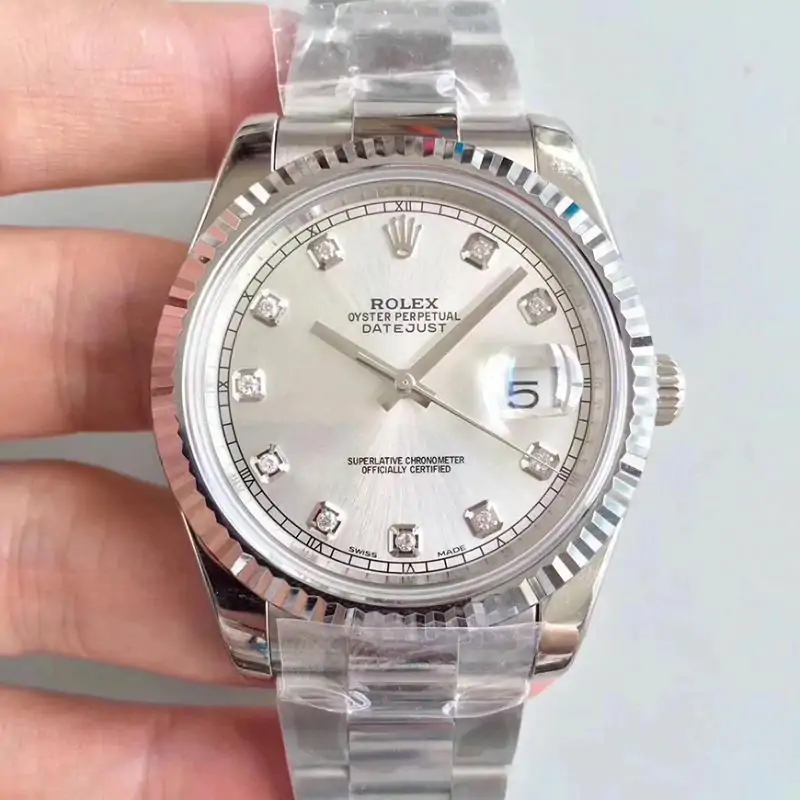
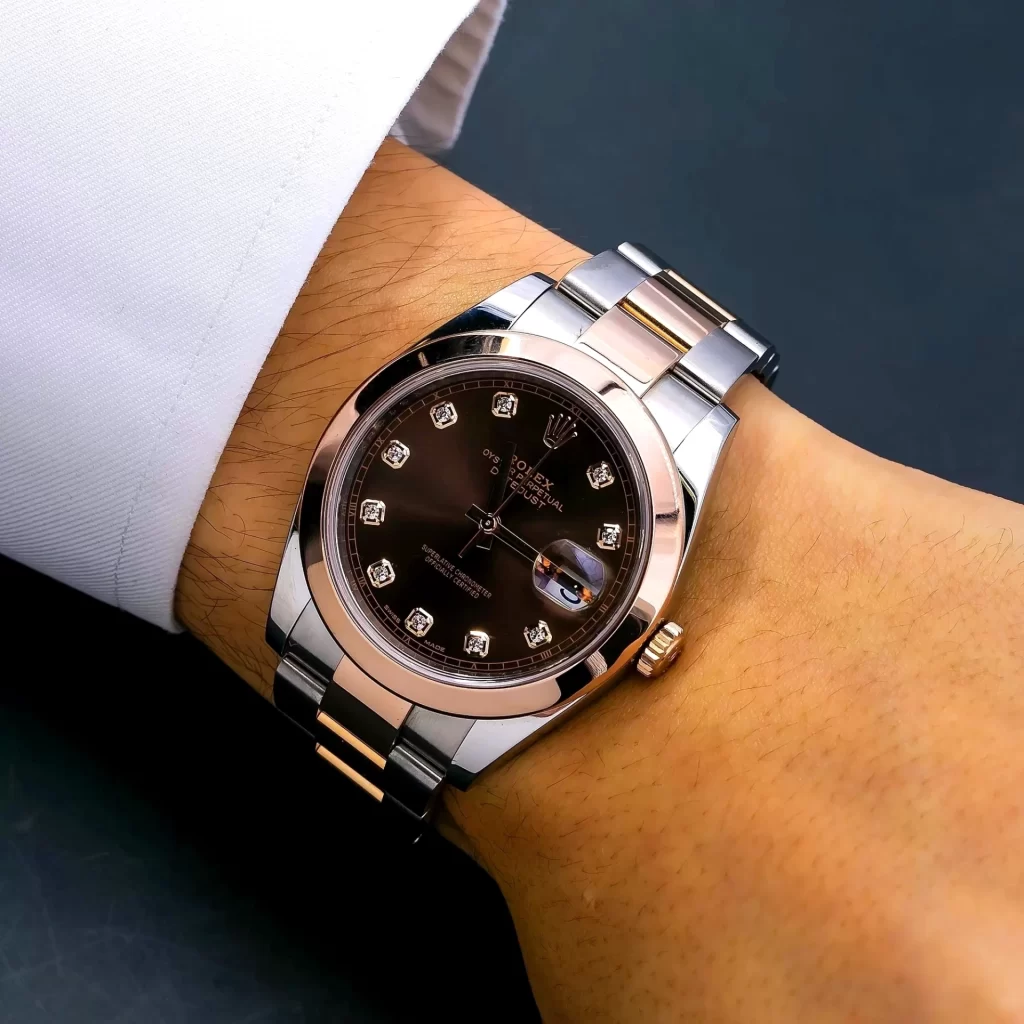
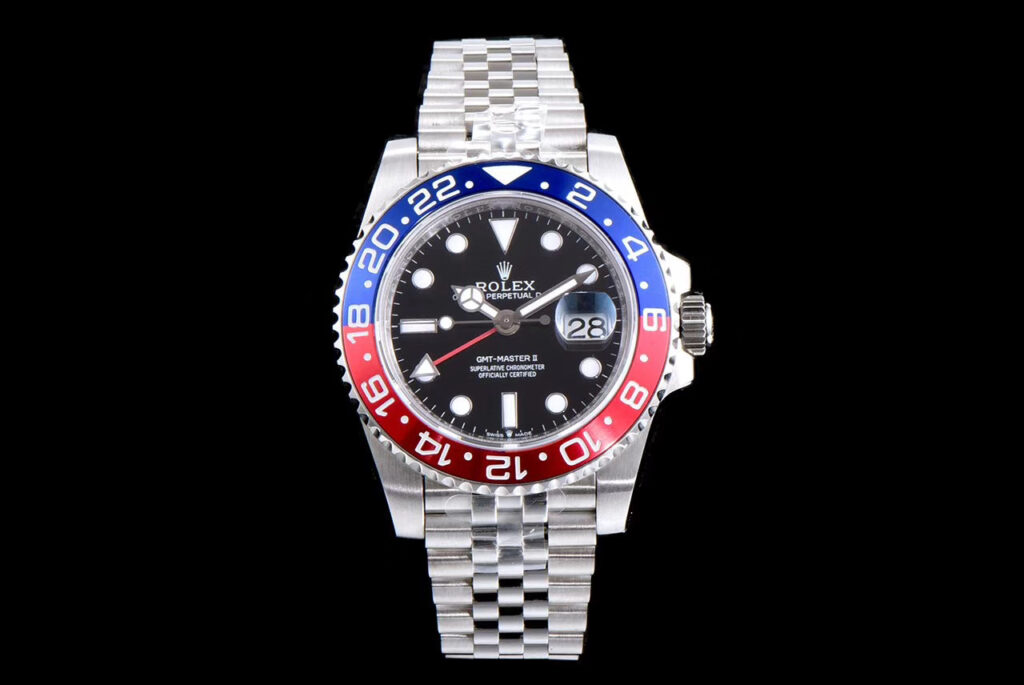
The Destro’s defining feature is its reversed layout: the crown and date magnifier sit defiantly at 9 o’clock instead of the traditional 3 o’clock position. This inversion creates an immediate visual dissonance, as though the replica watch were designed for a parallel universe. Rolex’s signature green-and-black Cerachrom bezel remains a masterpiece of craftsmanship, its ceramic sheen contrasting elegantly against the 904L stainless steel case. Yet the relocated Cyclops lens and crown challenge decades of ingrained expectations. For right-handed wearers, the solution seems simple: switch wrists. But even this pragmatic adjustment cannot fully dispel the uncanny sensation of wearing a mirrored icon.

Engineering Excellence Meets Ergonomic Ambiguity
Available in two configurations – a Jubilee bracelet version (ref. 126720VTNR-0002, €12,000) and an Oyster bracelet variant (ref. 126720VTNR-0001, €11,750) – the Destro retains Rolex’s hallmark precision. The Jubilee model I tested draped elegantly over the wrist, its five-row links blending suppleness with structural integrity. The Oysterlock clasp, a marvel of secure yet intuitive engineering, underscored Rolex’s mastery of functional design. With a 40mm case diameter, 12mm thickness, and 48mm lug-to-lug span, the watch felt balanced and unobtrusive… until I glanced down.

The Struggle of Symmetry
Wearing the Destro on my right wrist restored logical alignment – the crown now faced upward, and the date window sat unobstructed. Yet this practical fix clashed with a lifetime of muscle memory. As a left-handed watch on a right wrist, it forced an awkward recalibration of how I interacted with its controls. Worse, the reversed dial layout created a psychological barrier: the GMT-Master II, a symbol of globetrotting sophistication, suddenly felt alien. Its iconic status, forged by decades of red-and-blue “Pepsi” and black-and-blue “Batman” iterations, clashed with the Destro’s mirrored identity. To invert such a legend, I realized, is to flirt with heresy.
Cult Classic or Curiosity?
Rolex’s left-handed experiment has sparked debate among collectors. On Chrono24, over 650 Destro listings hover around €15,716 – a €2,000-3,000 discount compared to the coveted “Pepsi” model. This price gap suggests lukewarm enthusiasm, yet scarcity and Rolex’s enduring prestige could shift perceptions. Unlike playful novelties such as the fake Rolex Oyster Perpetual‘s Celebration dial or Day-Date’s Emoji Puzzle, the Destro’s rebellion is subtle, its defiance rooted in ergonomics rather than aesthetics. Will it ascend to cult status among left-handed enthusiasts or remain a niche oddity? Time, as ever, will tell.

The Destro’s greatest strength – and weakness – is its refusal to conform. It forces wearers to confront their subconscious biases about what a luxury replica watch should be. While its engineering dazzles, its emotional resonance falters under the weight of tradition. For some, this inversion may symbolize innovation; for others, it’s a step too far from the GMT-Master’s storied legacy. As I returned the Destro to its case, I marveled at Rolex’s audacity – even if I couldn’t fully embrace its mirrored reality. After all, icons are not merely objects; they are stories etched in steel. And sometimes, rewriting a legend is the boldest act of all.