Showing posts with label tariffs. Show all posts

June 16, 2021

Spurn bank regulators' false promises.

Sir, Martin Wolf makes a good case for “We should not throw liberal trade away for the wrong reasons and in the wrong way”, “Spurn the false promise of protectionism” FT June 16.

Yet, when regulators, decades ago, decided to throw liberal access to bank credit, by imposing credit risk weighted bank capital requirements, something which completely distorted the access to bank credit, Wolf and 99.99 percent of those who should have spoken up, kept mum.

Though I’ve no idea whether they read it, in a 2019 letter I wrote to the Executive Directors and Staff of the International Monetary Fund, I argued that these risk weights are to access to credit, precisely what tariffs are to trade, adding “only more pernicious” 

Wolf writes that “the US economy has suffered from high and rising inequality and a poor labour force performance” and includes among other explanations the “rent-extracting behaviour throughout the economy”

But anyone who reads “Keeping at it” 2018 in which Paul Volcker’s 2018 valiantly confessed: “The assets assigned the lowest risk, for which bank capital requirements were therefore low or nonexistent, were those that had the most political support: sovereign credits and home mortgages”, should be able to understand that rent-extraction also occurs by means of cheaper and more abundant access to credit.

And boy did regulators throw away unencumbered access to credit in “the wrong way”

Here follows four examples: 

To establish their risk weights, they used the perceived credit risks, what’s seen “under the street light” while, of course, they should have used the risks for banks conditioned on how credit risks were perceived. 

By allowing banks, when the outlook was rosy, to hold little capital, meaning paying high dividends, lots of share buy backs, and huge bonuses, they placed business cycles on steroids.

Very little of their capital requirements cover misperceived credit risks or unexpected events. Therefore, just as in 2008 with the collapse of AAA rated mortgage back securities, and now with a pandemic, banks were doomed to stand there with their pants down.

With risk weights of 0% the sovereign and 100% the citizens, which de facto imply bureaucrats know better what to do with credit they’re not personally responsible for than e.g., entrepreneurs, they smuggled communism/statism/fascism into our banking system.

“We will make your bank systems safe with our credit risk weighted bank capital requirements” Sir, what amount of wishful thinking must have existed for the world, its Academia included, to so naively have fallen for the hubristic promises of some technocrats.

@PerKurowski


May 22, 2019

Why are tariffs on trade with others, worse than tariffs on access to bank credit for your own?

Sir, I refer to Martin Wolf’s spirited defense of free trade and not less spirited attack on Donald Trump for having turned the US into “a rogue superpower, hostile, among many other things, to the fundamental norms of a trading system based on multilateral agreement and binding rules.” “The US-China clash challenges the world” May 22.

Do I disagree? Not really, except noting that at least Trump follows the instinct to protect his own.

But where was/is Martin Wolf when bank regulators, for instance, with Basel II, require banks to hold 8% in capital when lending to their own unrated entrepreneurs, but allow his banks to lend to any other sovereign AAA to AA rated against no capital at all, or to any other foreign AAA to AA rated entrepreneur against only 1.6% in capital?

Sir, anyone who argues those differences in capital requirements are not de facto tariffs on the access to bank credit, have no idea of what they are talking about.

Truth is that since trade is about today, but credit is about tomorrow, I truly believe the Basel Committee and their affiliate regulators are, with their tariffs on the access to bank credit, doing much more damage than a Donald Trump.

But of course you dare not to favor the opinion of little me over that of your own chief economic commentator.

@PerKurowski

October 23, 2018

Most of those who either preach or negotiate free trade are just like a Peeping Tom in a nudist camp.

Sir, Alan Beattie, referring to the possible escalation of trade wars writes: “At the time the WTO is most needed, its failings become ever more manifest. Without reform, the organization itself will suffer severe, possibly fatal, collateral damage from the US-China struggle” "A global trading system under fire” October 22.

Beattie also quotesPascal Lamy, a former head of the WTO: “Whether we like Trump or not — and I do not like Trump, I think he must be credited with one thing, which is to have put this issue of WTO reform on the table.”

Having been busy denouncing failed and dangerous bank regulations, I have not followed WTO for more than a decade but, back in 2006 and 2007, I remember Grant Aldonas, Fred Bergsten and Martin Wolf already opining strongly on the need for WTO to reform.

The reforms requested were not only about efficiency… they were about the real core of free trade.

For instance Grant Aldonas held that the success of any reforms, depended on “WTO negotiators recognizing where the conventional mercantilist approach has taken them [so as to] turn around, head back up the road and chart a new course to achieve the development goals that were their original destination” “Why trade negotiators need driving lessons” May 3, 2006.

In a letter, I agreed stating “Currently trade negotiations, instead of opening the doors to the greener pastures we all wish for, feels more like someone corralling you in, to brand you.”

Grant Aldonas later also suggested a “plurilateral agreement among all WTO members willing to move directly to free trade on a global basis”, “A fresh free trade agenda for Doha”, July 13, 2007.

Again I agreed: “Just like in a nudist camp, we need to separate the real nudists from the Peeping Toms. Only this would allow us to conform a true and honest free trade core. It is clear that many of those who profess a belief in free trade fake it, since how could you otherwise explain the sort of perverse satisfaction many show from entering into negotiating processes that hinders the free trade from really advancing. The true spirit of free trade does not stand a chance against these saboteurs and who are simply too scared of taking off their protections, but want to enjoy the view anyhow.”

When Martin Wolf in April 2007 opined “If free trade is really as good as we say it is, then why should we negotiate about it”, I responded: “Indeed,you do not go to a nudist camp to play strip-poker!”

Sir, most of those holier than thou free-traders bashing President Donald Trump for imposing restrictions on trade, are just like a Peeping Tom preaching the merits of nudity, for other.

WTO bureaucrats also help make WTO inutile, as a result of many of them being engaged, primarily, in the protection of their own turf.

Protectionism comes in all colors and shapes. Those tariffs and subsidies imbedded in the risk weighted capital requirements for banks, are many times more costly to the world than any trade tariffs Trump can come up with.

PS. I myself must confess that, even though I am in principle all for free trade, I often find myself worrying about that all deficits and surpluses are not made equal, some are better, some are much worse.

@PerKurowski

October 15, 2018

IMF, what are tariffs on billions of trade, when compared to tariffs and subsidies on trillions of bank credit?

Sir, Chris Giles, James Politi and Stefania Palma write about concerns during recent IMF meetings in Bali, “With the world’s two largest economies slapping tariffs on $360bn of goods so far this year, and possibly more to come” “Geopolitical tension casts pall over annual IMF meeting” October 15.

Last year I read somewhere that the just world’s 10 largest banks combined had over $25 trillion in assets. So when I think on how much the allocation of those assets might be dangerously distorted by the risk weighted capital requirements, I find it hard to understand that “the world’s two largest economies slapping tariffs on $360bn of goods so far this year”, was of so much concern during the recent IMF meetings

Sir, get it, the risk weighting of banks’ capital requirements, for bank protection purposes, translates de facto into tariffs and subsidies that will steer the allocation of bank credit.

The damage, by promoting banks way too much to be into banks “safe” AAA rated securities, residential mortgages and loans to sovereigns, while de-incentivizing loans to “risky” entrepreneurs and SMEs, is immensely worse than what the current trade-wars, sort of Lilliputian vs. Blefuscu in comparison, could produce.

Sir, again, for the umpteenth time, what the risk weighted capital requirements for banks guarantee is: 

Especially large exposures to what’s perceived as especially safe, against especially little capital, which dooms or bank system to especially severe crises. 

Especially low exposures to what is perceived as risky, like loans to entrepreneurs and SMEs, which dooms our economies to weakness and to not being able to reach their potential.

@PerKurowski

September 17, 2018

If only a cost benefit analysis had been performed on the risk weighted capital requirements for banks

Tim Harford while reviewing Cass Sunstein’s“The Cost-Benefit Revolution” mentions, “In 1981, Ronald Reagan signed Executive Order 12291, requiring administrative decisions to weigh the costs and benefits of action and maximise net benefits.”, “A valuable study of a quiet victory for technocrats”, September 17.

How sad the risk weighted capital requirements for banks were no subjected to such a cost benefit analysis.

On the cost side, one would have to include the possibility that, since it would impose a tariff, by means of higher capital requirements, on the lending to the risky, and therefore de facto create a subsidy for when lending to the safe, that this could seriously distort the allocation of bank credit to the real economy… financing too much the safer present and too little that indispensable riskier future.

And, when reviewing its supposed benefit, that of making the bank system safer, one would have had to consider the possibility that, since the risky would then have to pay higher relative risk premiums than usual, that this could make them even riskier; plus the possibility that since the safe would get more credit at lower rates, that meant the safe could get too much credit at too low risk adjusted premiums, and banks could build up that type of excessive exposures to the safe that has always been the stuff bank crises are made off.

Adding then to the costs these possible negative benefits would certainly have caused this silly and dangerous regulation to be rejected… and the 2007-08 crisis avoided.

Hartford mentions that “Hayek’s objection to central planning is that it cannot work because the planners will never have enough information” I agree, but I am also sure that central planning often fails, not for lack of information, but simply because of them not understanding they lack information; and all there planning carried out in a group-thinking mutual admiration club.

In the “The forger’s spell”, a book by Edward Dolnick about the falsification of Vermeer paintings, the author makes a reference to having heard Francis Fukuyama in a TV program saying that Daniel Moynihan opined “There are some mistakes it takes a Ph.D. to make”. And Dolnick also refers to George Orwell’s comment, in “Notes on Nationalism”, that “one has to belong to the intelligentsia to believe things like that: no ordinary man could be such a fool.” 

Sir, time and time again I find reasons to be reminded of that book.


@PerKurowski

August 10, 2018

Trade tariffs revenues should at least try to compensate those hurt the most.

Sir, John Authers writes of the facts of life that give “Free trade the strange ability to convince everyone, rich or poor, that they have lost by it”, “Nafta’s losers always drown out its winners” August 10.

Tariffs are used to supplant market decisions. Sometimes it could be good, like for instance when making sure your “Arsenal Of Democracy” is fabricated on homeland, but most often it is bad, only helping to enrich those capitalizing on crony statism.

Whatever, in any case there should be much more transparency on who are then going to decide, instead of the market, on the use of all revenues provided by the tariffs.

I argue this because, if for instance 100% of those tariff revenues went to finance a Universal Basic Income, then at least those most hurt would be partially compensated… and the redistribution profiteers would think less favorably of these tariffs.

@PerKurowski

July 28, 2018

The access to bank credit war might be more dangerous than trade wars, but gets much less attention.

Sir, Cecilia Malmström, the EU’s trade commissioner when discussing the threat of trade wars writes about the need for“developing tools that allow instances of uncompetitive and unfair behaviour to be addressed quickly, whether these are linked to state intervention or to countries acting unilaterally on the international stage. It would also require greater control over subsidies and the operations of state-owned enterprises, for instance.”, “Reform rules-based trade before it is too late” July 27.

Absolutely, but how sad it is that another war waged with tariffs and subsidies, that of the access to bank credit war, does not receive remotely the same attention.

In a letter the Washington Post recently published I argued: 

“The risk-weighted capital requirements for banks also translate de facto into subsidies and tariffs, which have resulted in a too much-ignored allocation of bank credit war. 

One consequence is that those perceived as risky, such as entrepreneurs, have their access to bank credit made more difficult than usual, and our economy suffers. Another is that by promoting excessive exposures to what is especially dangerous, because it is perceived as safe, against especially little capital, guarantees that when a bank crisis results, it will be especially bad. 

In terms of Mark Twain's supposed saying, these regulations have bankers lending out the umbrella faster than usual when the sun shines and wanting it back faster than usual when it looks like it is going to rain.”

That war has among others assigned a risk weight of 0% to sovereigns and one of 100% to citizens, which allow governments to have “uncompetitive and unfair” access to bank credit. It will, as it destroys the markets capacity to signal the rates effectively, cause the over indebtedness of all nations… 0% risk weighted Greece was just a small preview of the tragedies to come

@PerKurowski

July 11, 2018

Martin Wolf, ask the Greeks: Who is more dangerous, Trump with his trade tariffs, or​ ​bank regulators with their risk-weights?

Sir, Martin Wolf lashes out against the President of the United States’ “administration’s trade actions and announced [trade] intentions defining him as an “ignoramus” “Trump creates chaos with a global trade war” July 11.

I just know central bankers and bank regulators should know more about their specialized line of activity, than what a real estate developer should know about trade policy. And so, when it comes down to the title of world-class ignoramus, in my mind that one should clearly go to those who came up with the senseless idea of the risk weighted capital requirements for banks.

Dare to explain to a Greek that European technocrats assigned a 0% risk weight to their government, and that this was what led bankers into lending to it way over its capacity to use the loans. And then ask the Greek who is more dangerous, Donald Trump with his trade war, or bank regulators with their war, with subsidies and tariffs, on the allocation of bank credit?

Yes, Trump poses a threat to significant part of world trade, but the besserwisser in the Basel Committee have dangerously distorted most of the allocation of bank credit in the world.


@PerKurowski

April 27, 2018

What kind of tariffs is protectionist Michel Barnier thinking of imposing on banking and financial services provided by the City of London to Europeans?

Sir, Mehreen Khan’s, Jim Brunsden’s and Sofia George Parker’s write thatin reference to that “the EU would have more to lose from cutting off the City of London than Britain would” Michel Barnier said: “This is not what we hear from market participants, and it is not the analysis that we have made ourselves.”“Barnier dismisses UK hopes of special market access for London after Brexit” April 27.

Sir, I must confess that Michel Barnier does not qualify as my favorite EU Brussels technocrat, but with this he certainly proves himself to be a protectionist, completely in the hands of the European financial intermediaries (the aluminum and steel producers) and with little consideration to all those European consumers of financial services that might prefer using the services and the legal framework provided by the City.

What kind of tariffs is Barnier thinking of imposing on banking and financial services? Has Michel Barnier really been authorized to impose on behalf of all the European Unions his will on all Brexit negotiations?

Sincerely, I do not think Barnier has thought this thru. He might be setting off a real European capital flight to London. 

@PerKurowski

February 17, 2017

If a manufacturing trade deficit leads to deficits of skills, then that can be something truly serious.

Sir, Professor Robert H Wade when commenting on Martin Sandbu’s “Trump’s love of manufacturing is misguided” of February 15 writes: “manufacturing typically has strongly positive “externalities”, especially in innovation, and that the innovation intensity of manufacturing depends on close, physical links between production and innovation (“learning while doing”).” “Manufacturing has positive externalities” February 17.

Indeed, just think of where you, I and we all would have been, if America had not had that manufacturing capabilities and those skills that allowed it to build up what Franklin Roosevelt called “The Arsenal of Democracy”, and which allowed for the defeat of Germany’s impressive war machinery during World-War-II.

And currently, the possibility of some other nation ending up with 1st class robots, and your own with 2nd or even the 3rd class robots should clearly be a source of much concern to everyone.

My current pray is “God save my grandchildren from being surrounded by dumb artificial intelligence and 2nd class robots”. But that said perhaps intelligent artificial intelligence could be worse, since then we humans might turn into having to be its obedient servers. Who really knows?


@PerKurowski

January 13, 2017

Higher import tariffs and minimum wages are superb news… for robot manufacturers

Sir, Richard Waters writes: “Pace of automation will depend on how easily workers are displaced” January 13.

And that partly depends on how much robot, driverless cars and similar automation options, will lobby the governments for higher import tariffs and higher minimum wages.

Or on if we will impose some payroll and minimum wage taxes on these, in order for the humans to compete on a more level playing field.


@PerKurowski

October 08, 2015

Raghuram Rajan, your own bank regulations are more important to mobilize development funds in India than the World Bank.

Sir, I refer to Victor Mallet’s and James Crabtree’s “Rajan issues call for World Bank and IMF reforms” October 8.

It states that Raghuram Rajan, Indian central bank governor and former chief economist of the International Monetary Fund, gave the example of financial regulations with global reach that would typically be discussed among representatives of advanced economies behind closed doors and presented only at a late stage to those of emerging markets. “Eventually what emerges is a compromise among the advanced countries, even though we’ve been at the table when the final vote is there,” Rajan said.

Not so! Technocratic members of a small mutual admiration club might discuss those financial regulations, but there is nothing to stop Raghuram Rajan to question those regulations openly; and there is nothing forcing India to accept those regulations, except of course that of their own local regulators also wanting to be seen as loyal members of such an exclusive and sophisticated club.

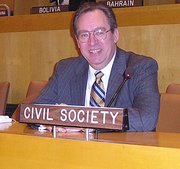
For instance, at the High-level Dialogue on Financing for Developing at the United Nations, New York, October 2007, I questioned bank regulations coming out of Basel, based on the fact that developing countries cannot afford to have regulations that block them from the risk-taking needed in order to develop. And nowhere did I see India or any other developing country lending support to my arguments.

Of course I agree with Rajan supporting the request to increase the capital of the International Bank for Reconstruction and Development, but, for India, and for the financial resources India could mobilize for its development, he has much more important thinks to do.

He could request from the World Bank, as the world’s premier development bank, a clear opinion of how regulatory risk aversion, as currently expressed in risk weighted capital requirements for banks, harmonizes with the needs of developing countries… and even with the needs of developed countries, who also need economies moving forward in order not to stall and fall.

The World Bank has previously expressed some concerns. In its Global Development Finance 2003, in relation to the minimum capital requirements of the Basel II proposals, it stated that these “include the likelihood of increased costs of capital to emerging market economies; and an “unleveling” of the playing fields for domestic banking in favor of international banks active in developing countries”. But why has WB kept silence on it thereafter?

Raghuram Rajan, those risk weighted capital requirements odiously discriminate against the possibilities of “The Risky” to access bank credit in a fair way and, expressed in terms of trade, are just vulgar tariffs distorting the allocation of capital around the world… especially in the emerging and development countries. Do something about that! For a start don’t follow the Basel Committee; it has in fact no idea about what it is doing.

It has deemed the risky SMEs and entrepreneurs, those risky tough ones we must need to get going when the going gets tough, to be the untouchables of the banking sector.

PS. The document I presented at the UN was also published in “The Icfai University Journal of Banking Law” of India in October 2008.

@PerKurowski ©  J

November 19, 2004

Basel is just a mutual admiration club of firefighters seeking to avoid crisis

Published in FT November 18, 2004 The link is gone! You will find the copy below.

Sir, If a citizen from a developed country wishes to obtain finance from his local bank to buy a pricey retirement home in his local overheated market, then Basel poses no problem.

But should he want to buy a much more affordable home in a developing country and have his bank finance him, then Basel slaps such capital reserve requirements on the bank as to make it an impossibly onerous proposition.

This is just one way by which our bank supervisors in Basel are unwittingly controlling the capital flows in the world.

We also wonder in how many Basel propositions it will take before they start realizing the damage they are doing by favoring so much bank lending to the public sector. In some developing countries, access to credit for the private sector is all but gone, and the banks are up to the hilt in public credits.

Please, help us get some diversity of thinking to Basel urgently; at the moment it is just a mutual admiration club of firefighters trying to avoid bank crisis at any cost - even at the cost of growth.

PS. Another letter in FT 2006: “IMF cannot be the independent central bankers’ clubhouse.” 


PS. Just before the fall of the Berlin Wall, statist/socialist/communist regulators, decided banks need to hold zero capital when lending to the governments in their domestic currency but must hold 8% when lending to their unrated citizens.

PS. To top it up: It is what’s perceived as safe which is most dangerous to our bank systems.


PS. Here my 2019 letter to the Financial Stability Board


PS. Here my 2019 letter to IMF: Risk weights are to access to credit what protectionist tariffs are to trade, only more pernicious.


PS. Here is a current summary of why I know the risk weighted capital requirements for banks, is utter and dangerous nonsense.