Reviewed: Liv Avow Advanced SL
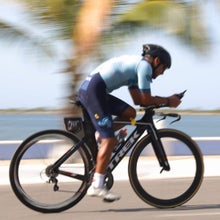
The rest of the industry gave up on women’s tri bikes. Liv didn’t - and the Avow Advanced SL is the proof.
The rest of the industry gave up on women’s tri bikes. Liv didn’t - and the Avow Advanced SL is the proof.
Ranging from $3,500 to $12,000, we hands-on review and rate 10 of the best triathlon bikes from 2022-2025.
From classic bucket-list triathlons to beginner-friendly pool sprints, these popular races are the top swim-bike-run events in all 50 states.
Only four triathletes have ever won the Ironman 70.3 and Kona world championships in the same year. Two of them - Craig Alexander and Leanda Cave - share what it takes to pull it off, plus the 2026 contenders who could do just that.
Pain can come on gradually (as a chronic problem) or suddenly from a forceful movement (as an acute injury).
Race-week swim sets for every triathlon distance.
As triathletes, we often love to crank out bike-to-run workouts but tend to overlook the just-as-important swim-to-bike training.
As a triathlete, multiple factors can put you at risk for both of these injuries.
Increase ankle flexibility for a stronger back half of your stroke.
A stronger core means a stronger swim, bike, and run. Here are the best core exercises for triathletes looking to get fitter and faster.
By embracing disqualifications, race mishaps, and training fails, pro triathlete Malachi Cashmore built a viral social media brand that funds his dream of reaching the top of long-course racing.
Almost every runner has heard it: Running is bad for your knees. But is that true? Dr. Jeffrey Sankoff looks at recent research, plus the magic mileage number to keep your knees healthy.
“Most advice around burnout emphasizes rest and time away from your sport. While mileage may be a contributing factor, burnout isn’t solely about doing too much.”
It’s no secret triathletes love data. But is there such a thing as too much data? We ask coaches Luca Zenti and David Tilbury-Davis.
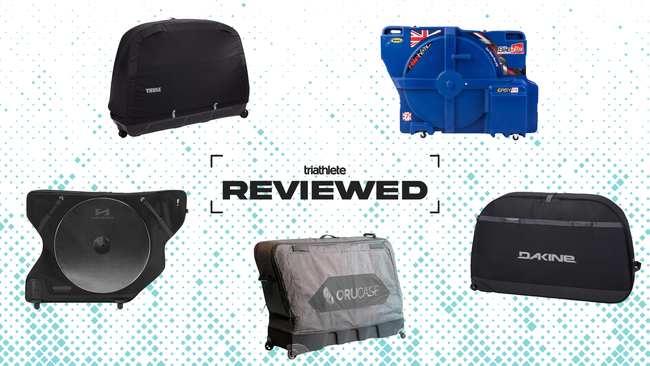
A rugged, easy-to-pack travel case protects your ride – and your peace of mind – when navigating planes, trains, and automobiles. We hand tested five popular models to find the right one for you.
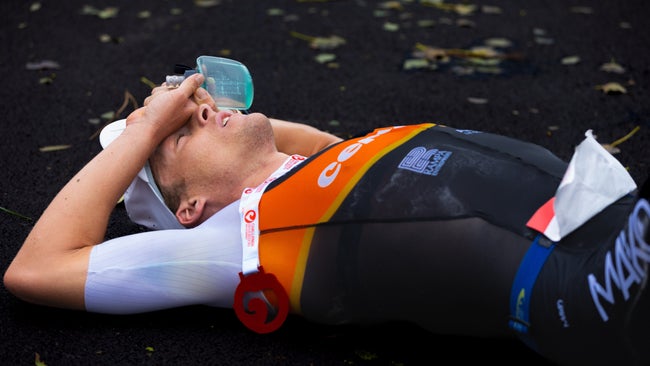
Do certain factors lead to a higher DNF rate at Ironman Races? Data guru Russell Cox analyzes athlete performance over the last 13 years in search of trends.
DNF: three letters nobody wants to see next to their name. It’s an acronym for “did not finish,” and for some athletes who have put in the time and effort to prepare for racing the 140.6 miles of an Ironman triathlon, it can be a real sting to not see the finish line. But as difficult as it might feel, it’s also more common than most assume. On average, 8% of the athletes on the start line at an Ironman will not finish the race.
In this article, we’ll take a look at data from the last 13 years of Ironman racing to find the highest and lowest DNF rates, as well as some of the factors that lead to these extremes. We’ll answer questions like “Who has a higher DNF rate in Ironman racing: men or women?” and “Does previous racing experience matter in making it to the finish line?”