Sponsored
Enjoy fast, free delivery, exclusive deals, and award-winning movies & TV shows.
Buy New
-47% $16.43
FREE delivery Friday, September 25 on orders shipped by Amazon over $35
Ships from: Amazon.com
Sold by: Amazon.com
$16.43 with 47 percent savings
List Price: $30.99
Get Fast, Free Shipping with Amazon Prime
FREE delivery Friday, September 25 on orders shipped by Amazon over $35
Or Prime members get FREE delivery Tuesday, September 22. Order within 10 hrs 9 mins. Join Prime
In Stock
$$16.43 () Includes selected options. Includes initial monthly payment and selected options. Details
Price
Subtotal
$$16.43
Subtotal
Initial payment breakdown
Shipping cost, delivery date, and order total (including tax) shown at checkout.
Shipper / Seller
Amazon.com
Amazon.com
Shipper / Seller
Amazon.com
Returns
FREE 30-day refund/replacement
Quick refund
Usually issued within 24 hours. See exceptions
FREE return
At least one free return option available.
Convenient dropoff
At any of our 50,000 US locations.
See return policy
Gift options
Available at checkout
Available at checkout This item is a gift. Change
At checkout, you can add a custom message, a gift receipt for easy returns and have the item gift-wrapped
Payment
Secure transaction
Your transaction is secure
We work hard to protect your security and privacy. Our payment security system encrypts your information during transmission. We don’t share your credit card details with third-party sellers, and we don’t sell your information to others. Learn more
$7.29
Pages can have notes/highlighting. Spine may show signs of wear. ~ ThriftBooks: Read More, Spend Less Pages can have notes/highlighting. Spine may show signs of wear. ~ ThriftBooks: Read More, Spend Less See less
FREE delivery September 25 - 29. Details
In stock
$$16.43 () Includes selected options. Includes initial monthly payment and selected options. Details
Price
Subtotal
$$16.43
Subtotal
Initial payment breakdown
Shipping cost, delivery date, and order total (including tax) shown at checkout.
Access codes and supplements are not guaranteed with used items.
Ships from and sold by ThriftBooks-Phoenix.
Added to

Sorry, there was a problem.

There was an error retrieving your Wish Lists. Please try again.

Sorry, there was a problem.

List unavailable.
Kindle app logo image

Download the free Kindle app and start reading Kindle books instantly on your smartphone, tablet, or computer - no Kindle device required.

Read instantly on your browser with Kindle for Web.

Using your mobile phone camera - scan the code below and download the Kindle app.

QR code to download the Kindle App

  • The Secret Life of Words: How English Became English

Follow the author

Get new release updates & improved recommendations
Something went wrong. Please try your request again later.

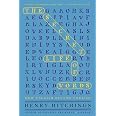
The Secret Life of Words: How English Became English

4.1 out of 5 stars (81)

{"desktop_buybox_group_1":[{"displayPrice":"$16.43","priceAmount":16.43,"currencySymbol":"$","integerValue":"16","decimalSeparator":".","fractionalValue":"43","symbolPosition":"left","hasSpace":false,"showFractionalPartIfEmpty":true,"offerListingId":"QoLuNjG4ytiJR1Vx8dTFD0%2BZQQZdxlSxW0H4mgQUejNiEGEJOeP18tvgniLHK%2FyYiiuhwlzUdjWj3uGQUrvfGW2DZIx4RXVsZzS2YiBKG6DUem9sEFFnXrEORVCqkZuOwmTnRoGAYwo%3D","locale":"en-US","buyingOptionType":"NEW","aapiBuyingOptionIndex":0}, {"displayPrice":"$7.29","priceAmount":7.29,"currencySymbol":"$","integerValue":"7","decimalSeparator":".","fractionalValue":"29","symbolPosition":"left","hasSpace":false,"showFractionalPartIfEmpty":true,"offerListingId":"QoLuNjG4ytiJR1Vx8dTFD0%2BZQQZdxlSx%2B3%2Fk8jVxYNlvEQDFwnouyiXGZCQwHD3BDhWwpFAt%2BvAlN2UVieLTsOoxSx4JbSja4j%2B7HibPHOVY2MKsy6%2BrE8GyzEQDSo3A1wGgSueYkcAO2VOrjzaQPuyE6rZyjgyRwAX%2FVxsDOVsS%2Bb4y1Eqc3W2i%2FTSDIe%2B5","locale":"en-US","buyingOptionType":"USED","aapiBuyingOptionIndex":1}]}

Purchase options and add-ons

AN ECONOMIST BOOK OF THE YEAR

The Secret Life of Words is a wide-ranging account of the transplanted, stolen, bastardized words we've come to know as the English languag. It's a history of English as a whole, and of the thousands of individual words, from more than 350 foreign tongues, that trickled in gradually over hundreds of years of trade, colonization, and diplomacy. Henry Hitchings narrates the story from the Norman Conquest to the present day, chronicling the English language as a living archive of human experience.

A SAMPLE OF THE THOUSANDS OF STORIES BEHIND THE WORDS:
• Alcatraz Island was named by a Spanish explorer who arrived in 1775 to find the island covered with pelicans, or
alcatraces. And "alcatraces"? The word goes back to the Arabic al-qadus, which was a bucket used in irrigation that resembled the bucket beaks of pelicans.

• What does a walnut have to do with walls? The word comes from the Old English walhnutu, meaning foreign nut. They were originally grown in Italy and imported, and the northern Europeans named them to distinguish them from the native hazelnut.

• A crayfish is not a fish. The name comes from the old French word
crevice, through the Old German crebiz and the modern French ecrevisse. The "fish" part is just the result of a mishearing."

The Secret Life of Words is a wide-ranging chronicle of how words witness history, reflect social change, and remind us of our past.

Sponsored

Frequently bought together

This item: The Secret Life of Words: How English Became English
$16.43
Get it as soon as Friday, Sep 25
In Stock
Ships from and sold by Amazon.com.
+
$16.00
Get it as soon as Friday, Sep 25
In Stock
Ships from and sold by Amazon.com.
Total price: $00
To see our price, add these items to your cart.
Details
Added to Cart
Choose items to buy together.

Customers also bought or read

Loading...

Editorial Reviews

Review

“Hitchings here provides a colorful, thematic history of the English language . . . Hitchings is a fine writer with an eye for the illustrative detail . . . With ninety-plus pages of notes, sources, and useful indexes, this is fine choice for libraries and a ‘smorgasbord' for language aficionados. Highly recommended.” ―E. L. Battistella, Choice

“A rich and readable history.” ―
The Boston Globe

“Astonishing . . . Every page of
The Secret Life of Words is stuffed with rewards. . .Painstakingly detailed, closely argued and suffused with a contagious enthusiasm.” ―Daily Telegraph (UK)

“A galloping history of English-speaking people and lists of words they have borrowed or invented.” ―
The New York Sun

“Filled with fascinating nuggets.” ―
The Independent (UK)

“A delightful book.” ―
The Roanoke Times

About the Author

Henry Hitchings was born in 1974. He is the author of The Secret Life of Words, Who's Afraid of Jane Austen?, and Defining the World. He has contributed to many newspapers and magazines and is the theater critic for the London Evening Standard.

Product details

  • ASIN ‏ : ‎ 0312428561
  • Publisher ‏ : ‎ Picador
  • Publication date ‏ : ‎ September 29, 2009
  • Edition ‏ : ‎ First Edition
  • Language ‏ : ‎ English
  • Print length ‏ : ‎ 448 pages
  • ISBN-10 ‏ : ‎ 0274886030
  • ISBN-13 ‏ : ‎ 978-0312428563
  • Item Weight ‏ : ‎ 12 ounces
  • Dimensions ‏ : ‎ 5.5 x 1.13 x 8.5 inches
  • Best Sellers Rank: #593,714 in Books (See Top 100 in Books)
  • Customer Reviews:
    4.1 out of 5 stars (81)

About the author

Follow authors to get new release updates, plus improved recommendations.
Henry Hitchings
Brief content visible, double tap to read full content.
Full content visible, double tap to read brief content.

Discover more of the author’s books, see similar authors, read book recommendations and more.

Sponsored

Customer reviews

4.1 out of 5 stars
81 global ratings
Sponsored

Customers say

Customers find the book informative and appreciate its comprehensive history of the English language. However, the content receives mixed reactions, with some finding it great while others say it's worse than college textbooks. Moreover, customers disagree on the narrative structure, with several noting a lack of compelling storytelling.
AI Generated from the text of customer reviews

Select to learn more

9 customers mention informative, 7 positive, 2 negative
Customers find the book informative, with one customer noting the breadth of the author's learning and another highlighting its serious scholarship.
...The book is extremely informative and the author is great.Read more
...So many questions answered, such knowledge in the writer, I cannot applaud too loud. Thank you, Henry Hitchings !Read more
Hitchings has written a solid, scholarly book. It's very informative, but not a light, casual read. A good source of authoritative information.Read more
...It is so packed with information. I thought it would be more interesting.Read more
9 customers mention language content, 9 positive, 0 negative
Customers appreciate the book's language content, describing it as a comprehensive history of the English language and a scholarly read. One customer notes that it offers competing theories of word etymology.
Hitchings has written a solid, scholarly book. It's very informative, but not a light, casual read. A good source of authoritative information.Read more
...The write opens your eyes to how the English language came about and by doing so reveals how all languages came to be. A good read for the curious.Read more
...In it he explores the history of the English language and shows clearly how it evolved from the Indo-European language group and kept being re-...Read more
With some digressions, the entire history of English to the early twenty-first century is given. I admit, I'm an information sponge!...Read more
16 customers mention content, 11 positive, 5 negative
Customers have mixed opinions about the book's content, with some finding it great and appreciating how it explores word origins, while others express disappointment, with one customer comparing it unfavorably to college textbooks.
Great bookRead more
I love this book so much that I decided to buy it after reading a copy from the library....Read more
DISAPPOINTED.PAGES VERY YELLOWED MADE IT A CHORE TOREAD.Read more
...language, as well as with the history of the world, this is the perfect book....Read more
15 customers mention interestingness, 10 positive, 5 negative
Customers have mixed reactions to the book's content, with some finding it interesting and enjoyable, while others find it boring.
...A good read for the curious.Read more
...take a book about the history of the English language and make it as boring as this is beyond me....Read more
...The book is interesting, but it is not very satisfying.Read more
Well liked by the teacher crowd. Very interesting for an english teacher friend of mine. A great gift. Good value.Read more
5 customers mention narrative, 2 positive, 3 negative
Customers have mixed opinions about the narrative of the book, with several noting a lack of compelling storytelling, while one customer finds it detailed and another finds the language paths fascinating.
...There is, in short, a lack of compelling narrative in The Secret Life of Words and too much reliance on overwhelming quantities of examples....Read more
...The paths that they followed are fascinating, and the stories behind them are the stories of Western culture and civilization....Read more
...more as a story about the English language, but one that is not very compellingly told. The book is interesting, but it is not very satisfying.Read more
...His narratives are detailed and well-documented....Read more

Top reviews from the United States

  • 5 out of 5 stars
    A Seafaring Adventure into the History of the English Language
    Reviewed in the United States on January 8, 2012
    Brief content visible, double tap to read full content.
    Full content visible, double tap to read brief content.

    This text is a thorough and comprehensive history of the English language. Comprised of sixteen chapters, Hitchings compartmentalizes the development of the English language in important historical periods of England (and later the U.S.), and in languages that have made important contributions to English. Each chapter is also headed by an English word with its etymology. The first chapter is an introduction, explaining that this is essentially a book about the way in which English has borrowed vocabulary throughout its history; its external influences; and important people who have played a part in creating or improving English. The last chapter reflects upon the present status of English worldwide and its future prospects. The chapters are also structured to show readers how English was shaped by external factors and how English became a global process.

    Chapters 2, 4, 6, 9, 10, and 13 covers the internal processes of language development. Beginning with Celts, the Romans, the Germanic tribes (Angles, Jutes, Frisians, and Saxons), the Vikings, and finally, the Normans, Hitchings begins a detailed account of the origins of the English language. The fourth chapter shows how English becomes moder: it gains preeminence among intellectuals; Chaucer aids it by using it in his famous Canterbury Tales; and then, the printing press comes along, helping to standardize English for the first time and spread literacy among the English. In chapter 6, readers witness the rise of English as part of England's national consciousness. As Hitchings covers the 16th and early 17th century, English and literacy go hand in hand. A habit of borrowing, largely from Latin, is seen as healthy, while some purists denounce it in what is historically called the "Inkhorn Controversy," an ongoing debate between purists and language innovators. Readers get to see further expansions in the English vocabulary during the 17th century, contributed by philosophy, religious conflicts, scientific innovations, the development of universities, and political turmoil. Chapter 10 covers the 18th century, the stability of the English or British empire; the first attempts to standardize the language through grammar books; and written language completely replaces the oral language. Chapter 13 covers the tumultuous 19th century: the influences of the French Revolution, the Industrial Revolution, the Romantic and the Victorian age, the Decadent period in the arts, and the population shift from rural/agrarianism to urban/industrialization. In chapter 15, the influences of modern technology and world wars have the greatest impact on the English language.

    The other chapters focus on the expansion of English abroad or from abroad: the great influences of Arabic through English trade with European and Asian countries (chapter 3), the beginnings of the English empire in America (chapter 5), colonization of the New World between the 1580s to the 1640s (chapter 7), close encounters with Japan (chapter 8), the expansion of the British empire in India and China (chapter 11), the birth of American English (chapter 12), and the influences from Africa (chapter 14).

    Inevitably, Hitchings shares his own reflections about English and its future. He states that contrary to other languages, English is no longer a language of a particular nationality or country, but it is global. He predicts that its destiny lies in countries such as China and India, not in England or the U.S. Furthermore, he predicts conflicts between different types of English.

    His narratives are detailed and well-documented. Although a young scholar, he demonstrates his expertise in language that goes beyond telling funny anecdotes about language. His work is serious scholarship, constantly citing the OED (the Oxford English Dictionary), documenting the first appearance of borrowed words, and offering competing theories of a word's etymology when necessary. I have seen for the first time in this text words such as the verb Englishing (p. 93), the adverb jazzily (p. 166), and logorrheic (p. 185). I understood be Englishing (which Hitchings capitalize) the act of translating from Latin to English or making Latin words as part of English. For the aforementioned reasons, I highly recommend this text to anyone interested in the history of the English language.

    9 people found this helpful
    Sending feedback...
    Thank you for your feedback.
    Sending feedback...
    Thanks, we'll investigate in the next few days.

    We'll check if this review meets our community guidelinesOpens in a new tab. If it doesn't, we'll remove it.

  • 4 out of 5 stars
    The Gateway to Thought
    Reviewed in the United States on October 2, 2008
    Brief content visible, double tap to read full content.
    Full content visible, double tap to read brief content.

    Although it is fairly obvious that the "strong language" position that states we can only think because we have grammer and vocabulary is wrong, it is however true that the grammar and vocabulary of our native language does influence the way in which we think. And this simple fact means that the way in which our language works is not only interesting of itself but also revealing of our unregarded cultural psychology.

    Some quick facts: the average Briton, German, or Norwegian uses about 3,700 words daily. The average American uses about 500 words. Yet Americans are no less intelligent or capable than their European counterparts, so what is going on? The answer lies in the history of British English versus American English. The former has evolved over 1,500 years and has enjoyed a relatively stable population in which each speaker comes from approximately the same linguistic background. The former, on the other hand, has evolved largely over the last 200 years and has never enjoyed a linguistically stable population. To borrow a simile from the world of computing, American English is the RISC version of the language: a Reduced Instruction Set Chip that allows for very rapid assimilation and communication - perfect for a nation that is perpetually being renewed by waves of immigration from all across the globe. In a country where someone from Ukraine needs to communicate with a native of Chile and a refugee from Darfur must talk with a shopkeeper born in Canton, a standard lexicon of 500 words and a much-simplified grammar (no adverbs, no perfect tenses, no subjunctives) is just what is required. The cost, however, is a lack of expressive range in American English which results in the speakers sounding simplistic and cliched. But once the population settles down, American English will begin to add unique richnesses of its own, most probably heavily influenced by the Hispanic dialect of Spanish that is common to much of the USA.

    What has all this to do with The Secret Life of Words? Simply that Hitchings sets off on a voyage of exploration, and his terra incognita is the English Language. We think we know it, but how many of us are really aware of the meaning of the words we use? Words, when you really know them, are like fish: alive in the mouth, wriggling, subtly shifting shape while remaining essentially whole, but often ready to slip away if left unguarded.

    Back in 1954 J. A Sheard published through Andre Deutsch a marvellous little book entitled "The Words We Use." In it he explores the history of the English language and shows clearly how it evolved from the Indo-European language group and kept being re-fertilized by branches of that same family over a 3,000 year period. He was also alive to the effects of trade and conquest, showing how English has picked up words as diverse as amok (Malay) and pyjama (Hindi) from around the globe - a result of British ships plying the trade routes for over 400 years.

    Hitchings takes the same basic theme - a history of the English language, centering on vocabulary - and like Sheard explores where words came from and what they reveal about our language and culture. He is not as strong as Sheard on formal analysis (for example, he doesn't really demonstrate how Old English, as a result of the Norse invasions and settlements around the north-east of England led to the shift from English being a largely synthetic language to becoming a largely analytic language (e.g. one in which meaning is determined by word order rather than by suffixes as is the case with Russian, Latin, Greek, etc.). Nor does he really bring alive the great movement of tribes that spread out from the Kafkas, some going west to become the descendants of today's Slavs, Scandinavians, and Latins, while others went east to give rise to today's speakers of Hindi. A few judicious diagrams would really help bring the text alive, but sadly Hitchings doesn't provide them.

    Likewise, whereas Sheard enables us to see how language works to reinforce social circumstances (for example, after the Norman invasion of England in 1066, the Anglo-Saxon peasants sat on Old English stools while the Norman aristocracy reclined on chairs, and the peasants tended the cows while their masters ate the beef) Hitchings just presents lists of new words. Likewise, whereas Sheard shows how some words re-enter the language multiple times throughout history (by example, the Latin word "capital" yields in English not only capital but also chattel and cattle), Hitchings seldom illustrates the odd yet revealing quirks of language in this way. There is, in short, a lack of compelling narrative in The Secret Life of Words and too much reliance on overwhelming quantities of examples.

    Yet despite the shortcomings the theme is sufficient to entice anyone who possesses some curiosity about the wonderfully rich and perverse English language. As he gets into his stride, Hitchings takes us across centuries of experience, showing how the movement of people results in the alteration of language. The chapter titles, which are basically surrogates for organizational sub-themes, may strike some as contrived or even rather shaky ground upon which to build, but by and large the excursions work well enough to carry us along. There's just enough novelty of example to keep the general reader satisfied (after all, who can resist poaching a few fruity examples to use at dinner parties?) and lend us the sense that we are learning as we go. Many of the speculations in his later chapters seem somewhat unconvincing, and he completely fails to analyze the structural issues arising from the diversity of English speakers. He comments that more people speak English now as a second language than speak it as their primary tongue, and he also notes that India has more English speakers than the USA and the UK combined. But he notes only the loan-words and dialect; he doesn't dig deeper to the fundamental structural changes that are turning British English into a minority dialect. The breadth of his learning is everywhere apparent and it is always nice to benefit from someone else's diligent research. Additionally Hitchings' style is light and lucid, never convoluted or overly-formal. But in the end I found myself craving more substance and less surface sheen.

    In short, this is a well-informed book that will certainly add greatly to almost everyone's comprehension of the English language and hopefully stimulate greater appreciation of its quirky charms. Yet in the end I will return to Sheard, despite his greater formality of language and more limited scope, because somehow Sheard brings English alive in a way that Hitchings doesn't quite manage. Sheard is more demanding yet in the end far more satisfying, perhaps not least because he ignores his own proclaimed limit (in the Introduction he claims he will focus only on vocabulary) and in fact pushes on into the evolving structure of the language whenever necessary.

    Sadly Sheard has been out of print for over forty years and his book is available only through the agency of a well-connected antiquarian book seller, whereas Hitchings is available now. And that alone is enough to recommend his book to everyone who would like to understand why English is what it is, and how it informs the way we think and communicate in this world.

    84 people found this helpful
    Sending feedback...
    Thank you for your feedback.
    Sending feedback...
    Thanks, we'll investigate in the next few days.

    We'll check if this review meets our community guidelinesOpens in a new tab. If it doesn't, we'll remove it.

  • 5 out of 5 stars
    Fantastic read !
    Reviewed in the United States on August 23, 2012
    Brief content visible, double tap to read full content.
    Full content visible, double tap to read brief content.

    For someone like me, who loves to read, both in English and in French, a French bilingual English teacher in love with the English language, as well as with the history of the world, this is the perfect book. So many questions answered, such knowledge in the writer, I cannot applaud too loud. Thank you, Henry Hitchings !

    2 people found this helpful
    Sending feedback...
    Thank you for your feedback.
    Sending feedback...
    Thanks, we'll investigate in the next few days.

    We'll check if this review meets our community guidelinesOpens in a new tab. If it doesn't, we'll remove it.

  • 3 out of 5 stars
    Not quite the book I thought it would be.
    Reviewed in the United States on January 1, 2011
    Brief content visible, double tap to read full content.
    Full content visible, double tap to read brief content.

    There are many ways to write human history. Most writers of history books tend to go the traditional way - following kings and queens, wars, revolutions and invasions. The history of the world is almost always written in military or political terms, and while that's certainly a valid way to do it, it's a little overdone. A truly creative historian might try to look at the progress of humankind through a different lens - the history of art, perhaps, or literature or science.

    Hitchings has decided to look at history through the rise and spread of the English language - once an agglomeration of angry noises from a few small tribes in what would eventually become Europe, now a tongue that dominates the world. The English language is used by billions, studied by millions more. It's the language of business, commerce, politics, law, entertainment and news, and has spread like no other language before it.

    The big question then becomes, How did this happen? How did English become what it has become? What is the history that led it to span the globe, and what qualities does it have that other languages don't? In this book, Hitchings looks at the history of English - and by extension the Western world - through the growth of its vocabulary. Where did our words come from, and what does their journey into English tell us about our own history?

    A modern English speaker, equipped with a time machine, could probably go back about four or five hundred years and still be confident that she would be able to converse with people. Maybe not with perfect clarity, and it would be an entertaining thing to watch, but it would certainly be possible. Before that, the conventions and lexis that we are all so familiar with will start to be more and more scarce, and by the time of Chaucer, our time traveler would have a hard time indeed. So, as far as languages go, modern English is a fairly young tongue. Over the last half-millennium or so, the sheer number of words available to English speakers has exploded, mainly due to what some would call the language's "whorish" qualities - English will take up with any other language that comes along, accepting its words and making them its own. By following the spread of English, and the changes that it has made, we can see how people and cultures intermingled in the last thousand years or so.

    Hitchings begins at, more or less, the beginning, with the Anglo-Saxon roots of English and its almost immediate conflicts with Norman French and the languages of the invading and pillaging Norsemen. He follows the political swings of English, as the rulers of the British Isles alternatingly embrace and shun the language, until it finally becomes the tongue that defines that tiny island on the edge of the North Atlantic. He looks into Arabic and Latin, Japanese and the languages of the Native Americans. We see the wellsprings of the language of food and music, science, military and law. He introduces us to words that came into English through long and winding roads (one of my favorites is Alcatraz - from the Spanish word for "pelican," which in turn comes from Arabic's al-qadus for "machine for drawing water," which is turn comes from Greek's kados, meaning "jar" - quite a journey for such a miserable place.) The history of the English language is a fractal history, meaning that in order to understand it you also have to understand the histories of a dozen other languages and then the languages that came before them. To try and put it all down on paper is a monumental task indeed.

    The study of English words is fascinating, though. I have recently become enamored of the "Way With Words" podcast, which dedicates itself to unraveling questions about English usage. The hosts are funny and engaging, and manage to give a brief history of words and phrases and all the little tics of English that make you annoyed enough to have to call a radio show about it. It's a pleasure to listen to, which is probably why I listened to that show a whole lot more than I read this book.

    Mr. Hitchings has done an admirable job with this book, trying to cover all the different avenues by which words came into English. The paths that they followed are fascinating, and the stories behind them are the stories of Western culture and civilization. The trouble is that Hitchings doesn't do all that good a job in making it interesting to the lay reader, i.e. me.

    By and large, each chapter deals with a different source of vocabulary or a different time in history, but the narrative that he sets up tends to... wander about. There's no real narrative to focus on, and while I know this isn't supposed to be one, Hitchings is trying to tell us a story. It's a long and complicated one, but it's still a story, and as such needs to flow in order to keep the reader's attention.

    I can't fault him for his research or his dedication, but I think he could have given more thought to the organization of the book. Instead of trying to cover as many sources as possible, perhaps he could have narrowed his focus. Instead of throwing out a dozen or so words at a time, he could have given us an in-depth narrative on just a few. Each chapter could probably have been expanded into its own book on the Arabic/Spanish/Latin/German/Greek/African origins of words, and so in reading it you get the feeling that there's so much more that he's glossing over. By trying to follow all the twisted paths of the history of English, it's very easy for the reader to get lost.

    All I kept thinking as I read this was that I had much more fun reading Bill Bryson's book, Mother Tongue, which covers the same topic but is much more enjoyable to read, and perhaps that was my mistake. By the time I got to the end, and was more or less just scanning pages so that I could legitimately say I'd finished it, I realized that this is not the kind of book that you settle down with and read all the way through. It's a piecemeal book - pick it up, read a chapter, put it down and leave it alone for a while. When you're in the mood for more language history, pick it up again and read another chapter. Give yourself time to mull it over and digest, and finish it when you finish it.

    However you decide to get through it, you will certainly have a greater appreciation for the richness and diversity of the English language, so regardless of how interesting it was narrative-wise, Hitchings has achieved his goal. English is an amazing language, and it behooves all its speakers to learn a little bit more about the amazing confluence of cultures that produced the sounds that you speak every day.

    -----------------------------------------------------

    "A new word is a solution to a problem. It answers a need - intellectual, experiential. Often the need is obvious, but sometimes it is unseen or barely felt, and then it is only in finding something to plug the gap that we actually realize the gap was there in the first place."

    - Henry Hitchings, The Secret Life of Words

    -----------------------------------------------------

    17 people found this helpful
    Sending feedback...
    Thank you for your feedback.
    Sending feedback...
    Thanks, we'll investigate in the next few days.

    We'll check if this review meets our community guidelinesOpens in a new tab. If it doesn't, we'll remove it.

  • 2 out of 5 stars
    Wanted to like this book, but....
    Reviewed in the United States on June 8, 2013
    Brief content visible, double tap to read full content.
    Full content visible, double tap to read brief content.

    How anyone could take a book about the history of the English language and make it as boring as this is beyond me. This is worse than any textbook I ever read in college. So many wonderful stories to be told about the language and this guy just makes it a real sleep inducer.

    3 people found this helpful
    Sending feedback...
    Thank you for your feedback.
    Sending feedback...
    Thanks, we'll investigate in the next few days.

    We'll check if this review meets our community guidelinesOpens in a new tab. If it doesn't, we'll remove it.

  • 5 out of 5 stars
    A great buy!
    Reviewed in the United States on June 20, 2013
    Brief content visible, double tap to read full content.
    Full content visible, double tap to read brief content.

    This book is fantastic. Whenever people would see me reading it they would say things like, "Oh, you must be very smart" or "My the book you're reading looks interesting". I only made it through the first ten pages, but the public reaction to me reading this book has been very satisfactory. I will carry this book into many a Starbucks and make sure people see me reading it.

    One person found this helpful
    Sending feedback...
    Thank you for your feedback.
    Sending feedback...
    Thanks, we'll investigate in the next few days.

    We'll check if this review meets our community guidelinesOpens in a new tab. If it doesn't, we'll remove it.

  • 4 out of 5 stars
    An interesting account of English
    Reviewed in the United States on January 23, 2012
    Brief content visible, double tap to read full content.
    Full content visible, double tap to read brief content.

    This is a fascinating description of the evolution of English as a language. It is tied to the events, conquests, migrations, trading and other significant historical influences in a very interesting account of English as it is spoken today. Greatly enjoyed.

    2 people found this helpful
    Sending feedback...
    Thank you for your feedback.
    Sending feedback...
    Thanks, we'll investigate in the next few days.

    We'll check if this review meets our community guidelinesOpens in a new tab. If it doesn't, we'll remove it.

  • 5 out of 5 stars
    Book
    Reviewed in the United States on May 22, 2024
    Brief content visible, double tap to read full content.
    Full content visible, double tap to read brief content.
    Sending feedback...
    Thank you for your feedback.
    Sending feedback...
    Thanks, we'll investigate in the next few days.

    We'll check if this review meets our community guidelinesOpens in a new tab. If it doesn't, we'll remove it.

Top reviews from other countries

    Translated by Amazon
    See original
  • 5 out of 5 stars
    英語になった外来語のエッセイ
    Reviewed in Japan on December 23, 2017
    Brief content visible, double tap to read full content.
    Full content visible, double tap to read brief content.

    英語はおよそ350もの国から借用語を取り入れているという。 本書は英語の借用語16を取り上げ、その語のみならずその国の文化を紹介している。日本からの借用語としてbonsai(盆栽)がとりあげられている。日本文化の紹介では, Marco Polo, the Japanese-Portuguese Dictionary(『日葡辞典』), William Adams, Richard Cocks, Engelbert Kaempfer (ケンペル)『日本誌』(History of Japan)の著者)などが紹介される。さながら日本英学小史である。

    このbonsaiの項では、(ポルトガルなどを経由して)英語に入った日本語が多数紹介される(たとえば、bonze, Mikado, soy など)。借入翻訳(calque)の例も紹介されている。 たとえば、pillow book(←pillow(枕の)草子(book)。

    (calque は『ランダムハウス英和大辞典』によると「原語句の統語構造を維持しながら、それを構成する形態素をすでに自国語に存在する形態素を利用して翻訳すること」)。

    著者のHitchings は博覧強記である。どの頁を見ても有益な情報が詰まっている。一読をお薦めする

    Sending feedback...
    Thanks, we'll investigate in the next few days.

    We'll check if this review meets our community guidelinesOpens in a new tab. If it doesn't, we'll remove it.

    Translated from Japanese by Amazon
    See original
  • 5 out of 5 stars
    Exceptional as usual from Hitchings
    Reviewed in Canada on December 16, 2017
    Brief content visible, double tap to read full content.
    Full content visible, double tap to read brief content.

    Everything Hitchings writes about is worth reading. This is no exception. A very enjoyable read.

    Sending feedback...
    Thanks, we'll investigate in the next few days.

    We'll check if this review meets our community guidelinesOpens in a new tab. If it doesn't, we'll remove it.

  • 5 out of 5 stars
    Bien
    Reviewed in Spain on November 11, 2015
    Brief content visible, double tap to read full content.
    Full content visible, double tap to read brief content.

    El libro está en muy buen estado, parece prácticamente nuevo. El contenido es muy ameno e infinitamente interesante. Se presenta a modo de narración, no es un diccionario etimológico.

    Sending feedback...
    Thanks, we'll investigate in the next few days.

    We'll check if this review meets our community guidelinesOpens in a new tab. If it doesn't, we'll remove it.

    Translated from Spanish by Amazon
    See original
  • 5 out of 5 stars
    Very Interesting (and not stupid)
    Reviewed in the United Kingdom on August 19, 2008
    Brief content visible, double tap to read full content.
    Full content visible, double tap to read brief content.

    Has a comprehensive bibliography for future research, and two sets of indicies so can be used as a text book. However you can also read it as a story book. I was surprised just how fascinating the history and development of the concepts behind each of the words described turned out to be.

    Sending feedback...
    Thanks, we'll investigate in the next few days.

    We'll check if this review meets our community guidelinesOpens in a new tab. If it doesn't, we'll remove it.

  • 4 out of 5 stars
    Secret Life of Words
    Reviewed in the United Kingdom on January 15, 2011
    Brief content visible, double tap to read full content.
    Full content visible, double tap to read brief content.

    Nice tome for those interested in English Philology. Delivery was protracted due to Xmas rush and weather, but got to me before Christmas.

    Sending feedback...
    Thanks, we'll investigate in the next few days.

    We'll check if this review meets our community guidelinesOpens in a new tab. If it doesn't, we'll remove it.