Exploring Illegal Drugs in Singapore - A Data Perspective
The good, the bad, and the ugly of health products discovered through exploratory data analysis in Python
Data for Change
Exploring Illegal Drugs in Singapore - A Data Perspective
The good, the bad, and the ugly of health products discovered through exploratory data analysis in Python
All things are poisons, for there is nothing without poisonous qualities. It is only the dose which makes a thing poison." ― Paracelsus
Executive Summary (aka TL;DR)
Most of the illegal health products reported in Singapore are marketed for sexual enhancement and weight loss.
Majority of the illegal drugs are labelled in Chinese
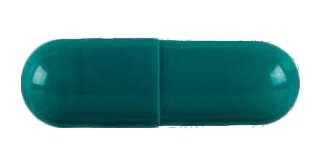
The most common dosage form design is that of a green oblong capsule
The top 5 most common adulterants are Sildenafil, Sibutramine, Tadalafil, Phenolphthalein, and Lignocaine
Background and Motivation
The lucrative nature of peddling counterfeit and adulterated drugs has led to the proliferation of the global trade of illegal health products. This is also driven by an increase in consumer demand for these products, and the low cost in purchasing them. The obvious downside is that the consumption of these health products purchased from dubious sources run the risk of causing serious health problems to the consumers.
These products often contain undeclared ingredients to enhance the effects to entice consumers to take them. These ingredients may be hazardous (especially if taken without medical supervision), over- or under- dosed, banned or have not been assessed for safe use in humans.
In a bid to better understand the illegal health product trade in Singapore, I decided to conduct an analysis of the publicly released list of detected and tested illegal health products reported by the Health Sciences Authority (HSA).
This analysis was sparked by a conversation I had with a fellow Entrepreneur First cohort member (Shrey Chaturvedi), when we were discussing about potential problems to tackle in the Southeast Asia counterfeit drug market. I decided it was a good opportunity to work on this mini-project related to what I enjoy - the intersection of drugs and data.
Part I - Sourcing for Data
The database for illegal health products reported by the HSA is available for public viewing on this page. Although this list is not exhaustive, it still serves as a reasonable sample of all the illegal health products being traded in Singapore.
This dataset is presented as a data table on the site, and was accessed and retrieved on 15th August 2020.
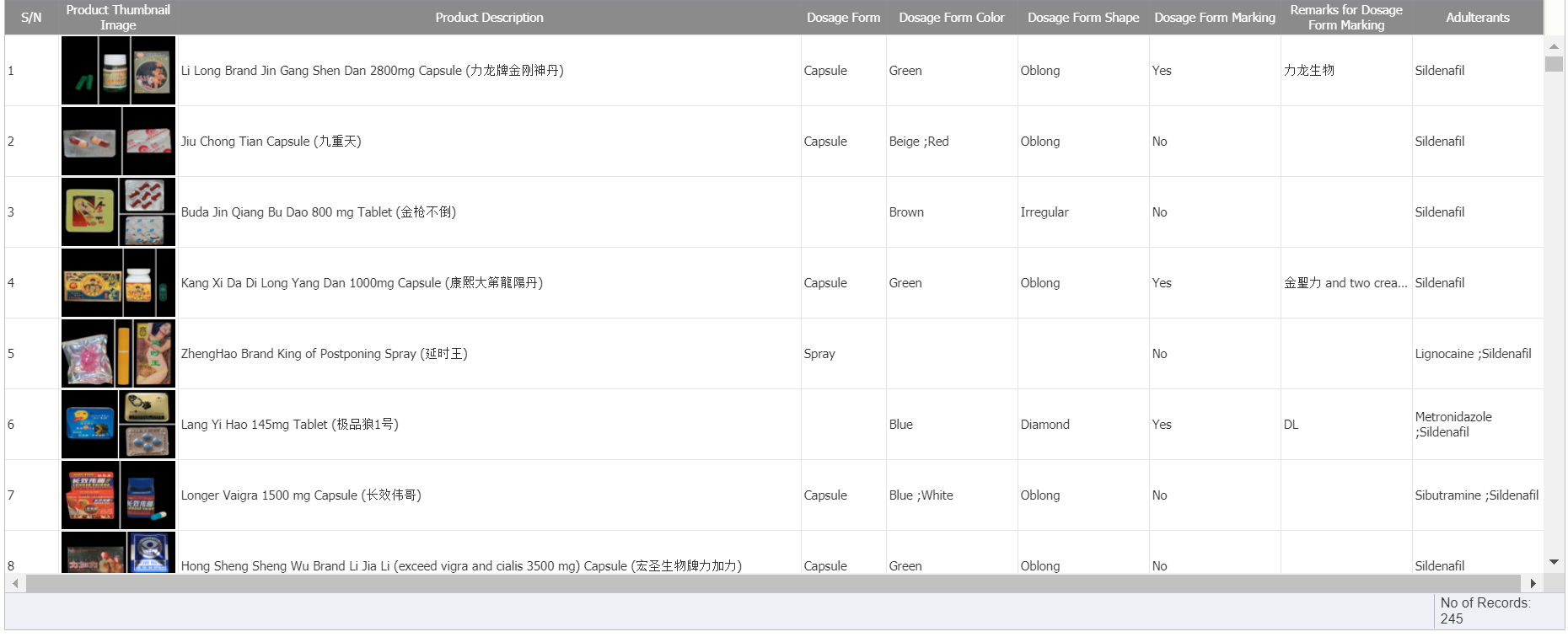
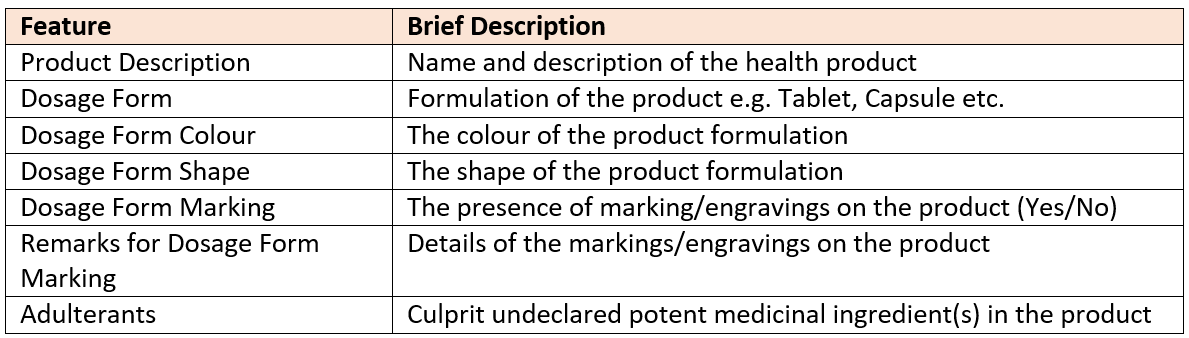
The features available are as follows:
The contents of the database on the site was manually transcribed and saved as an Excel (.xlsx) file with the use of Notepad++ and Microsoft Excel. This was then imported into Jupyter Notebook for further analysis using Python 3.
Having come across street side counterfeit drug peddlers while overseas on holiday, my initial hypothesis is that these counterfeit drugs are mainly lifestyle products. In particular, the 'best-seller' is likely sex-enhancement drugs targeted at the adult male population.
Part II - Data Cleaning
There are a total of 245 reported illegal health products documented in the HSA Illegal Health Products database at the time of this writing.
All 54 rows with null values in the 'Dosage Form' column were associated with tablets as displayed in the respective 'Product Description' column. These null values were thus filled with 'Tablet' as a dosage form entry, thereby creating a new Dosage Form category of 'Tablet' not utilized previously. The count of null values for each column in the final dataset is shown below:
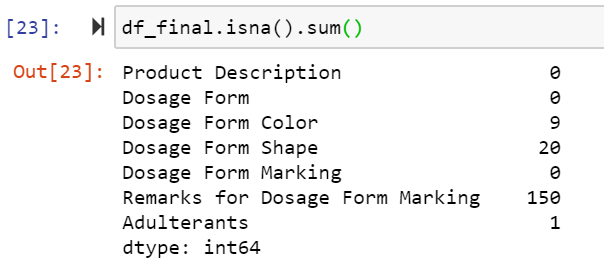
The null values for shape and color were mainly due to products packaged as vials and bottles, which are harder to characterize as compared to the usual oral tablets or capsules.
Given that there was plenty of missing data in the 'Remarks for Dosage Form Marking' column (i.e. 61.2% NA), the review of product markings was omitted in this analysis.
There were 13 products with dosage form stated as 'Pill', which was an uninformative categorization. The product images were reviewed manually to determine its exact dosage form (i.e. tablet or capsule).
Part III - Insights from Exploratory Data Analysis
Now to the main part of this analysis, which is the patterns and findings observed.
(i) Product Description
The product description gives the name of the product, along with some useful (albeit brief) information about its intended use for the consumer. Given that we are dealing with text strings here, it would be a good idea to use a word cloud generator (with Python WordCloud library) to illustrate the text frequency in these descriptions.
After removing uninformative stop words (e.g. 'Brand', 'Capsule', 'Jiao Nang' (which means capsule in Chinese) 'Tablet'), the following word cloud was produced:
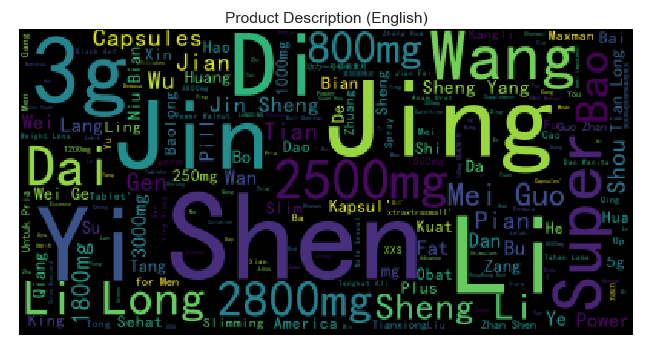
It is clear that most of these words are romanization of Chinese characters (i.e. Hanyu Pinyin). This suggests that many products are mainly labelled in Chinese, and interpreting this full word cloud is not the best way to understand the nature of these products.
Given that the word cloud suggests a high occurrence of Chinese characters, it would be interesting to see the proportion of the illegal health products containing Chinese characters in their product description.
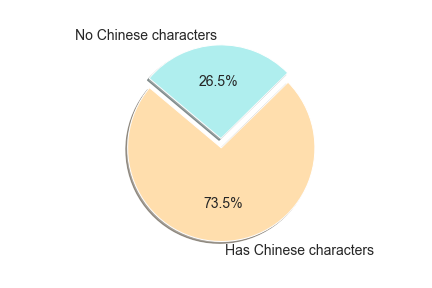
It can be seen that the list of illegal drugs is dominated by products labeled in Chinese (73.5%). This might imply that either the Chinese population is the primary target group for illegal drug dealers, or that these products are sourced primarily from China.
The next step is to generate a Chinese character word cloud. This was done by first using regular expression (regex) to extract all Chinese characters from the 'Product Description' column, and using Python's jieba library to tokenize these Chinese characters. With certain Chinese stop words removed (e.g. 胶囊), the WordCloud library was used once again to generate a word cloud:
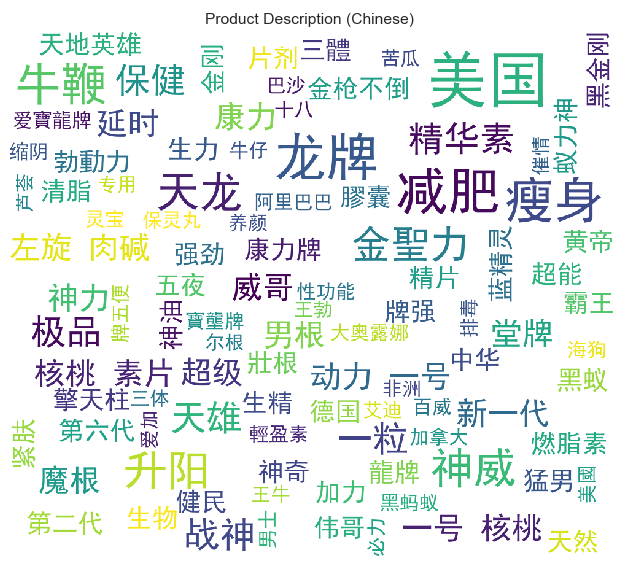
With this Chinese word cloud, it becomes easier to understand the nature of the illegal health products.
Finding 1 The word America ('美国') occurs frequently, implying that dealers tend to market their counterfeit drugs as products of USA, likely to falsely augment its appeal, quality and legitimacy towards consumers. This assertion was confirmed when I looked at these specific products containing '美国', and found these products to be branded with phrases like 'America Warrior' and 'America Viagra'. Another country observed in the word cloud is Germany ('德国'), meaning that drugs produced in Germany are also associated with strong branding.
Finding 2 The two most common claims made by these health products relate to sexual performance and male genitalia ('牛鞭', '升阳', '延时', '魔根'), and weight loss ('减肥', '瘦身'). This is further supported by other frequently occurring nuanced words associated with sexual vitality ('金聖力', '战神', '动力', '天雄', '神威').
Finding 3 There are several common words associated with dragon ('龙牌', '天龙'), which is not out of the ordinary since the dragon traditionally symbolizes potent and auspicious powers in Chinese culture.
Finding 4 While drug names are not commonly mentioned in the Chinese descriptions, there is one obvious branded name that appeared frequently, which is Viagra ('威哥', '伟哥').
It is also important to analyse the other products that did not contain any Chinese characters, which make up 26.5% of this illegal drugs dataset. After removing English and Malay stop words (e.g. Kapsul, Obat), the generated word cloud is shown below:
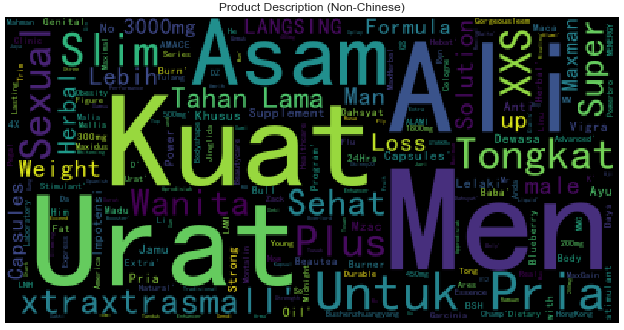
Similar to what was seen earlier for the Chinese-labeled products, these products also appear marketed for weight loss and sexual enhancement for men. This is observed from the English words (e.g. 'Men', 'Sexual', 'Slim', 'Weight'), as well as some of the suggestive Malay words (e.g. 'Kuat' (strong), 'Untuk Pria' (for men), 'Tongkat Ali' (herb known for its use in managing erectile dysfunction). All these insights support the earlier hypotheses that sexual enhancement drugs are the leading counterfeit products being traded.
Finding 5Another finding from the word cloud exploration is the presence of the Malay phrase 'Asam Urat', which means uric acid in English. High levels of uric acid in the blood is the cause of gout, and the frequent occurrence of the Malay phrase of uric acid suggests that there are many counterfeit products marketed for gout management as well.
(ii) Dosage Form
The majority of these illegal health products are in oral solid dosage forms, namely capsules and tablets.
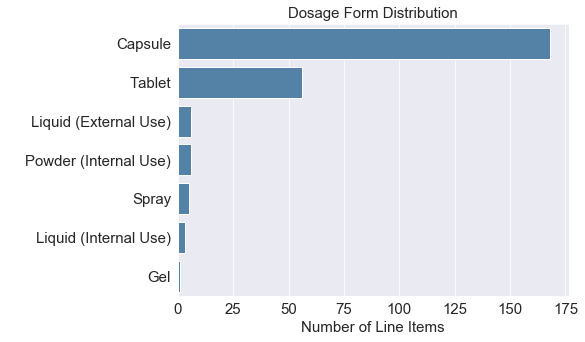
This is unsurprising since oral formulations offer many advantages such as:
Ease of manufacture, packaging and transport
Good chemical and physical stability
Relatively low cost of production
Simple and accurate dosing for consumers
(iii) Dosage Form Color and Shape
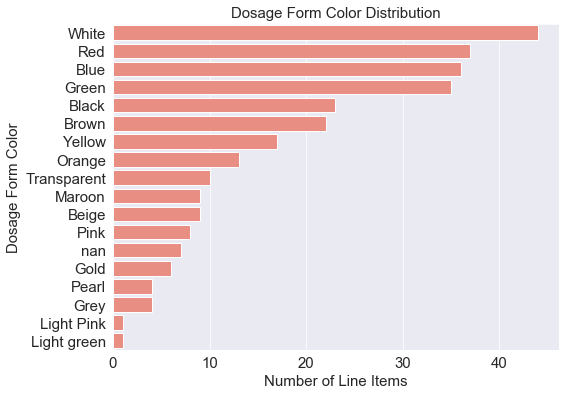
Since white is the most commonly occurring color for oral medications in general, it is also not surprising to see that white is the predominant color for these illegal health products as well. The next three most common colors happen to be the standard primary colors of red, blue and green.
In terms of the dosage form shape, the predominant shape is oblong.
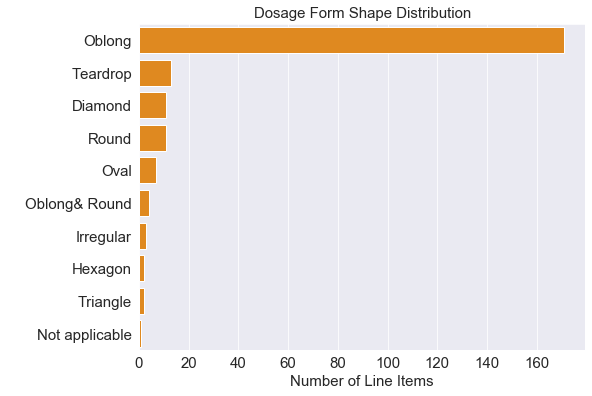
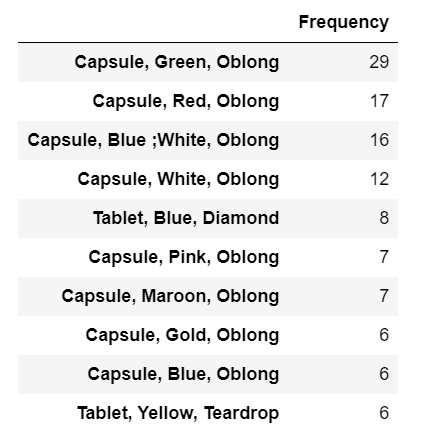
By looking at the above charts separately, you might imagine that the most common design is that of a white oblong capsule. However, we should be looking at it from the combined sequence of dosage form, color and shape. With that, it is evident that the most common dosage form design was in fact a green oblong capsule instead of a white one.
Here is an example of what a green oblong capsule looks like:
(iv) Dosage Form Markings
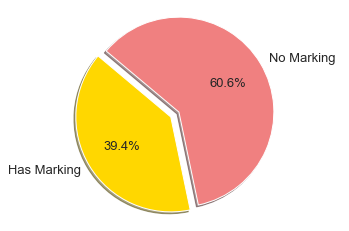
It can be seen that the majority of these illegal health products (60.6%) do not have any markings on them. This makes it all the more difficult to pinpoint the specific identity of these drugs, as well as to distinguish the counterfeit products from the real ones.
(v) Adulterants
Adulterants are the undetected and unapproved potent medicinal ingredients in the health product, and these adulterants are the main reasons why these counterfeit products are deemed illegal.
These adulterants can cause serious adverse health effects owing to accidental misuse, overuse, or interaction with other medications, underlying health conditions, or other ingredients within the supplement.
The following table show the top 10 most common adulterants that form a part of these illegal products.
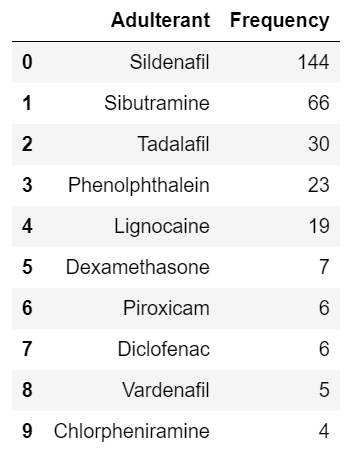
Now would be a good time to bring in some pharmacological knowledge into the fray, by describing the top 5 adulterants seen in the above table.
_(1) Sildenafil_What is it? Sildenafil is by far the most common adulterant found in illegal health products. Sildenafil is the generic name of the active compound found in Viagra (brand name), and is used to treat erectile dysfunction (ED).
Fun Fact: Sildenafil was originally developed for the treatment of pulmonary hypertension and angina pectoris (chest pain due to heart disease). However, during the clinical trials, researchers found the drug to be more effective at inducing erections than treating angina.
Side Effects: While most side effects are generally mild (e.g. flushing, headaches), there is a risk of more severe reactions such as vision loss, priapism (persistent and painful erection), and severe hypotension. These risks are certainly amplified when consuming these counterfeit products, whereby the dosages contained within them are poorly regulated.
_(2) Sibutramine_What is it? Sibutramine is a compound used for weight loss. This supports the insights gathered earlier that weight loss is a common area which illegal health products tend to target. Sibutramine works by increasing thermogenesis and making the user feel fuller after a meal, and it has mainly been studied in obese patient populations.
Side Effects: It is known to be associated with an increased risk of cardiovascular events like heart attack, stroke and hypertension.
_(3) Tadalafil_What is it? Being in the same drug class as Sildenafil (i.e. Phosphodiesterase-5 Enzyme Inhibitors), Tadalafil is also used to treat ED, and shares many similar features with Sildenafil. Its brand name is Cialis.
_(4) Phenolphthalein_What is it? Phenolphthalein is a laxative, and is commonly found in adulterated weight loss products. Multiple dietary supplements containing Phenolphthalein and Sibutramine have been previously recalled by the U.S. Food and Drug Administration (FDA) due to their unapproved inclusion in the supplements.
Side Effects: Phenolphthalein exposure has been associated with carcinogenicity (i.e. can cause cancer).
_(5) Lignocaine_What is it? Lignocaine is an anesthetic, meaning that it is a medication used to numb tissues in a specific body region when applied topically on the skin or mucous surface. It typically comes in the form of topical products (e.g. spray, gels), and is used to manage premature ejaculation due to its numbing effect.
Side Effects: Topical use has generally mild side effects such as itch/redness, but the potentially poor quality of the illegal product may lead to unexpected hypersensitivity/allergic skin reactions.
From here, I decided to take a closer look at these Lignocaine-containing products, to confirm my hypothesis that all supplements containing Lignocaine are of the topical dosage form.
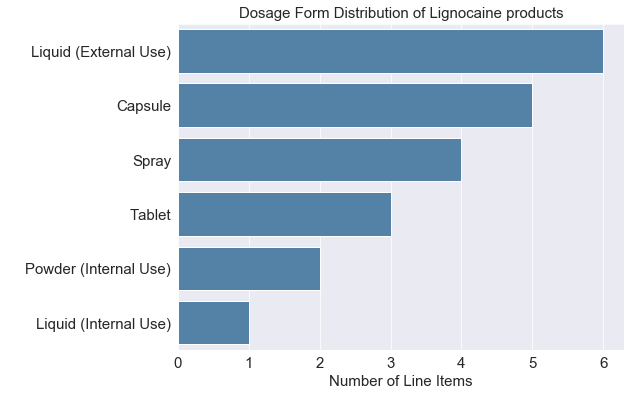
Although the most common dosage form is indeed something used for topical application (liquid for external use), I was surprised to see that there were quite a number of oral capsule and tablet products containing Lignocaine as well, especially since Lignocaine is not meant for oral consumption. This is certainly something worth looking deeper into.
Next Steps
This analysis offers some insights into the trends and patterns observed in the illegal health product trade in Singapore, which can be of value for authorities like the HSA. For example, by understanding the common marketed claims and main groups of people targeted by illegal dealers, specially curated education campaigns can be conducted to raise awareness so that the public understands how to better protect themselves.
Having access to more data (such as place of purchase, country of manufacture, date of reporting, profiles of peddler/consumer etc.) would also help to make this analysis more insightful and useful in tackling the peddling of such illegal products.
Wrapping things up
In reality, it can be very challenging to distinguish real products from counterfeit ones. So here is some advice from your friendly pharmacist: Always purchase your medications and health products from registered medical institutions, clinics and pharmacies. If you do encounter such illegal products being peddled, you may report it to the HSA Enforcement Branch via phone (6866 3485) or email ([email protected])
I look forward to hearing your feedback on the above analysis. If you would like to have a copy of the code, or wish to discuss more about this review, please feel free to drop me a message on LinkedIn!
Special thanks to Koo Ping Shung for sharing his feedback on the analysis
Before you go
I welcome you to join me on a data science learning journey! Follow this Medium page and check out my GitHub to stay in the loop of more exciting data science content. Meanwhile, have fun exploring the intersection of drugs and data science!
Bibliography
Center for Drug Evaluation and Research. (n.d.). Counterfeit Medicine. Retrieved August 15, 2020, from https://www.fda.gov/drugs/buying-using-medicine-safely/counterfeit-medicine
How to identify adulterated, counterfeit and substandard health products, and what you should do. (n.d.). Retrieved August 15, 2020, from https://www.hsa.gov.sg/consumer-safety/articles/identify-adulterated-counterfeit-substandard-health-products
Illegal Health Products Found in Singapore. (n.d.). Retrieved August 15, 2020, from https://www.hsa.gov.sg/illegal-health-products-found-in-singapore
The dangers of adulterated, counterfeit and substandard health products. (n.d.). Retrieved August 15, 2020, from https://www.hsa.gov.sg/consumer-safety/articles/illegal-health-products
Create wordcloud with chinese. (n.d.). Retrieved August 15, 2020, from https://amueller.github.io/word_cloud/auto_examples/wordcloud_cn.html