
Last refreshed: November 13, 2026 · Sources: Anthropic models overview, API pricing & Anthropic Newsroom
Direct Answer (November 13, 2026): Since the June 2026 Fable 5 / Opus 4.8 rollout this roadmap baseline started from, Anthropic has shipped Fable 5.2 (claude-fable-5-2, $8/$40), Opus 5.5 ($4/$20 daily driver), Sonnet 5.5 ($2/$10), and Haiku 5.5 ($0.10/$0.50 ≤100K) — all with a 1M context window and 128K output — alongside unbundled Enterprise seats ($20/seat/mo annual, 20-seat min) and Managed Agents ($0.08/session-hr active runtime).
The Anthropic roadmap 2027 comes into focus after Fable 5 launched in June 2026 as Anthropic’s most capable widely available model — a new Mythos-class tier above Opus — and the signals from Anthropic’s research agenda, model release cadence, and safety roadmap point clearly toward what comes next.
This is a forward-looking read grounded in public signals: what Anthropic has shipped, what they’ve said, and what the patterns suggest for 2027. It’s relevant for developers planning integrations, enterprises making multi-year platform commitments, and anyone tracking where Claude’s capabilities are heading.
Where Anthropic Stands as of November 2026 (Mid-2026 Baseline Updated)
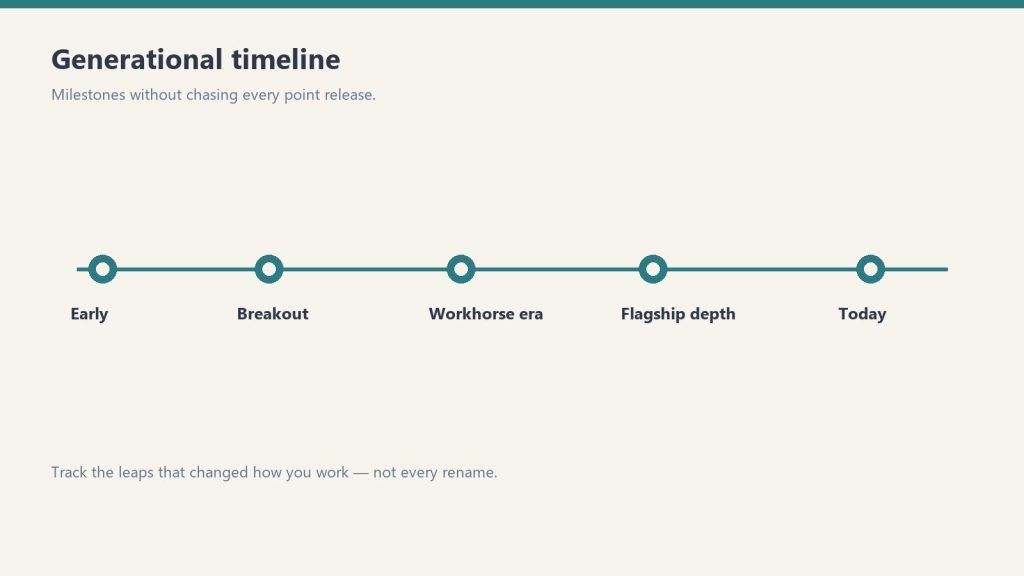
Claude has grown from a single chat model in 2021 to a four-tier family — Haiku, Sonnet, Opus, and the new Mythos class — with a 1-million-token context window, native vision, tool use, Computer Use, extended thinking, and persistent memory across managed agents.
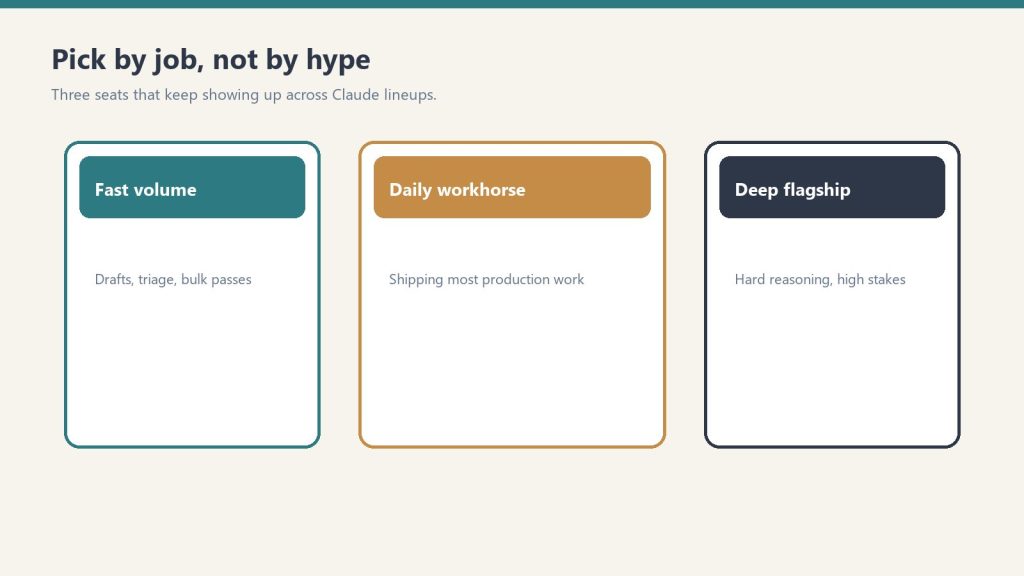
Current production model lineup as of November 13, 2026 (replacing the June/August Fable 5 · Opus 4.8 · Sonnet 4.6 · Haiku 4.5 baseline):
Get The Signal
What we actually ran, what it measured, and what it means for a restoration shop — every week, including the flops.
| Tier | Current Model (Nov 2026) | API Rate (In/Out MTok) & Spec | Best For |
|---|---|---|---|
| Flagship / Fable | Claude Fable 5.2 (claude-fable-5-2) | $8 / $40 ($0.20 read · 1M / 128K) | Most demanding reasoning, long-horizon agentic work |
| Opus (Daily Driver) | Claude Opus 5.5 (claude-opus-5-5) | $4 / $20 ($0.20 read · 1M / 128K) | Primary reasoning & software engineering default |
| Sonnet | Claude Sonnet 5.5 (claude-sonnet-5-5) | $2 / $10 ($0.10 read · 1M / 128K) | Fast everyday development & production |
| Haiku | Claude Haiku 5.5 (claude-haiku-5-5) | $0.10 / $0.50 ≤100K (1M / 128K) | Ultra-low-cost, high-throughput pipelines |
Fable 5 launched June 9, 2026 alongside Claude Mythos 5 — a restricted version available only through Project Glasswing for vetted cybersecurity and infrastructure partners. The distinction matters: Fable 5 is the general-availability frontier model; Mythos 5 is the same model with certain safety filters lifted for specific use cases.
The June 2026 launch was followed by a brief government-imposed deployment pause after Amazon researchers identified a method of prompting Fable 5 to surface software vulnerabilities. Anthropic worked with government partners to add new classifiers and redeployed the model globally July 2, 2026.
What the Fable 5 Launch Signals About 2027
The Fable 5 launch established that Anthropic is building a two-track release model — a general-availability tier with conservative safety filters and a restricted frontier tier for vetted partners — and that cadence will continue into 2027.
Several specific signals point forward:
The Mythos class will expand access. Anthropic said explicitly at Fable 5 launch that Project Glasswing would expand to more vetted partners over time. The current restriction is a staged rollout, not a permanent ceiling. By 2027, Mythos-class access is likely to be more widely available to enterprise customers who can meet Anthropic’s trust and verification requirements.
Safety classifiers will improve. Fable 5 launched with classifiers that trigger on roughly 5% of sessions, routing those queries to Opus 4.8 instead. Anthropic committed to reducing false positives “as more capable models arrive in the coming months.” More capable models arriving implies at least one Mythos/Opus generation release before end of 2026 or early 2027.
Token unbundling sets up the next Enterprise pricing tier. The April 2026 decoupling of Enterprise seat fees from token bundles ($20/seat/month annual, 20-seat minimum, plus API usage) — creates a cleaner structure for consumption-based tiers as model capability increases. Expect the 2027 pricing architecture to track closely with Mythos access tiers.
Agentic infrastructure is the platform bet. Managed Agents launched April 8, 2026, Memory entered public beta April 23, and the Agent SDK (formerly Claude Code SDK) now handles the entire agent loop automatically. The infrastructure is being built to support long-running, multi-session, multi-agent workflows. The 2027 roadmap is almost certainly agentic-first.
What Anthropic’s Research Agenda Suggests
Anthropic’s published research priorities — interpretability, Constitutional AI, alignment, and scaling — point toward a 2027 model that is more self-correcting, better at long-horizon planning, and safer to deploy with reduced human oversight.
Interpretability is Anthropic’s differentiator. Chris Olah’s interpretability team is the most distinct research group at any frontier lab. Their work on understanding what’s actually happening inside neural networks feeds directly into how future models are trained and where safety filters are placed. Advances in interpretability in 2026–2027 will likely show up in more precise, less overreaching safety classifiers — meaning fewer false positives on legitimate requests.
Long-horizon agency is the capability frontier. Fable 5’s headline capability over Opus 4.8 isn’t raw reasoning quality on static benchmarks — it’s how little friction there is in multi-step agentic workflows. Fable 5’s AutomationBench scores are the clearest signal of where Anthropic is competing. The 2027 research agenda will push this further: more steps, less human intervention, better recovery from errors mid-task.
Multi-agent coordination is early. The current Managed Agents platform supports multi-agent orchestration, but the tooling is young. 2027 is when production multi-agent deployments at scale become routine rather than experimental for most enterprise customers.
What It Means for Developers
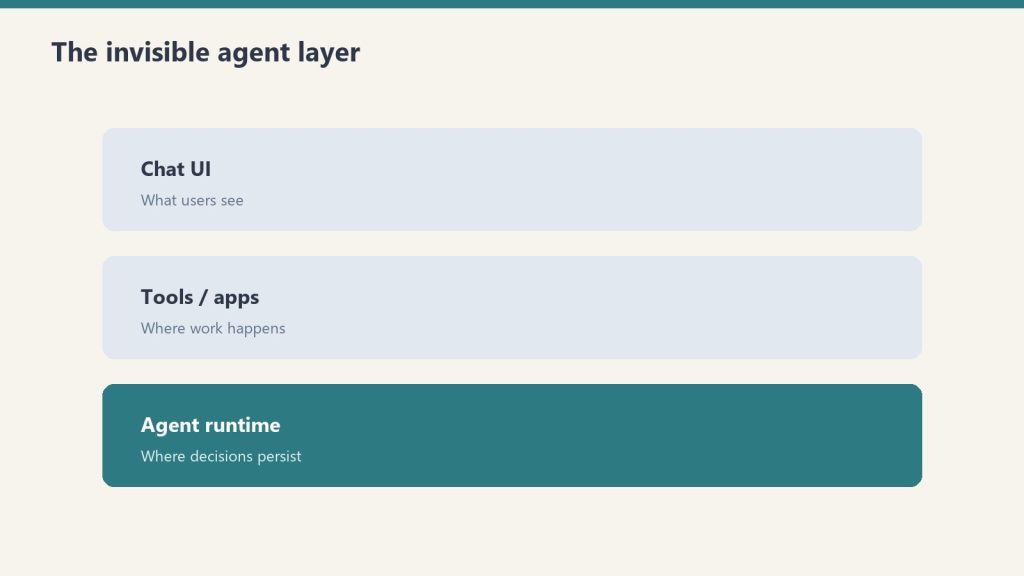
Developers building on Claude in 2026 should architect for the Agent SDK and Managed Agents platform, not just the Messages API — that’s where Anthropic is investing, and it’s where the capability gains will be most significant in 2027.
Practical implications:
Plan around Opus 5.5 as your daily driver and Fable 5.2 as your frontier escalation layer. Anthropic’s late-2026 pricing drop on Fable 5.2 ($8/$40 vs. June’s Fable 5 at $10/$50) and Opus 5.5 ($4/$20 vs. Opus 4.8 at $5/$25) lets teams default everyday agents to Opus 5.5 and escalate complex runs to Fable 5.2 without re-architecting integrations.
The Fallback API is now infrastructure. Any integration calling Fable 5 needs fallback logic configured. Anthropic’s safety classifiers will route some queries to Opus automatically — your integration needs to handle that gracefully, not treat it as an error.
Memory changes what agents can do. Agents that don’t retain context across sessions are meaningfully less capable than those that do. The Managed Agents memory API (public beta since April 23, 2026) is the right surface to build persistent agent behavior on now, before it becomes a standard expectation.
What to Watch
The clearest leading indicators for 2027 Anthropic roadmap developments:
- Project Glasswing expansion announcements — any broadening of Mythos-class access is a signal that the trust-gating model is maturing
- Interpretability research publications — Anthropic publishes regularly; major interpretability papers tend to precede model releases by 3–6 months
- Managed Agents general availability — currently in public beta; GA signals the platform is production-ready for the long-term
- Context window changes — the 1M token context window is already the industry standard; what comes next is likely structural, not just larger
Related on Tygart Media: how to use Claude · Anthropic API key.
Frequently Asked Questions
What is Claude Fable 5?
Claude Fable 5 is Anthropic’s most capable widely released model, launched June 9, 2026. It sits in the new Mythos class above the Opus tier and is built for the most demanding reasoning and long-horizon agentic work. It launched alongside Claude Mythos 5, which is restricted to vetted partners through Project Glasswing.
What is Project Glasswing?
Project Glasswing is Anthropic’s program for giving vetted cybersecurity and infrastructure partners access to Claude Mythos 5 — the same underlying model as Fable 5, but with certain safety filters lifted for specific use cases. Access is currently limited and application-based.
When will Anthropic release the next model after Fable 5?
Anthropic has not announced a release date. Their historical cadence — roughly one major model generation per 6–9 months — suggests a 2026 Q4 or early 2027 release is plausible. Anthropic has stated that more capable models arrived in late 2026 with Fable 5.2, Opus 5.5, Sonnet 5.5, and Haiku 5.5, alongside an expected 2027 cadence.
What is Claude Managed Agents?
Claude Managed Agents is Anthropic’s managed infrastructure for running autonomous Claude agents in cloud sandboxes, launched in public beta April 8, 2026. It handles session management, tool execution, credential management, and multi-agent coordination without requiring developers to build that infrastructure themselves. Memory for Managed Agents entered public beta April 23, 2026
What to Read Next
Claude AI Pricing — All Plans and API Rates
Current Claude Model Version Tracker
Claude API Model IDs and Strings
Get The Signal
What we actually ran, what it measured, and what it means for a restoration shop — every week, including the flops.

Leave a Reply