

Metabolites are the intermediate molecules formed during the numerous metabolic reactions that occur within living cells. They are essential for maintaining life, as they participate in growth, development, energy production, and the regulation of cellular activities. Metabolites are found in all living organisms, including plants, humans, and microorganisms.
1. Plant Metabolites
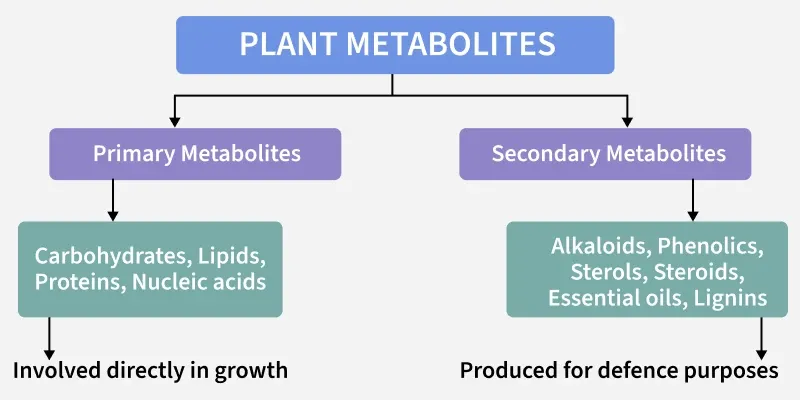
Plant metabolites are chemical substances produced by plants during their metabolic activities. These compounds are essential for plant growth, development, defence, and interaction with the environment.
Characteristics of Plant Metabolites
- Metabolite functions include signalling molecules, defence, and catalytic activity.
- Examples of metabolites include antibiotics, glucose, amino acids, etc.
- Metabolites serve various functions, including providing energy, building cellular structures, signalling, coordinating activities, and defence.
- The metabolites are produced by plants, humans, and even microbes.
- Essential metabolites are crucial for growth, while non-essential ones are produced during specific developmental stages but aren't directly involved in growth or development.
- Based on their role and distribution, plant metabolites are broadly classified into primary metabolites and secondary metabolites
A. Primary Metabolites
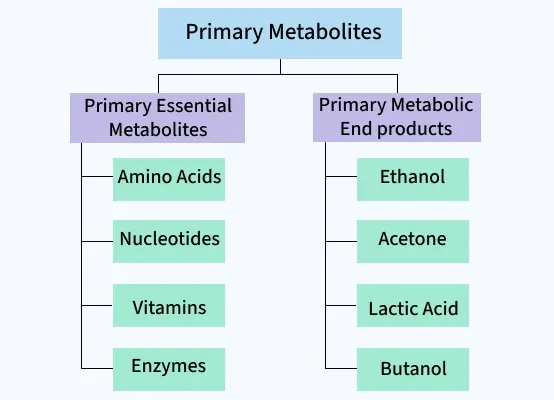
Primary metabolites are chemical molecules generated during growth and development, crucial for fundamental metabolic activities like respiration and photosynthesis.
Characteristics of Primary Metabolites
- Formed during the growth phase of plants, these metabolites sustain the body's physiological functions and are termed central metabolites.
- They serve as intermediate products in anabolic metabolism, utilised by cells to create essential macromolecules.
Examples of Primary Metabolites
B. Secondary Metabolites
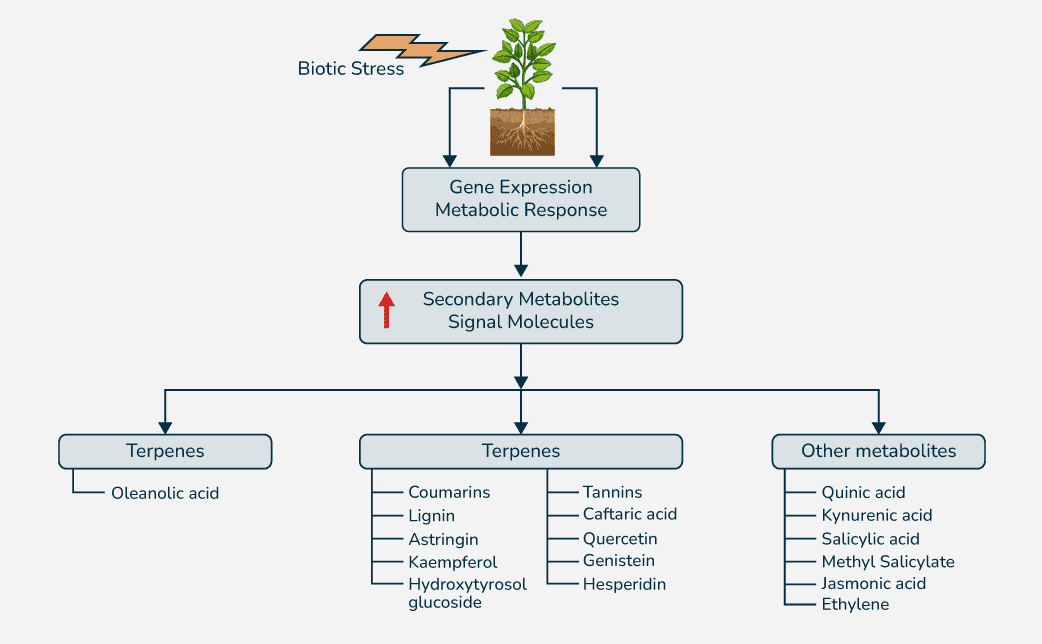
Secondary metabolites are chemical compounds produced by organisms that are not directly involved in growth or development but often play specialised roles in defence, signalling, or attraction.
Characteristics of Secondary Metabolites
- Unlike primary metabolites, which are essential for basic cellular functions, secondary metabolites are considered non-essential.
- Secondary metabolites are considered the end-products of primary metabolites.
- These compounds are typically synthesised in response to environmental stressors or as part of specialised metabolic pathways.
- Secondary metabolites contribute to the diversity and adaptability of organisms in various ecosystems.
- Secondary metabolites often play roles in interactions such as competition, predation, and mutualism.
- Research also shows how secondary metabolism can affect different species differently; For example, various types of leaf-eating marsupials in the same forest responded differently to a secondary metabolite in eucalyptus trees.
- Some species have evolved to resist secondary metabolites and even use them for their benefit, like monarch butterflies that can eat milkweed despite its toxins, using them to deter predators.
Examples of Secondary Metabolites
- Alkaloids: Examples include caffeine (found in coffee and tea), nicotine (found in tobacco), and morphine (found in opium poppies).
- Flavonoids: Examples include quercetin (found in onions and apples), resveratrol (found in grapes), and catechins (found in green tea).
- Terpenoids: Examples include menthol (found in mint), cannabinoids (found in cannabis), and Taxol (used in cancer treatments).
- Phenolic compounds: Examples include tannins (found in tea and red wine), lignans (found in flaxseed), and curcumin (found in turmeric).
2. Human Metabolites
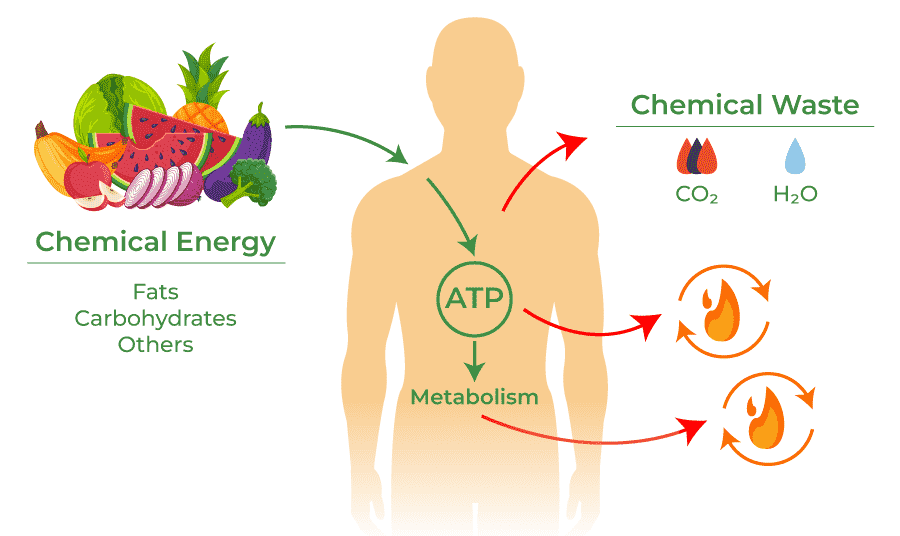
Human metabolites are the by-products formed during the body's normal chemical processes. Human metabolites include molecules like arachidonic acid and prostaglandin, which share similar properties and are passed through enzyme-catalysed reactions.
Characteristics of Human Metabolites
- Steroid hormones, derived from cholesterol with slight structural modifications, have distinct biochemical roles.
- Catecholamines such as norepinephrine originate from the amino acid tyrosine in an irreversible pathway.
- Metabolomics studies the human metabolome, representing the complete set of metabolites in an organism, complementing gene expression and proteomic analyses.
- The Human Metabolome Database (HMDB) offers detailed information on metabolites found in the human body.
3. Microbial Metabolites
Microbial metabolites come in a wide variety of chemicals, offering a rich source for discovering new compounds useful to humans. While distinguishing between primary and secondary metabolites of microorganisms can be tricky, they often produce a mix of similar compounds.
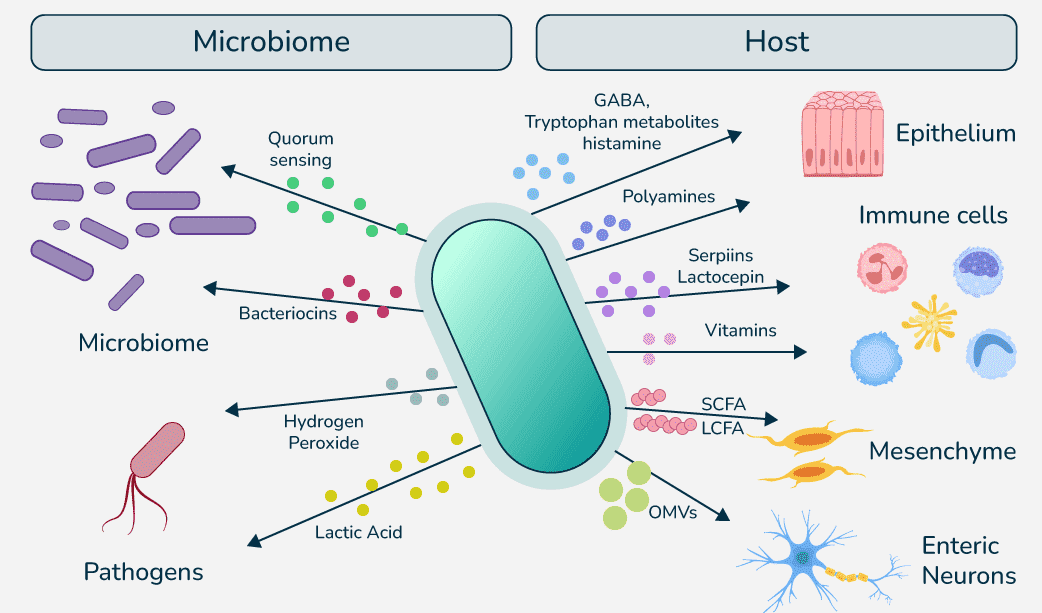
Characteristics of Microbial Metabolites:
- In industrial microbiology, alcohol is a common primary metabolite used in large-scale production, particularly in fermentation for making products like beer and wine.
- Citric acid, from Aspergillus niger, is widely used in food, pharmaceutical, and cosmetic industries.
- Secondary metabolites like antibiotics (e.g., erythromycin, bacitracin) and atropine, derived from plants, play important roles in human health.
- These secondary metabolites can give them an edge in their environment by inhibiting other species' growth or helping in resource gathering.
