

A sole proprietor is a person who owns, manages, and controls a business alone without any partners. In this form of business, there is no separate legal identity of the business, so the owner and the business are considered the same.
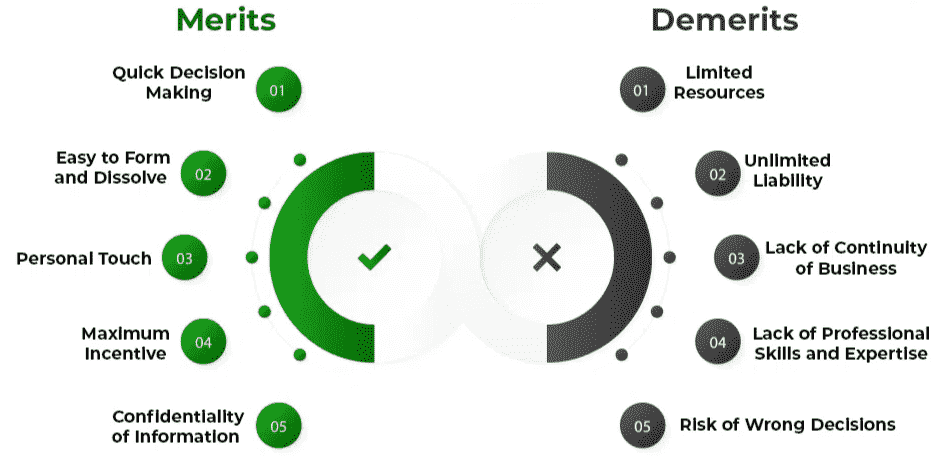
Advantages
1. Quick Decision-Making: The sole proprietor has complete authority to make all business decisions without consulting anyone. This helps in taking quick actions and responding promptly to market changes or customer needs.
2. Easy to Form and Dissolve: A sole proprietorship is simple to establish as it requires very few legal formalities and low investment. Similarly, the business can be closed easily without lengthy legal procedures.
3. Personal Touch: The owner maintains direct contact with customers, suppliers, and employees. This helps in building strong relationships, understanding customer preferences, and providing better services.
4. Maximum Incentive: The owner enjoys the entire profit earned by the business. This motivates the proprietor to work harder, improve efficiency, and expand the business.
5. Confidentiality of Information: Since all business decisions are taken by one person, important business information remains confidential. This helps protect trade secrets and business strategies from competitors.
Disadvantages
1. Limited Resources: The financial resources of a sole proprietor are limited to personal savings and borrowings. This restricts the ability to expand the business or undertake large-scale operations.
2. Unlimited Liability: The proprietor is personally responsible for all business debts and obligations. If the business suffers losses, personal assets such as property or savings may be used to repay creditors.
3. Lack of Continuity of Business: The existence of the business depends entirely on the owner. The business may come to an end due to the owner's death, illness, insolvency, or retirement.
4. Lack of Professional Skills and Expertise: A single person may not have expertise in every area such as finance, marketing, production, and management. This can affect the efficiency and growth of the business.
5. Risk of Wrong Decisions: All business decisions are made by one individual without expert advice or consultation. As a result, poor decisions may lead to financial losses and negatively affect the business.
