

Cyber crime refers to illegal activities carried out using computers, mobile devices or the internet. These crimes involve stealing, hacking or misusing sensitive data such as personal information, bank details or confidential business data.
Causes of Cyber Crime
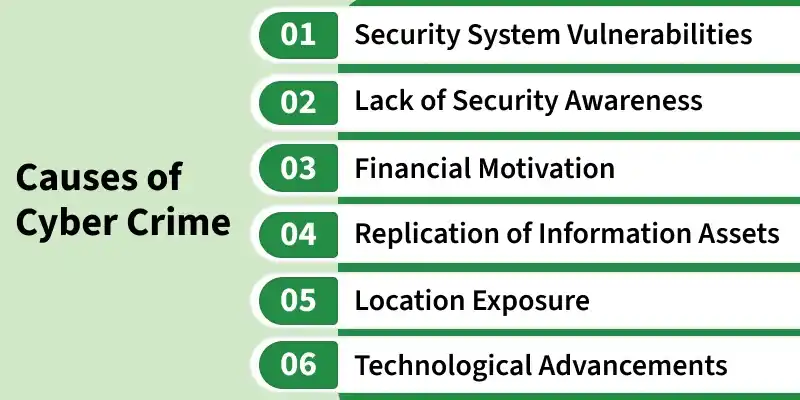
1. Security System Vulnerabilities
Unpatched software, misconfigured systems and weak access controls create exploitable attack surfaces for threat actors. Vulnerabilities in operating systems, applications or network devices can be leveraged to gain unauthorized access.
Example: Attackers exploit a known remote code execution (RCE) vulnerability in an unpatched web server to compromise an organization's network.
2. Lack of Security Awareness
Insufficient cybersecurity training increases the likelihood of human errors such as credential disclosure, unsafe browsing and social engineering attacks. Human factors remain a major cause of security incidents.
Example: An employee enters corporate credentials into a phishing website, enabling attackers to access internal systems.
3. Financial Motivation
Cybercriminals are often driven by monetary gain through activities such as ransomware, banking fraud, data theft and cryptocurrency scams. Financial incentives continue to fuel the growth of organized cybercrime.
Example: A ransomware group encrypts critical business data and demands cryptocurrency payment for the decryption key.
4. Replication of Information Assets
The widespread sharing and replication of digital content increases the risk of data leakage, identity theft and unauthorized distribution of sensitive information. Once published online, information can be difficult to control.
Example: Personal information exposed on social media is used to conduct identity-based fraud and account takeover attacks.
5. Location
Location information embedded in posts, images and mobile applications can reveal user movements, routines and physical assets. Attackers may use this information for profiling and targeted attacks.
Example: Geotagged social media posts disclose an individual's travel schedule, assisting attackers in planning targeted scams.
6. Technological Advancements
Emerging technologies can introduce new attack vectors before adequate security controls are established. Cybercriminals frequently adopt advanced tools to improve the scale and sophistication of attacks.
Example: Threat actors use AI-generated deepfakes and automated phishing campaigns to bypass traditional trust mechanisms and deceive victims.
Prevention of Cyber Crime
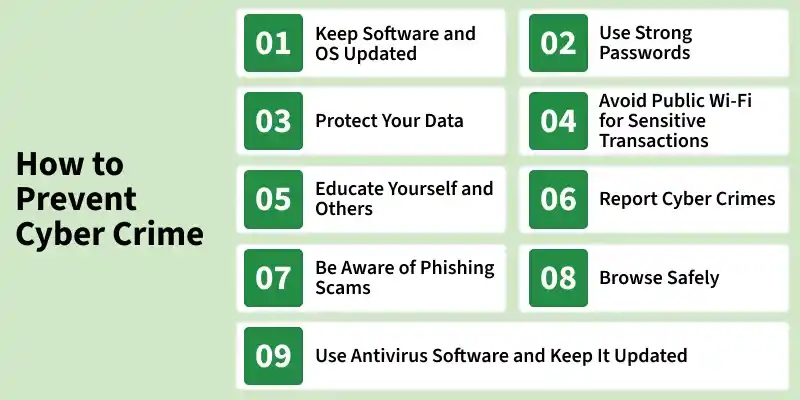
1. Keep Software and Operating System Updated
Regular patch management eliminates known vulnerabilities and reduces the attack surface available to cybercriminals. Security updates often contain fixes for critical exploits.
Example: A system receives a security patch that prevents attackers from exploiting a previously disclosed vulnerability.
2. Use Antivirus Software and Keep it Updated
Modern endpoint security solutions detect, block and quarantine malware using signature-based and behavioral analysis techniques. Regular updates ensure protection against emerging threats.
Example: Endpoint protection identifies suspicious ransomware activity and terminates the malicious process before file encryption begins.
3. Use Strong Passwords
Complex passwords combined with Multi-Factor Authentication (MFA) significantly reduce the risk of unauthorized account access. Authentication controls help defend against credential-based attacks.
Example: An attacker obtains a user's password but cannot access the account because MFA verification is required.
4. Protect Your Data
Data protection measures such as encryption, access controls and regular backups help maintain confidentiality, integrity and availability(CIA). Secure backups support rapid recovery after incidents.
Example: Encrypted backups allow an organization to restore operations after a ransomware attack without paying a ransom.
5. Avoid Public Wi-Fi for Sensitive Transactions
Sensitive activities should be performed over trusted and encrypted networks to prevent interception of data in transit. Virtual Private Networks (VPNs) provide additional communication security.
Example: A remote employee uses a VPN to securely access corporate resources from an external network.
6. Educate Yourself and Others
Security awareness training helps users recognize phishing attempts, social engineering tactics and other common threats. Informed users serve as an important security control.
Example: An employee identifies a spoofed email and reports it to the security team before any compromise occurs.
7. Report Cyber Crimes
Timely reporting enables incident response teams and authorities to contain threats, collect evidence and minimize organizational impact. Early detection improves response effectiveness.
Example: A user reports suspicious account activity, allowing security personnel to quickly disable compromised credentials.
