

The computer forensics investigation procedure follows a structured process to ensure that digital evidence is properly collected, preserved, analyzed and presented in a legally acceptable manner. There are five phases of the digital or computer forensics investigation process that are as follows:
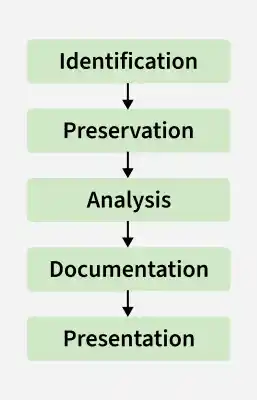
Phase 1: Identification
This phase involves determining the devices and resources that may contain relevant digital evidence for the investigation.
- Identifies potential sources of digital evidence, including computers, laptops, mobile devices, servers, network systems and cloud environments.
- Preserves the integrity and authenticity of evidence by restricting access to authorized investigators and preventing unauthorized modification or tampering.
Phase 2: Extraction of Data and Preservation
In this phase, relevant data is extracted using forensic tools and techniques while maintaining the originality of the evidence.
- Acquires digital evidence using forensically sound acquisition techniques and creates a bit-by-bit forensic image while preserving the original data.
- Maintains the integrity, authenticity and chain of custody of evidence through hashing, secure storage and write-blocking mechanisms.
Phase 3: Analysis
During this phase, investigators examine the extracted data to find evidence related to the incident.
- Performs forensic analysis using techniques such as data carving, keyword searching, timeline analysis and live forensics to identify relevant evidence.
- Recovers deleted, hidden, encrypted or corrupted data and reconstructs the sequence of events to determine the nature and scope of the incident.
Phase 4: Documentation
All findings and investigation steps are recorded in a structured manner to clearly describe the complete investigation process and its outcomes.
- Maintains comprehensive documentation of investigation activities, evidence handling procedures, analysis methods and findings to ensure traceability.
- Records timelines, evidence details and forensic results to support transparency, legal admissibility and audit requirements.
Phase 5: Presentation
The final findings are presented to legal authorities, management or court in the form of reports and explanations.
- Provides expert testimony and supports legal or disciplinary proceedings by clearly explaining the investigation methodology, evidence and conclusions.
