

Cyberethics refers to the set of moral principles that guide individuals and organizations when using information technology and digital resources. It focuses on how technology should be used in a manner that is legal, responsible and respectful of others. Cyberethical behavior includes:
- Respecting the privacy of others.
- Using digital resources responsibly.
- Protecting personal and organizational data.
- Avoiding online harassment and cyberbullying.
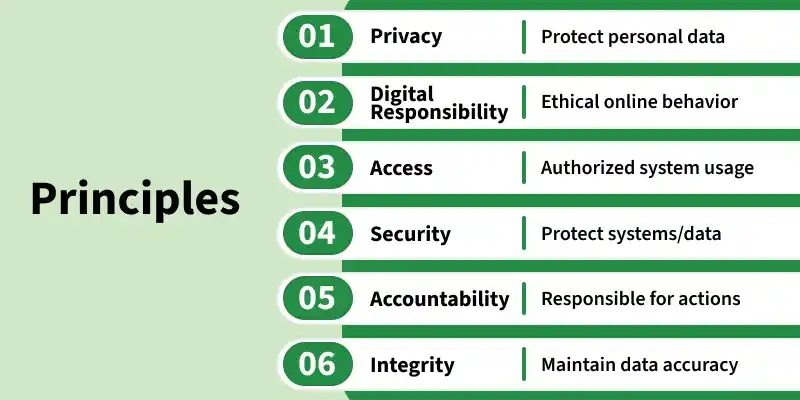
Privacy
Privacy ensures that personal and sensitive information is collected, stored and shared responsibly.
- Protects confidential information and Prevents unauthorized data exposure.
- Example: Using strong privacy settings on social media to control who can view your personal information.
Integrity
Integrity ensures that information remains accurate, consistent and trustworthy.
- Prevents unauthorized data modification and Maintains information authenticity.
- Example: A bank ensures that transaction records cannot be altered without authorization.
Accountability
Accountability means individuals and organizations are responsible for their digital actions.
- Supports traceability of activities and Encourages responsible behavior.
- Example: Employee actions on a company network are logged and audited to identify misuse.
Security
Security protects digital systems, networks and data from threats and attacks.
- Defends against cyber threats and Protects valuable information assets.
- Example: Installing antivirus software to detect and block malware.
Access
Access ensures that digital resources and technologies are available to everyone fairly.
- Promotes digital inclusion and Reduces technology barriers.
- Example: Providing accessible websites for users with disabilities.
Digital Responsibility
Digital responsibility encourages ethical and respectful use of technology.
- Promotes ethical technology use and Discourages harmful online behavior.
- Example: Giving proper credit when using someone else's online content or images.
Common Cyberethical Issues
Several ethical challenges arise in today's digital environment:
- Cyberbullying: Using digital platforms to harass, threaten or intimidate others is unethical and can have serious emotional and psychological effects on victims.
- Digital Piracy: Copying, downloading, or distributing copyrighted content without authorization violates intellectual property rights and ethical standards.
- Privacy Violations: Collecting, sharing, or misusing personal information without consent breaches an individual's right to privacy.
- Identity Theft: Stealing or using another person's personal information for fraudulent purposes is both unethical and illegal.
- Misinformation: Creating or spreading false or misleading information can damage reputations, influence public opinion unfairly and reduce trust in digital platforms.
Benefits of Practicing Cyberethics
Organizations and individuals who follow cyberethical principles gain several advantages:
- Enhanced trust and credibility.
- Better protection of sensitive information.
- Reduced risk of legal and regulatory violations.
- Stronger cybersecurity culture.
- Improved digital citizenship and social responsibility.
