Phoenicopteridae
The Key to Scientific Names
Legend Overview
Phoenicopteridae Flamingos
Version: 1.0 — Published March 4, 2020


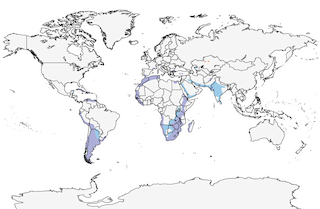
- Year-round
- Breeding
- Non-breeding
Full content is available exclusively to Birds of the World subscribers. Sign in Learn more
Introduction
Flamingos are perhaps best known for their long legs, sinuous neck, and pink plumage derived from the pigments in the organisms they eat. Although an iconic symbol of tropical beaches, some species inhabit lakes high in the Andes. With bills that are highly specialized for foraging on plankton, flamingos prefer lakes with the greatest concentrations of their tiny prey, often those that are so saline that no fish can survive to eat the plankton. Flamingos thus often nest on hypersaline lakes and lagoons, in dense colonies of distinctive volcano-like mud nests. One of the most beautiful spectacles in nature is the sight of dense foraging flocks taking flight over an otherwise lifeless expanse of water.
General Habitat
Diet and Foraging
Breeding
Conservation Status
Systematics History
Conservation Status
| Least Concern |
33.3%
|
|---|---|
| Near Threatened |
50%
|
| Vulnerable |
16.7%
|
| Endangered |
0%
|
| Critically Endangered |
0%
|
| Extinct in the Wild |
0%
|
| Extinct |
0%
|
| Not Evaluated |
0%
|
| Data Deficient |
0%
|
| Unknown |
0%
|
Data provided by IUCN (2025) Red List. More information