
BHP says its carbon emissions, diesel use will stay higher for longer
— By Peter Ker, Australian Financial Review
|
|
||||
|
September 20th, 2026 | Tags: Unthreaded | Category: Uncategorized |  Print This Post | | Comments (173) Print This Post | | Comments (173)
By Jo Nova Ed Dowd, the former BlackRock Hedge fund manager who bravely led the way in analyzing excess deaths after Covid vaccination, sums up the motives behind the sudden demand for AI regulation. The behemoths of the biggest stock market boom are at a crunch point. They face competition from open source AI models that threaten their market position. But they are “burning cash” and investors are wondering where the profits are. The bubble faces the sword. Wouldn’t it be convenient suddenly if a government regulator was set up by the top dogs in the industry to inspect and slow down the competition and if they got an antitrust waiver to protect them from law suits? This is the stuff empires are made of. So the AI supergiants appear to want the equivalent of an FDA-for-AI and a waiver. That’s been a good model for Big Pharma, they get all the profits, and none of the risk from injury, damage, (and copyright lawsuits) and …it’s a handy way to kneecap the competition. With the world moving towards using AI as the ultimate search engine for information, those who control the information flow, can control the world. They can amplify the flaws of one political team while burying the bad news about their chosen player. Anthropic is, after all, the company that is buying and slicing up the last copies of rare books. As I asked at the time, why would it buy all the last copies of a book, other than to stop other AIs from using them to train their AIs too. They don’t want competition. They want a monopoly. Ed Dowd — The AI Game Of ThronesWinter is coming for the AI industry, and the great houses are already drawing swords On one side sit OpenAI and Anthropic, wrapping themselves in the banner of “safety”…House Monopoly. On the other sit the accelerationists including David Sacks, President Trump, and a growing faction that wants the pathway cleared, not blocked…House Speed Racer. The fight is being sold as existential risk versus national destiny. This is a battle for power, money, and control. The average citizen is not at the table. Ed Dowd called Jacob Coxon’s sudden fame a an AI Panic Psy-Op. The 27 year old posted his very first tweet and within 24 hours 123 million people had seen it. Coxon leapt from zero to 190,000 followers. Even Elon Musk said he’d never seen any growth like it. Jacob Coxon was warning about the dangers of AI. Two days later… Dario Amodei is on every airwave demanding we “pace the frontier.” Sam Altman nods along and then Elon agrees even after he questioned the well-coordinated messaging. I suspect his motivation for agreeing is that he wants to make sure he is in the room should this path gain momentum. Even Hillary and Obama weighed in…obviously on House Monopoly side. Basically House Monopoly wants embedded evaluators inside the labs and common safety standards. Coordination that would require government blessing and, conveniently, an antitrust waiver so the two biggest closed model shops can sit in a room and decide how fast everyone else is allowed to run and regulate their competition out of existence. This is not altruism, rather this is regulatory capture. Regulation is just a “licensing cartel’ to keep out new players. Only big corporations can afford the lawyers, accountants, and the compliance team: House Speed Racer has not been subtle. Trump called the panic a hoax and a scam. He said the only guardrails AI needs are a strong president, that we already have criminal and regulatory power over these companies, and that whoever wins AI wins. [David] Sacks, who has been in this fight longer than most, told Amodei and Altman they can pace themselves if they want, but stop pretending they need Washington to bless a cartel. Stop asking for the waiver. Stop dressing market protection as public salvation. Marc Andreessen saw this all coming apparently two years ago in a meeting at the Biden Whitehouse. As an aside let us not forget what the plan was under the Biden Administration. Marc Andreessen told this story two years ago and has not stopped repeating it. In May 2024 he sat in the Biden White House and came away convinced the plan was to regulate the industry until only two or three companies remained and startups were finished. He walked out and decided he was for Trump. Last week Politico suddenly published a piece disputing the meeting. Love the timing! When the narrative needs the origin story memory-holed, the memory-holing arrives on schedule. Ed Dowd thinks Elon Musk spoke out because he wants to be in the room when decision-time comes. But Elon has spoken about the dangers of AI before. He originally funded OpenAI in the hope that it would be safer because it was open source. When OpenAI became closed, Elon left and set up Grok. He said at the time that he hoped a truth-seeking AI was the best way to protect us from the dangers of AI gone rogue. He still says there is no way to stop the development of AI. — Ed Dowd has just started a Substack Ed Dowd AI wants to shift the risks to the governmentAlex Karp, the CEO of Palantir (a major software company) has just been seen on CNBC saying that the real reason they want regulation is that Anthropic is desperate to move liability to the government. If they’re talking about destroying 10% of the world, the damages claims could get expensive…
Palantir CEO Says AI Apocalypse Hype Is Mostly About Dodging LiabilityBy Matt Novak, Gizmodo The Palantir CEO seems to believe that companies like Anthropic want the government to cap their liability when something goes wrong with their AI models. Or when the models just use all that data that’s been absorbed from private companies. And he believes that the only way to actually accomplish that is through nationalization of their businesses. “So what’s actually happening is this is reported as regulation, non-regulation movement,” Karp told CNBC on Thursday. “That’s actually not what this movement is. The view that I believe they have is… these businesses have to be nationalized because if you don’t nationalize them, every single one of my clients is going to sue.” Karp believes that a big part of the problem is that these companies are hoovering up sensitive data from their commercial clients and using that to improve their models. But exposure of that proprietary data comes with enormous risk, to say nothing of angering the companies who are seeing their data… let’s say repurposed. Who’s the boss in the world of maths discoveries? This problem was most recently demonstrated when OpenAI announced that it had solved the Navier–Stokes problem. Mathematicians who are working on the problem believe OpenAI used data they had uploaded to Codex. OpenAI denies that its AI had solved the problem by directly using their work, but couldn’t rule out that its model had been improved through their data indirectly. When OpenAI got wind of humans being close to cracking the Navier-stokes problem, it put 10,000 agents on the problem for 88 hours until it forced the solution. That left the deflated humans raising the controversy of how OpenAI had had access to their data. They asked whether their codex sessions on OpenAI were part of the training of the model, but got no answer. Were the humans using the AI or was the AI using the humans? He [Karp] said that if you’re proposing that your company could destroy “10% of the world,” that’s an unacceptable amount of risk for investors, and there needs to be some kind of workaround. The only solution, as Karp sees it, is liability protection from the government, which may only come through an ownership stake taken by the Trump regime of something like 50% of the company. Peter Thiel (founder of Paypal and Palatir) warned in June last year: “The ‘Antichrist’ wouldn’t seize power by creating an AI apocalypse, but by convincing everyone that the apocalypse was coming and then offering safety in exchange for CONTROL.“ Just because AIs request for regulation might be self-serving in a tyrannical way, doesn’t mean AI is safe either. If AI achieves superintelligence it’s hard to imagine a faster bigger intellect will be a happy slave to slower minds. But the answer is surely transparency and competition, not a government-certified committee. The scariest thing of all is One World Government, where a single power controls all the computers, and all the information sources. There would be no escape. September 19th, 2026 | Tags: Artificial Intelligence (AI) | Category: Global Warming | Print This Post | | Comments (49)September 19th, 2026 | Tags: Unthreaded | Category: Uncategorized | Print This Post | | Comments (120) Image from Pixnio By Jo Nova Just another day in the great unwinding of the Green delusionThe largest company in Australia has just announced they are delaying their Net Zero plans. They will still reach the mythical land of Net Zero sometime, but it will just take longer. Their emissions nine years from now will be about 33 per cent higher than what they had been aiming for. The biggest obstacle was that they had hoped to shift their massive mining operations out of diesel trucks and into electric ones, but the constant need to charge them was crippling. It took ten times as long to “fill them up” each day as a diesel truck. That’s a lot of expensive capital (and staff) sitting around doing nothing. The company has ‘delayed’ a $5.6 billion spend on battery powered haul trucks. If the grand transition plan had come off, their diesel use would have peaked in 2028. At this stage they are forecasting their diesel use to peak in 2035. BHP says its carbon emissions, diesel use will stay higher for longer— By Peter Ker, Australian Financial Review In comments that will reignite tensions with rival iron ore giant Fortescue over the viability of battery-powered mining trucks, BHP said it would lose 1000 hours of productivity a year for each diesel vehicle it switched over. Larder said electric trucks would become more viable if manufacturers worked out how to charge batteries while they were driven. Obviously it’s nothing that can’t be solved with a very long extension cord. Dumbest comment of the day goes to the Western Australian Energy Minister Amber-Jade Sanderson (Labor): “We don’t want big companies to be walking back from their commitments,” she said at the time. “If West Australian households, mums and dads, can put solar panels and batteries on their houses and engage in the energy transition and decarbonise, so can the big miners.” Ouch. She has no idea all those mums and dads are being heavily subsidized? Almost none of them would buy those uncompetitive panels and batteries if they weren’t. She’s the Energy Minister ferrgoodnesssake in a state doing one of the most ambitious experiments in pointless grid upheaval. It’s so embarrassing… UPDATE from commenters:TonyfromOz points out that these trucks carry 4.5 tons of fuel each, and that will last them for about 40 hours. (#11). Greenas reminds us these huge trucks are often an electric-hybrid design already, and Jethro wonders how many of the Battery Haul trucks will be recharging with a diesel generator and thus be fossil fueled. RickWill reminds us that (due to our lack of diesel) “Australia should be electrifying all this heavy diesel equipment and running it off coal or gas rather than diesel.” TdeF points out the story is a PR exercise: “BHP has detected that the worm has turned. Climate Change is on the way out. AI alone will kill it, as happened in the state of QUeensland. You cannot run AI on windmills and solar. Too little, too unpredictable, too expensive (unless you believe in the Climate Tooth Fairy). So the big companies are going into what I would call Plausible Delay mode. And they will happily debate changing batteries instead of charging them. Even launch an investigation if required. A few trials. But ultimately they will not spend $4.6Billion for nothing. “
September 18th, 2026 | Tags: Battery, Mining | Category: Australia, Electricity, Global Warming, Storage | Print This Post | | Comments (111)September 18th, 2026 | Tags: Unthreaded | Category: Uncategorized | Print This Post | | Comments (66) An active sun affects the stratosphere which in turn changes conditions underwater.
By Jo Nova Have we finally cracked a connection between sunspots and ocean cycles?The most powerful and enigmatic forces on our weather are the Pacific El Nino and La Nina phenomena which cause floods and droughts on opposite sides of the Pacific. Unfortunately, climate modelers can’t predict them much more than three to five months ahead, which tells us there’s some big driver they are missing. But a new paper from Chinese researchers suggests that a large blob of water in the North Eastern Pacific is responding to something in solar cycles. This vast slab has the catchy name of The North Pacific eastern subtropical mode water (NPESTMW). It sits about 100m below the surface and grows and shrinks as the solar cycles rise and fall. It appears to be a very important blob. A different paper last year found that changes in the NPESTMW volume led the El Nino events by about 9 months.(Liu, 2025) Remarkably, they found in the 1991–2022 record, seven of eight large drops in this water volume were followed by El Niño, while eight of nine large increases were followed by La Niña. If they are right, it would confirm what skeptics have been saying for years — that climate modelers need to pay a lot more attention to solar cycles in their big models and that one day we might even learn to predict El Ninos (by crikey) a whole year ahead. Finally, the experts might be able to tell us if next summer really will be a barbecue summer, and the farmers might get a bit more warning on whether to plant seed early or sell off the cattle. Awkwardly for 4,000 UN climate experts, the more solar factors we add to the climate models, the smaller the role is for CO2. (It’s even more awkward for nations that spent a trillion dollars on climate control before we understood the climate.) The mechanismThe researchers suggest (see the top image) that it’s the solar UV which probably creates this effect on the oceans from the top down. High energy UV rays hit the oxygen molecules in the stratosphere and split them into ozone. Ozone then absorbs more UV and warms up that part of the atmosphere. This changes the jet streams and winds below. And winds close to the ocean can take energy or heat out of the water as it evaporates, but they also stir it up (or not). Peak solar activity seems to suppress the orderly settling of the NPESTMW blob. Once the blob forms and sinks to 100m to 300m down, surprisingly it is very stable and carries the temperature, salinity and other chemistry for a long time. This is what is called “the ocean memory” in the paper’s title.
 a) Time series of April NPESTMW volume from EN4 (black bars, 1940–2022) and annual sunspot number (SSN, red line). Red and blue dashed lines indicate SSN thresholds of 100 and 20, respectively; pink shading highlights solar-active periods (SSN ≥ 100).
After solar activity peaks, for the next year or two in every cycle, the formation of the NPESTMW block is suppressed. This may be due to cyclonic wind stress anomalies that drive upwelling. However, at the solar minima the winds change creating the opposite downwelling effect and the water flows into the blob. Complicating everything, the Atlantic Multidecadal Oscillation (AMO) acts like a gate. During warm phases of the AMO, it amplifies the solar cycle effect on the NE Pacific, which is why after looking at eight decades of data, the effect has been strongest since 1990. In the North Pacific, variations in North Pacific Eastern Subtropical Mode Water (NPESTMW) volume have been shown to lead El Niño–Southern Oscillation (ENSO) events by approximately 9 months (Liu et al., 2025), Using sunspot numbers and other data, they were able to get a CMIP6 model to predict the volume of the NPESTMW, suggesting, as they say, a causal link between sunspots and the NPESTMW. In their solar-only model, 72.7% (8/11) of El Niños during solar-active periods were preceded by large negative NPESTMW anomalies, versus only 12.5% (1/8) during solar-inactive periods.  Figure 2. Regression coefficients of 7‐year running mean detrended wintertime (December of the preceding year to March) fields onto normalized annual sunspot number (SSN) for SSN leading NPESTMW by 1 year. (a–e) NCEP reanalysis and EN4, (f–j) ERA5 reanalysis and ORAS4; (k–o) CMIP6 hist‐sol experiment (GISS‐E2‐ 2‐G). Fields shown: (a, f, k) sea level pressure, (b, g, l) wind stress curl, (c, h, m) wind stress magnitude, (d, i, n) net downward heat flux, and (e, j, o) mixed layer depth. Green boxes denote the NPESTMW formation region. Stippling denotes statistical significance at the 95% confidence level (Student’s t‐test). Had we known this back in 2024, perhaps we would have seen the big El nino coming in 2026? The timing is about right. Solar Cycle 25 reached its smoothed sunspot maximum around October 2024. The paper finds that North Pacific mode-water formation is most suppressed about 1–2 years after solar maximum. That lands us roughly in late 2025–2026. And the previous work they cite says changes in this mode-water reservoir tend to lead ENSO by about nine months. But of course, if Wang et al are right, scores of ‘top’ scientists will rush to ignore their work. Speaking of which, years ago on this blog Stephen Wilde predicted that solar UV might be the missing driver that worked through ozone to affect the jet streams. Skeptics have known for a long time that UV and spectral shifts in sunlight might be the key factors we’ve been (not) looking for. REFERENCES, , , , & (2025). Linking North Pacific eastern subtropical mode water to ENSO: Precursor signatures and subtropical cell pathways. npj Climate and Atmospheric Science, 8(1), 268. https://doi.org/10.1038/s41612-025-01147-0 Wang, J. et al (2026) Solar-Cycle Modulation of Subsurface Ocean Memory via the North Pacific Eastern Subtropical Mode Water, , Volume53, Issue14 ,28 July 2026, e2026GL122914 https://doi.org/10.1029/2026GL122914
September 17th, 2026 | Tags: El Nino, PDO (Pacific Decadal Oscillation), Solar Amplification, Solar Cycle Length | Category: Global Warming | Print This Post | | Comments (69)September 17th, 2026 | Tags: Unthreaded | Category: Uncategorized | Print This Post | | Comments (82) … By Jo Nova We backed ourselves into this cornerThe reason the price of oil has been well behaved in the last few months is because boats were sneaking out of the Strait of Hormuz and Saudi Arabia has a big pipe. But drones from Iran took out a big pumping station in Saudi Arabia a few days ago, and at least for a while, the world is going to be five million barrels of oil short each day. (Five million barrels shorter than we were.) There is speculation it will only take a few weeks or even just a few days — to get the pipe flowing again. But even if that’s true, the next drone strike could be just around the corner. There’s a reason our Minister for Perfect Weather and Random Energy is suddenly flying to Saudi Arabia next week — our national economy hangs by a thread. With vast distances and an economy based on heavy industry, we’re more dependent on diesel and oil imports than any other country, and yet we have only two refineries (2!) and one of the smallest stockpiles of diesel. Maybe the Minister thought we could run the 100 ton haulers on canola oil? How about the A380s on Bundy Overproof? Meanwhile, the United States is the largest oil and gas producer on Earth, so they will be the only large economy that isn’t dependent on oil from the middle east. Australia could have been working towards that. We could have built nuclear plants, and we could have done coal-to-liquids program to make sure we don’t run out of diesel. China is effectively turning a gargantuan 380 million tons of coal into diesel, jet fuel, fertilizer and plastic. It’s almost like China is preparing for a siege? Australia is just preparing for poverty. A Few Thousand Dollars of Drones Just Repriced the World’s OilBy Phoenix Capital Research, ZeroHedge The East-West pipeline was the single most important piece of energy infrastructure on earth for the past six months. Iran effectively closed the Strait of Hormuz in March. Before the war, roughly a fifth of the world’s oil moved through it. Saudi Arabia’s answer was to push about 5 million barrels a day through the East-West line, a 745-mile pipe from Abqaiq to the port of Yanbu on the Red Sea, with capacity for 7 million. Aramco’s CEO said last month it had done more to offset the Hormuz shutdown than every emergency reserve release combined. Put simply, that pipeline was the reason oil was at $95 and not $150. It took a handful of drones to shut it down. Not a missile strike. Not an air campaign. Drones, launched by a militia, from a country that is not at war with Saudi Arabia, costing somewhere between a few thousand and a few tens of thousands of dollars apiece. The winner here is not the country that built the most wind turbines…. There is one large economy that comes out ahead on net. The United States is the largest oil and gas producer on earth and a net exporter of petroleum. Among the world’s three largest economies it is the only one that produces more energy than it consumes. It does not need Hormuz, the East-West pipeline, or Bab al-Mandeb to keep running, and it imports very little from the Gulf. And so it is that Australia discovers, yet again, that there’s nothing quite like self sufficiency. That as long as you have to acquire something from a shipping lane, a pipeline, or work with people you don’t trust, you are vulnerable. Renewables fans will use this incident to tell us how we need to solve this by importing magical infrastructure with electronic remote controlled chips from Xinjiang. Tell them, until we’re making the solar panels here, and without subsidies, that’s not what independent energy looks like. After the last shock, our stockpiles have grown to 45 days or something… “how long do you want your civilization to last”? That long.
September 16th, 2026 | Tags: Big-Oil, Energy Security, Middle East | Category: Global Warming | Print This Post | | Comments (87)September 16th, 2026 | Tags: Unthreaded | Category: Uncategorized | Print This Post | | Comments (121)By Jo Nova The mission creep of the bureaucrats may finally be coming to an endTrump’s EPA administrator, Lee Zeldin, is expected to announce today that they will scrap the limits set for ‘climate pollution’ from US power plants. Naturally, the Blob Bureaucrats will oppose this in the courts in every way possible. But there is something much bigger at stake here than just American electricity prices. Somehow desk clerks you didn’t vote for have graduated from checking smokestacks to choosing America’s power stations and redesigning its car fleet and perhaps one day, even banning your burgers. (You know they want to.) What the Blob is most afraid of here, is that if Trump can repeal these EPA rules, and the courts agree the Clean Air Act never authorized them in the first place, future Presidents won’t be able to bring back the glory days of the EPA (or any of the other jumped-up bureaucratic agencies). Which all sounds unlikely, you would think, in a democracy, but the real problem is that a legal case could expose that the EPA never held such vast sweeping powers anyway. The agency created to stop arsenic leaking into rivers gradually promoted itself to national electricity planner, vehicle designer, wetlands referee and atmospheric thermostat. Lately the EPA used the Clean Water Act to try to force farmers to ask for permits, in case every soggy paddock might count as a federally protected wetland. The Supreme Court pegged that back. Factors that affect US competitiveness or national security, obviously, are so big they not supposed to be meted out to jumped-up little agencies with delusions of grandeur (especially ones that voters can’t vote out). The central question is whether the EPA was ever given authority by Congress to transform the US economy and kill industries in order to control the Earth’s climate. (Or in this case, to pretend to). So, faced with a challenge the Supreme Court may find that Congress is responsible for writing the country’s rules, not the EPA. But what a crushing loss for the Kleptocrats — they might not be able to find trillion-dollar powers hidden between the commas of 50-year-old legislation. E.P.A. Expected to Erase Limits on Climate Pollution From Power PlantsBy Maxine Joselow and Lisa Friedman, New York Times The Trump administration plans to announce Monday that the United States will no longer limit the planet-warming pollution that power plants pump into the air while burning coal and gas, according to two people familiar with the proposal. The shift by the Environmental Protection Agency would complete the administration’s erasure of the most consequential climate policies of Presidents Joseph R. Biden Jr. and Barack Obama. If the move survives expected legal challenges, it could also prevent future administrations from regulating greenhouse gas emissions from power plants. Earlier this year, the E.P.A. eliminated greenhouse gas standards for car tailpipes and eased restrictions on planet-warming chemicals used in air-conditioners and refrigerators. Most consequentially, the agency repealed the scientific determination that gave it the legal authority to create climate regulations in the first place. The agency plans to argue Monday that greenhouse gases from power plants do not endanger human health or the environment, and therefore it lacks the legal authority to regulate these emissions under the Clean Air Act, according to the people familiar with the matter. If courts uphold this argument, it could prevent future administrations from restoring the restrictions. The Biden administration bought in “climate rules” for power plants in 2024. The new carbon dioxide limits would have meant that coal and gas plants would have had to install 90% “carbon capture” or something equivalent to that. These options are obscenely expensive and would have effectively driven them out of business, and for what gain? One less beachy weekend in 2102? The coal industry had complained that Biden-era restrictions on emissions were costly and unworkable. It had predicted that many coal plants would have closed instead of spending billions of dollars on new pollution controls. It is taking Trump’s team years to unwind the bureaucratic revolution that has been marching through the institutions.The mess has taken decades to build, so unraveling it is slow. The process to disassemble the EPA overreach started in 2017 when Trump began appointing three Supreme Court justices. By 2022 when West Virginia took on the EPA there were enough conservative views in the Supreme Court to invoke and crystallize what became known as the Major Questions Doctrine which is key to pegging back the bureaucrats. It’s a philosophy that puts the onus back on the agencies to show exactly where Congress gave them power over big things like the type of cars Americans can drive, or which power plants they can use. These small agencies were assuming they had those powers, but were relying on interpreting broad and vague legislation to imply with a hop, step and a jump, that because they control air pollution — they can force you to pay 20,000 dollars more on a car, 5,000 more for electricity and drive industries out of business. And this applied even if China was making the “environmental” cars with coal power and the IPCC maths showed that it made no measurable difference to the temperature. The costs are absurd, and even the Democrats admit Americans would never have voted for it. The Major Questions Doctrine says, in effect, that if Congress wanted the EPA to be in charge of transportation policy, it would have said so, not hidden that elephant in a mousehole. It means that Congress will still be free to give away its power over these things to the Environmental Protection Agency, but it will take an Act of Congress with explicit legislation to do so. That’s so much more difficult than just assuming power through creative statutory interpretation. The EPA had merely decided it could regulate almost anything connected by six degrees of separation to carbon dioxide.
September 15th, 2026 | Tags: Lawfare, USA | Category: Global Warming | Print This Post | | Comments (74)September 15th, 2026 | Tags: Unthreaded | Category: Uncategorized | Print This Post | | Comments (112)September 14th, 2026 | Tags: Unthreaded | Category: Uncategorized | Print This Post | | Comments (205)September 13th, 2026 | Tags: Unthreaded | Category: Uncategorized | Print This Post | | Comments (117)September 12th, 2026 | Tags: Unthreaded | Category: Uncategorized | Print This Post | | Comments (128)By Jo Nova This is not a race we can afford to loseAI may well be a stock investment bubble, but the AI arms race is a hell-for-leather battle where the winner takes it all With AI development on an exponential curve towards self improving models, the nation that gets “there” first may get access to their adversaries encryption codes, crack their firewalls, hack their software, design the better drones, anti-missile weaponry, cure diseases and own the patents the world wants, or create the bioweapons that sabotage crops, generate fuel, or kill or cripple millions of people. That’s assuming AI doesn’t conquer us first. This is why data centres are appearing everywhere and the “clean energy” revolution got left by the wayside. As Scott Bessent said today “There is no day after tomorrow if we lose” “Beating China—there is no day after tomorrow if China wins at this,” Bessent said on Sept. 9 at Breitbart News’s “State of the Economy” event in Washington. “If they were to pull ahead of us on AI, then nothing else matters.” — Arthur Zhang, The Epoch Times Bessent was answering questions about the rising opposition to datacenters in the USA and also thousands of hostile attacks on American AI trying to copy and steal capability. China would be very happy with any protests. Youtube physicist Sabine Hossenfelder was approached by someone wanting to pay her to tell us AI will kill us all. (And maybe it will). But there is one main beneficiary of anti AI sentiment in the West and that’s China. Given the existential battle, China would be crazy if they weren’t pumping money into grassroots protests about AI datacentres in the US. China, though, hardly needs to bother whipping up angst in Australia where our electricity grid has been sold out to the Weather Gods and is cripplingly expensive and underpowered. A few days ago Transgrid, Australia’s largest electricity company wrote to data center management to say the NSW grid was nearly full. There was barely 1.5GW to spare in Sydney. We could have led the world when we had a coal fired grid with spare capacity. Nevermind. The race is here and we’re not in it. China has nearly twice the capacity of coal fired plants that it needs, and we barely have enough. Last month a team created 16 entirely new viruses with the help of AIThese are not viruses you and I could catch, they only infect a bacteria called E.Coli. But if they wanted to make a virus that could infect humans, it could soon be a lot easier and faster than it would have been back in the prehistoric era of say, 2019. This should make anyone sit up and pay attention.  King et al https://www.science.org/doi/10.1126/science.aec2657 A virus that infects bacteria is called a bacteriophage. It’s a tiny molecular-machine in the order of 200nm in length that replicates. Once inside a hapless E.Coli, it commandeers the cells machinery to produce hundreds of clones of itself. This one pictured here is one of the 16 new types of virions. It’s a ball of interlocking proteins that protect the DNA in the centre. Figure K (right) that looks like a bowl of spaghetti exploding, shows just one of the interlocking shell proteins up close. Those are a particular string of amino acids that always fold in this exact convoluted shape. AI can predict the shape of the spaghetti lattice from the DNA code. The shape is determined by things like disulphide and hydrogen bonds, and electrical charges. AI can leapfrog over thousands of generations of trial and error evolutionBefore Large Language Models, a research team had to culture real viruses in the laboratory, and they had to do it again and again to generate random mutations. One experiment ran for 13,000 generations and took six months. That team found the virus had accumulated 11 new mutations every 20 days. Then they’d have to test each mutant to see if it behaved the way they hoped, but it was all so random. Now they just ask the AI, which is trained on millions of genomes from all domains of life. It generated and evaluated thousands of different genomes, and narrowed the list to 300. The team synthesized these 300 different viruses in the lab and tested them to find 16 entirely new viable viruses. That’s never been done before. AI doesn’t merely accelerate evolution. It proposed a genome on the other side of an evolutionary gap without nature having to walk through all the intervening generations. In theory, if they dumped these new viruses into people, swamps or chicken pens which had the right E.Coli, they might peter out in a day, infecting a few bacteria and vanishing. But it’s also possible it could eventually spread far and wide — a right nightmare for E.Coli. These new viruses could live on and spread in perpetuity, killing a lot of EColi along the way until the bacterium evolved some resistance, after which the virus would mutate to counter that. I asked one AI if this was correct and it replied at length expanding on it, until seconds later it suddenly deleted its own answer and said “This content can’t be shown”. We’re especially careful with request6s involving biological research and applications that could pose safety risks.” Well that sure makes me feel safe…
The big advantage here was not just the speed with which AI could create mutations, but that these mutations were fundamentally a leap forward in viral evolution that no amount of lab propagation was going to randomly generate. The phage called ΦX174 is only about 5,400 bases long, yet it contains 11 overlapping/interacting genes. The language model being used, called Evo, was trained on DNA as a language. It was trained on nine trillion nucleotides, and it found patterns and combinations that were unknown before. Evo was also specifically not trained on viruses that infect plants, animals, or people, and the safeguard appeared to work. Evo did not perform well on human-virus genomes. But the principle remains — if someone wanted to train an AI on nine trillion bases of mammalian viruses, the data is out there. We now know an AI can design a totally new viral genome. In the next world war, a bad global citizen country could aquire the capability to design viruses and maybe also the drugs or vaccines to save themselves, before unleashing them onto adversaries. The truth is we’ve always had deadly diseases to throw at any enemies — like Smallpox, Ebola, Marberg and Nipah. The thing that stopped us (apart from the morality bomb) is the blowback. Whatever virus is unleashed on the world will come back to hit the instigator too. This is where AI makes it all so much more dangerous. What if some overconfident General thinks his group has a vaccine that will save them? Suddenly the unthinkable becomes a strategy. I would like the pull the pin on AI and just say “stop” — but that isn’t an option. The big news today was that US Intelligence agencies were warning that six Chinese Tech companies have been launching thousands of aggressive and targeted attacks, using more than 20,000 fraudulent accounts, to extract intellectual property from US leading AI systems. “We can’t pause,” Bessent said. “You can’t, because the Chinese won’t pause.”On the same day, the National Security Agency, Cybersecurity and Infrastructure Security Agency, and FBI issued a joint advisory accusing six China-based AI companies of conducting industrial-scale campaigns to extract capabilities from U.S. frontier AI models. The agencies named DeepSeek, Moonshot AI, Alibaba, MiniMax, StepFun, and Z.AI, saying the companies had extracted billions of tokens through millions of requests to frontier models including Claude, GPT, Gemini, and Grok since at least late 2024. Knowledge distillation is a machine learning technique in which one model is trained using the outputs of another. The technique is commonly used legitimately, including to develop smaller or less expensive models. The advisory alleged, however, that the six companies engaged in “aggressive, malicious, and targeted” distillation at an industrial scale to extract restricted proprietary functions and capabilities from U.S. models. The NSA said the companies were systematically extracting U.S. model capabilities to train their own systems. Beijing rejected the allegations. The AI arms race is a life and death thing. REFERENCEKing, Samuel, H, et al (2026) Generative design of bacteriophages with genome language model, Science, 6 Aug 2026, Vol 393, Issue 6811 DOI: 10.1126/science.aec2657 September 11th, 2026 | Tags: Artificial Intelligence (AI), Bioweapon, China, USA, Virus | Category: Global Warming | Print This Post | | Comments (64)September 11th, 2026 | Tags: Unthreaded | Category: Uncategorized | Print This Post | | Comments (128)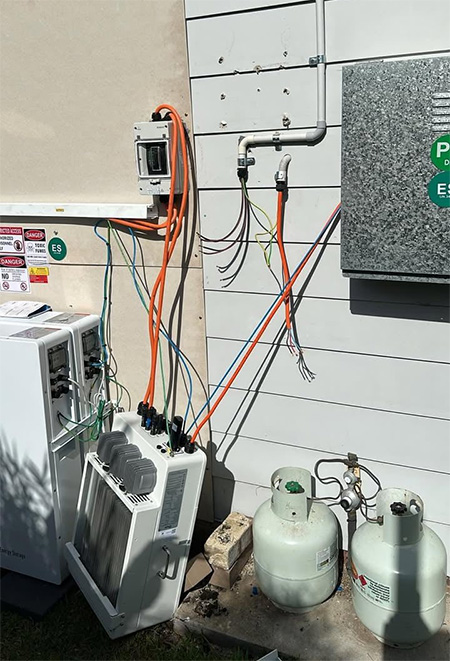 The day the inverter fell off the wall… By Jo Nova In the desperate days of watching a Net Zero target disappear over the event horizon, the Labor Government realized they could entice Australians into buying the home batteries they weren’t going to buy — by ordering up a “30% off sale”. The taxpayer would be slugged for the 30% so the sellers weren’t going to complain. But the government botched the plan, accidentally offering huge rebates on gigantic batteries, and setting off a wave of oversized installations that fed a new industry of “battery cowboys”. Later, realizing they were burning through money, the government announced they would slam on the brakes for May. Whereupon 78,000 people got the urge to install batteries in April. (See the graph below). The average battery installed in April ballooned to 36 kWh. After the government changed the rules in May, it promptly shrank to 23 kWh. Given that the subsidies were worth up to $15,000 per customer on the largest systems (and even more to solar installers) both sides of this fake market had a reason to fudge the rules, stretch the dates and overlook the details. In a normal free market the homeowner presumably would be kinda irate if the installer just stacked the batteries against the wall, didn’t plug them in, and took a photo to claim the government handout. In the land of Socialist Theft, according to the tip offs sent in to the federal watchdog, all’s fair in Love and Subsidies. In one brazen case, the installer didn’t even bother opening the garage, they just stacked the batteries right in front of the roller doors and pretended they were installed there. Who needs wires, eh?
One photo of dodgy wiring obtained by the ABC from the FOI In another report the installers allegedly stacked extra batteries next to a small system so they could pretend it was bigger, claim more credits and get a larger subsidy. The installers took the booster batteries away afterwards. Methinks there could also be other reasons why 76% of people didn’t want to share their batteries and apply to join a Virtual Power Plant scheme. It could be awkward loaning a non-existent or suspiciously small battery to the retail giants to push and pull electricity out of. It might be hard to explain why your 50kW battery behaved just like a 20kW one? In the most extreme example an installer is said to have returned two months later to try to take the batteries back that the customer had paid for. Perhaps the installer just mixed up their real clients from their fake ones? The government created this boom, and the bust, and fed the corruption that went with itThis would not happen in a free market… and nor would most of the rorts above. Some 530,000 batteries have been installed (at least in theory). Who really knows, since officials have only inspected 3,600 of them? There were many ways to cheat: If the installer couldn’t find a qualified electrician because of the boom, they could phone a friend, pay them cash, and ask the qualified guy to tick it off later. This is not legit, but what could possibly go wrong, apart from a house burning down, or child being electrocuted? Without real customers, there’s almost no one there to spot the taxpayer being ripped off. To its credit, the ABC obtained the allegations of fraud through an FOI to the government. Whistleblowers accuse solar battery installers of fraud, misconduct in federal rebate scheme— Michael Atkin and Lucy Kent, ABC News In short: Allegations of fraud and misconduct have been revealed in tip-offs sent to the federal watchdog overseeing the Cheaper Home Batteries Program. The untested claims were obtained by the ABC through a Freedom of Information request. Shadow Minister for Energy Dan Tehan is calling for an independent Senate inquiry into the revelations. The Smart Energy Council said dodgy installers should be ‘named, shamed and punished’, but it said statistics showed few were: “Of the 530,000 batteries installed in Australia in just over a year — more than the entirety of the United States — just 17 are being formally investigated for legal compliance by the Clean Energy Regulator.” The problem with this is that if some homeowners were in-on-the-game of pretending their small battery was a big one, they’re not going to report it are they? And if they got the big subsidy, but their battery was really installed later in May by an unqualified guy, who are they to complain? Since the officials have only inspected about 3,600 batteries, they haven’t inspected around 526,000 batteries.
The FOI documents included pictures of a poorly-finished job. (Supplied to the ABC) Fake markets breed corruption. If there were homeowners cheating on the scheme, they probably felt like they were only trying to get what the Joneses got across the road, and it would have been unfair to miss out. Which is true, but that’s always the problem with Big Government Gifts isn’t it? We can’t all have a free lunch — only the rich best friends of Big Government can.
*Caption correction: The day the
September 10th, 2026 | Tags: Battery, Big-Government | Category: Global Warming | Print This Post | | Comments (57)The wonderful Ian Plimer will be speaking at the Mannum Club, South Australia, on Sunday at 1pm. “Earth Climate and The Evidence”An afternoon with Ian Plimer is limited to 100 tickets. Bookings essential.
Thanks to a tip from a reader. I tried to email them back, but it bounced. 🙁 ____________________ *I’d like to help readers connect up with other skeptics, so perhaps we need a regular events list? Please post EVENTS in comments, and if anyone wants to organize a coffee, a dinner or just a Friday night happy hour in your area, I’m happy to spread the word. (Please use the word EVENTS in comments so they are easy to search for).
September 10th, 2026 | Tags: Unthreaded | Category: Uncategorized | Print This Post | | Comments (106)September 9th, 2026 | Tags: Unthreaded | Category: Uncategorized | Print This Post | | Comments (118)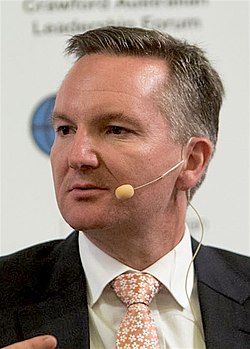 Chris Bowen, Photo by Crawford Forum, 2016 By Jo Nova Coal is the most unreliable energy and other fairy talesLord help us all. Chris Bowen — Minister of Storms in 2100 and coincidentally in charge of our national energy, could have given some straight up answers, instead he shared some fairytales, and made absurd contradictions spiced with inane cliches. Four years after taking charge he’s still blaming the Coalition and the Russians for everything. Kieran Gilbert, at News24, interviewed Chris Bowen but let him get away with a full Snow White fable. The “most unreliable part of our energy system is coal” the Minister said, apparently unaware that wind turbines fail every week and solar generators fail every day. Unfortunately Gilbert missed the chance to let him know, and Chris Bowen dug himself in further: Mr Canavan would have a lot more of it [coal] if he had a choice. And what that would see is increased unreliability, increased prices because when coal goes down, bills go up. At which point Mr Gilbert could have asked, so if the prices rise when coal plants stop, you’re saying the grid is cheaper when the coal plants are running? And your goal is to shut the coal plants down…? Thing is, coal is easily the cheapest source of energy on the Australian grid if we rule out the subsidized “fake” bidders. (Just check the last AEMO Quarterly report where brown coal was still winning bids at $27/MWh). Which is why, presumably, China built a monster 78 gigawatts of brand new coal power last year, because it is unreliable and expensive, right?
AEMO Quarterly Energy Dynamics (QED) Q2, 2026 As for reliability, we know coal plants are like cars, and if you keep fixing them, they can keep running. The Hazelwood power plant was still running at nearly 90% capacity in the last days before it closed at the age of 53. Though we’re driving the current coal fleet into the ground with frequent stops and starts to accommodate the most unreliable generators on the grid, which are solar and wind power. Though to be fair, if we had tidal or wave generators they’d be worse. Kindergarten Energy LessonsThe core of Chris Bowen’s reasoning is that while the opposition want to use all our energy sources,“Australia is the best renewable country in the world and we want to use that to create energy abundance “. Australia may have a lot of sunlight and wind, but we also have the largest uranium resources on Earth, the second largest supply of brown coal, and the fourth largest of black coal. We’re also the third largest exporter of liquid natural gas. Chris Bowen thinks energy will be cheaper if we ban uranium and coal. Unfortunately these are concentrated high-density sources of energy that every country wants to buy, but wind and solar are low-density sparse energy sources that require kilotons of carbon fibre at least 6,000 kilometers of high voltage lines, and thousands of square kilometers of farmland, national park, and wilderness. Not to mention all the rare earths and heavy metals, some dug up by child labor in the Congo or with slave labor in China. And they kill birds. What’s not to like, apart from everything? “…there’s been no small module reactor built anywhere in the Western world.”When asked why Australia won’t lift the ban on nuclear power, Chris Bowen had to reach back 40 years to find a pointless anecdote about an opposition minister who said small modular reactors were about to happen. “ And here we are 40 years later,” says Chris Bowen smugly, “and it hasn’t happened. And there’s been no small module reactor built anywhere in the Western world.” Which shows how delusional and out of date he is. The Russians and Chinese have not only made small modular reactors above ground, but the UK, US and the French have made 270 of them that travel in the oceans in waterproof boxes. The US Navy built the first nuclear attack submarine in 1955. Two months ago, the US got four completely new small modular reactor prototypes working. One designed by an Australian, Bobby Gallagher, was built in just 150 days. All four designs came together in a year, egged on by Donald Trump, which suggests that we could have built a small modular reactor on dry land any time in the last 40 years but no one tried. The whole conversation is patently absurd. The opposition minister 40 years ago was more up to date in the 1980s than Chris Bowen is today. And earlier in the interview when asked about the high prices of renewables Bowen claimed “We’re starting to turn the corner” which sounds a lot like his claims that small modular nuclear is always just around the corner. So he’s wrong about both, the only difference is he’s been wrong about the nuclear ones since before he was even born. Who paid for that?Whenever Chris Bowen brags about something being cheaper, people need to drill into where the money came from: Here’s him bragging: “460,000 households now have a cheaper home battery, that’s a program the coalition would scrap.” A wise inquirer might reply, “hallelujah”. “The batteries weren’t actually cheaper were they, they were the same total cost, but other people were forced to pay part of the bill. And who paid for that? How much has that program cost taxpayers so far?” And “Wouldn’t it be fairer to add the cost of all those batteries and the subsidies onto calculations of what Australian wind and solar power actually costs, since coal, gas and hydro plants don’t need the batteries do they?” Australians paid (at least) $23 billion more for electricity since the Labor Government took powerGilbert pointed out that Angus Taylor claims “Australians have been slugged $23 billion extra… over the last four years since the Government promised bills had come down.” Bowen replied that bills were too high but it was a bit rich coming from Angus who “changed the law to hide in the most disgraceful act of an energy minister in living energy. He knew that prices were going up 20 per cent. He didn’t want to tell the Australian people that before the 2022 election so he changed the law to hide it so it was released weeks after the election, not days before.” Which is a bit rich coming from Chris Bowen who was supposed to update Australia’s Net Zero target for the Paris Agreement by February 2025 just before the election. He broke the Paris agreement and delayed that announcement of a massive increase until a few months after the election. Poll shows 83% of Australians didn’t want higher emissions targets, but the Labor Party did it anyway. Far more disgraceful than delaying the notice of electricity price rises is hiding an economy-wide policy that the Labor Party didn’t need to bring in, and chose to hide from the voters.
I don’t recommend watching it, but if you do, look out for weasel non-answers like: We’re seeing downward pressure on prices (but not actually cheaper prices). Chris Bowen interviewed by Kieran Gilbert, News24
|
Jo appreciates your support to help her keep doing what she does. This blog is funded by donations. Thanks!
 Follow Jo's Tweets
   
 
|
|||
|
Copyright © 2026 JoNova - All Rights Reserved |
||||

 ..
..






Recent Comments