Using geometry, we can determine the volume and surface area of any object.
However, have you wondered what is the relationship between them?
If we want to maintain the volume of an box but reduce its surface area, is it possible?
Or does the volume ALWAYS increases with increase in its surface area?
How about reduction in surface area? Will the volume also reduce?
Let us throw some numbers into an example to figure out the answers.
For simplicity, let us use a simple box. (Diagram 1)
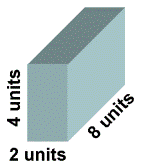
<== Diagram 1 Box of diagram 1 has a :
Volume = (2 x 8 ) x 4 = 64 cubic units
Surface area = 2 (2 x 8 ) + 2(4 x 2) + 2(8 x 4) = 112 square units
.
.
Let modify the box (Diagram 2) to another dimension and see its geometric parameters.
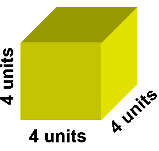
<== Diagram 2
Volume = ( 4 x 4 ) x 4 = 64 cubic units
Surface area = (4 x 4) x 6 sides = 96 square units
Note, the volume
remained but....
the surface area has
reduced!
This saves material, right?
How about another dimension (Diagram 3)?
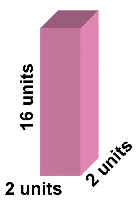
<== Diagram 3 ( A tall box!)
Volume = (2 x 2 ) x 16 = 64 cubic units
Surface area = 2(2x2) + 4(2x 16) = 136 square units
What now?
The volume again
remained,
but the surface area has
increased!
.
What is the conclusion from here?It is observed that althought the volume of the box has not changed, their surface areas has changed. The direction of change( increase or decrease), however, is on a case by case basis.
This concluded that there is
no relationship between volume and surface area of any object.
Therefore don't be tricked into reckoning that surface area increase will cause a definite increase in volume. Likewise for reduction also.
Hope you gain much from here.
Geometry is exciting and mysterious at the same time, right?
For relationship comparsion between another set of geometrical parameters, perimeter and area,
click here.
.


+copy.jpg)


 Posts
Posts


