

A number of road improvement projects are in process along the corridor of Route 15 North. One of these improvements, the Lucketts Bypass, is expected to directly impact JK Black Oak Wildlife Sanctuary (JK Black Oak). Loudoun Wildlife Conservancy is closely involved in this process, working to prevent construction of a roadway that would seriously damage JK Black Oak’s globally rare habitat.
What’s Happened with the Lucketts Bypass Project: The Timeline
2019
March 2020:
April 2020:
November 2021:
July 2022:
June 2025:
Summer 2025
-
- Expressing appreciation for the elimination of Route 3 (a full bypass alternative not released to the public that would have bisected JK Black Oak) by Supervisor Kershner’s office
- Advocacy on behalf of Hiway Mobile Home residents against alignments 4 and 5 which would have cut through the community and taken homes
October 2025
January 2026
April 2026
June 2026
August 2026
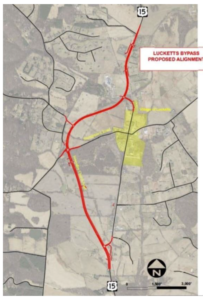
Alignment A
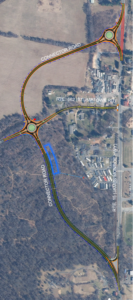
B, Mini-Bypass
What This Means
While a bypass to the east of Route 15 would have minimal impact on JK Black Oak Wildlife Sanctuary, any type of bypass placed to the west of Route 15 will have an direct impact. As currently mapped, Loudoun Wildlife does not support either of the two route alternatives. We do note two encouraging details: the proposed mini-bypass is a much smaller, two-lane design with a significantly reduced footprint, and the county has indicated ‘Mini-Bypass B’ is being refined further east, closer to Route 15, a positive sign, though not yet a confirmed outcome.
We understand how crucial improvements to Route 15 are to Lucketts and other county residents in desperate need of relief. We still believe the bypass option that would best correct the congestion and safety problems in this area would be on county land east of Route 15, with proper screening and buffers to alleviate safety concerns. If the project must instead proceed on the west side of Route 15, it should hug JK Black Oak’s eastern property line as much as possible to minimize habitat disturbance. Any sanctuary land east of the road would be fragmented from the rest of the sanctuary, too small and isolated to support most wildlife. This area would essentially be rendered desolate habitat; the “boxing in” would leave the ecosystem unproductive and uninhabitable for the wildlife that currently depend on it. No matter how the project proceeds, we are committed to protecting the vital and globally rare wetland habitat we protect at JK Black Oak.
What We Need: How to Get Involved
There will be a public meeting on the concept of the new mini-bypass on September 29th, 6:30-8 p.m., at the Lucketts Community Center. This meeting comes before two key milestones: SmartScale scoring results, expected in December, and the state’s public comment period ahead of the Board of Supervisors’ expected alignment decision in early 2027.
At the public meeting in September, we expect that community members will have the opportunity to ask questions and raise concerns to be considered as the planning progresses. Stay tuned, as we’ll be releasing a guide to the types of questions that the general public can ask to show the county that you care about protecting the sanctuary. In the meantime, here are our primary concerns still to be addressed:
- Right-of-way: JK Black Oak Wildlife Sanctuary can only survive if the physical footprint of the roadway is placed east of Route 15 or along the easternmost property line.
- Roadway speed: The county must commit to the roadway being no more than 35 mph. Lower speeds mean less ecological impact from noise, vibrations, and wildlife-vehicle collisions.
- Buffering: In order to protect the ecosystem immediately to the west and the residential community immediately to the east, screening and shielding should be substantial to minimize noise and safety concerns.
- Wildlife crossings: The county should put innovative amphibian and reptile crossing solutions in place, such as fencing that guides animals safely toward tunnels or culverts under the road, to prevent the most at-risk wildlife at JK Black Oak from facing a disproportionate impact from the roadway.
We need your voice. Ahead of the public information meeting, email your Supervisor to tell them to protect JK Black Oak Wildlife Sanctuary, and share your concerns with the county’s Department of Transportation and Capital Infrastructure (dtci@loudoun.gov). If you have questions, contact LWC Conservation Advocacy Coordinator Trinity Mills at tmills@loudounwildlife.org.
We continue to be grateful to everyone who has already attended public meetings, filled out the county’s survey, commented to the Board, and stayed engaged. Thank you. Stay tuned for more ways to help protect JK Black Oak Wildlife Sanctuary’s future.
Additional information relating to the Route 15 Lucketts Bypass:
- County Project Page on all Route 15 North Projects
- Study on reptile and amphibian crossings, USGS
- County Comment Form Map showing sinkhole locations and bypass routes
- Loudoun Wildlife’s comments to the Board of Supervisors from July 2022.
- Loudoun Wildlife’s comments on the potential bypass options from June 2021.
- Full results of the first county survey on alignment direction preferences.
- Advocacy 101 event recording on public involvement with road projects, including a case study on the Route 15 bypass


2 Comments
Leave your reply.