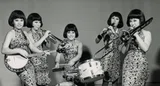
Tokyo Happy Coats “Oku no Hosomichi ” 【Bonus Track 16】 SN Productions co-founder Mr.Shattuck, last testimony<2>。


(12.09.2016./Courtesy of Library of Congress、Veteran's Heritage Project)
This article has been prepared as a Japanese satellite content with the permission of Mr.Roy Baugher, a Tokyo Happy Coats researcher from the United States. The Japanese and English versions of this article have been prepared with the permission of Library of Congress and Imprints of Honor, which conducted the interviews.
About "Alonzo Bain Shattuck Collection"
Title: Alonzo Bain Shattuck Collection
Narrator: Alonzo Bain Shattuck
Interviewer: Barbara Hatch
Location: Fountain Hills, Arizona, USA
Date: 12 September 2016
Citation: Veterans Heritage Project, Barbara Hatch, and Alonzo Bain Shattuck. Alonzo Bain Shattuck Collection. 1944. Personal Narrative.

ー5.Heading to the Pacific Front.
AS: Isn't it, though? I took a ship called the Winged Arrow [USS Winged Arrow (AP-170)], which was a very small converted coastal freighter. The back hole, there were three holes. There were two in the front, and one in the back. In the aft hole was a group of soldiers from my group that we trained, a couple hundred of us in the hole.

Heading to the Pacific Front
AS: And the front were Seabees. In the front holes, there were Seabees going overseas. And we spent 22 days across the Equator. Can you even imagine what that hole smelled like?
BH: Especially along the equator.
AS: We had saltwater shower for an hour a day for two hundred and some odd men.
BH: For 200 men?
AS: Yeah.
BH: Wow. Yeah, I bet it smelled bad. So I guess that was just the line they were going, why they were going along the equator. Did they put you through any of the Navy stuff with King Neptune and all of that? Because this was not really that kind of—
AS: No, that was not the time.
BH: And this would have been what, 19—was the war still going on?
AS: Oh, yeah. It was early, January '45.
BH: So they put you in a chemical weapons group. Okay.
AS: No. No.
BH: No?
AS: No. I was studying chemical engineering in Washington.
BH: So what—
AS: I was put right in the infantry.
BH: So when they said they called out these two hundred, did you figure out why they called you out?
AS: Never figured it out, because it was really strange. A buddy of mine and I—we went in on the same day in St. Louis. We had met each other, but did not know each other. And the way they gave you a streetcar token to get on the Broadway streetcar line, they go down to the end of it, and then they picked you up in a truck from Fort Leonard Wood for induction. But he became a very, very close friend of mine through the years. His name was Deptula, and mine was Shattuck, so we were always in different companies, because of the—
BH: Just the alphabet.
AS: Just the alphabet. And out of several thousand men that were out on that morning, he was in an entirely different company than I. He was also called. And the two of us went overseas together, but we got split up in Mog Mog [Ulithi Atoll, Yap State, Federated States of Micronesia].

ー6.Moving around the Pacific Ocean.
AS: And we met again after the war. I took a civilian job. He decided he wanted to stay, and my colonel got him a civilian job. And we were together in Japan until I left. He stayed with the government service and retired. I do not remember which year he retired from government service, but it was at a maintenance depot. He was a mechanic, and he went to the engineers, and I went to the infantry. But we met after the war in Japan. We hooked up. We were still both in the service. And we happened to get wind up stationed close to each other at the very end. I was in Hokkaido in the beginning, and he was down near Yokohama. And when I went to Yokohama to catch a ship, is when we hooked up again.
BH: You were up in Hokkaido.
AS: Yeah.
BH: Well, we will get there. [inaudible]
AS: Sakegawa.
BH: Yeah. What was his first name?
AS: Chester. Actually, it was Czeslaw Stanislaw Steptulowski. But he went by Chester Deptula.
BH: Step—
AS: Chester Deptula, D-E-P-T-U-L-A.
BH: What was his whole name actually? I am not too bad in Polish.
AS: Czeslaw Stanislaw Steptulowski.
BH: Steptulowski.
AS: But the family took the name Deptula. I am still in contact with his daughters. I was the godfather. His daughters were born in Japan.
BH: So, going over on the ship, did you get seasick?
AS: No.
BH: No? I am surprised. Most people do.
AS: If I had slept in a hole, I would have probably been sick from the odor. But I made a deal with the boatswain, and we had LCMs on deck, loaded on deck. And I rigged a hammock between the screws on an LCM that was on deck.
AS: And the boatswain allowed me to be up there, because I ran a crap game, and I was giving him a little part of what I won in the crap game.
BH: That is funny. But that is the way things—that is the way it is.
AS: Well, I had fresh air. I could not stand it in the hole.
BH: Yeah. It was too stifling. Yeah.
AS: I can, you know, later I worked in criminal investigation, and I was in autopsies and handled bodies. And I had dead bodies in the Army. Sight did not bother me. But anything that had a bad odor, I could then throw up. I could not take odors.
BH: Well, everybody has some sense that bothers them more. You know, one guy was in Iwo Jima and he, same thing, he had no smell. So he went on body detail and, because the sight did not bother him, but the smell, and because he could not smell, he did not get sick like the other one.
AS: I did not get sick.
BH: So where did you stop? Did you stop anywhere along the way or did you—?
AS: We went to Mog Mog in the Ulysses.
BH: Okay.
AS: From there to Leyte, Okinawa, Cebu. And Cebu, when the war ended, we were in respite life. And what I understand, there had been a plan of battle for invading of Japan. And when the war ended precipitously, where you were scheduled to do an invasion is where they sent you for occupation. So we loaded up in Cebu.
BH: It was in the Philippines, right?
AS: Yeah, and went to Hokkaido. We landed in Hokkaido, and my regiment went to Asahigawa. It is right up in the middle.

BH: Pronounce it for me again.
AS: Asahigawa, A-S-A-H-I-G-A-W-A.
BH: Asahigawa. So that would have been where you would have had to go, if we had actually done an invasion.
AS: Yeah, but we would have never made it to Asahigawa.
BH: But we did not do that.
AS: The way that island was, was sheer rock going up from there. There were no beaches to land on.
BH: And this was an island, the Asahigawa?
AS: Hokkaido was an island.
BH: Okay, the whole island.
AS: And they had concentric rings of defense to the middle of the island, where they were entrenched and in caves, man-made caves. We would have got wiped out if we had gone to Hokkaido.
BH: So you never questioned Truman's decision to use the bomb? I mean, not that you knew about it at the time, but as years went by.
AS: On the contrary, I am wholly in favor of his decision. Otherwise, I would not be here, neither would a lot of other men, thousands.

ー7.The end of the war has come.
BH: So when did you know? I mean, you were in Cebu when the war ended. Can you describe sort of, you know, how did you find out?
AS: They told us one morning. We were in tents in bivouac, along the beach outside of Cebu City. And it was us and the Americal Division, who was closer into the city. We were also in respite, getting replacements, because we had lost a lot of people. And it is a funny story. One of the battalions in my regiment had found a field finance office in Okinawa, a Japanese field finance office. And they had all this Japanese money that they found in this Japanese field finance. And they were giving it out to guys as souvenirs. They were 100 yen notes. We had stacks of them. I sent some home, and all the guys were sending them as, what do you call them, souvenirs. When we got to Japan and made our first payday, they paid us in Japanese yen, four to one. Four yen to a dollar. And these were 100 yen notes, which was a lot of money, because we were still, our military pay wasn't that high in those days.
BH: But you'd sent them home.
AS: Oh, I called, I wrote home, and said, "Send them back." [laughs]
BH: Did you get them?
AS: Yeah. It was good money. I guess it was about two months that they paid us in Japanese yen. And then they had military occupation currency. Have you seen it?
BH: Yes.
AS: I have some here if you want to take a look at it.
BH: Yeah, I mean, because otherwise your whole economic situation is a mess.
AS: They turned it into, what they did was print this, what they called military—
BH: Script?
AS: Script.
BH: Yeah. Yeah, because you would probably have so much black market, you'd completely destroy the economy of Japan, I'm imagining.
AS: They had black market anyway.
BH: Yeah.
AS: It was a bit controlled because of it.
BH: This would be an interesting study, just the study of currency during wars.
AS: I got a book over there, I pulled it out in case you wanted to see it. The Japanese government printed Philippine pesos.
BH: Right.
AS: And I have one bill of the Japanese government printed dollars.
BH: Wow.
AS: I've got a copy of one of them.
BH: Okay, well look at that after. Wow. So, somebody came around, and just said the war's over.
AS: Yeah.
BH: So, do you remember how you felt?
AS: Very relieved. [laughs]
BH: Yeah, I can imagine. Did people get up and whoop it up? It was morning.
AS: Oh yeah, we built bonfires. We threw some of the guys—we were told that we were going to leave in a few days in what they called T, O, and E, is Table of Organization and Equipment, which meant you were stripped down to exactly what you were supposed to have. And we'd been there a couple of weeks, and we'd acquired some local mattresses to stick on the ground. We stole a few Jeeps, and put our own numbers on them. But we had to get rid of everything outside of what your Table of Organization and Equipment said you could have. So, we were burning stuff in big bonfires, and some of this money that we'd gotten from the guys who found the finance office, we threw in the fire.
BH: Oh gosh. Were you afraid of getting in trouble or you just thought it was worthless?
AS: It was worthless.
BH: You thought?
AS: It was something extra. We were getting rid of stuff.
BH: You thought it was worthless. You didn't know.
AS: Yeah, we thought it was.

ー8. Landing in Hokkaido. Living in Asahikawa.
BH: So, then you heard that you were going to be shipped out. Did you know you were going to Hokkaido?
AS: No.
BH: They just said, "Get on this ship."
AS: Yes, they said Hokkaido. We wouldn't have known what it was. I don't think I would have anyway at the time. Japan, I mean Japan was Japan. I didn't know the names of the islands or anything. We got there. I actually went with the colonel. The colonel flew in ahead of time. We took over an area that had been a training area for Japanese paratroopers and ski troopers.
BH: In?
AS: Right outside of Asahigawa.
BH: Okay.
AS: In Hokkaido. The colonel of our regiment flew in. There was five of us, first three graders from the staff, from the regimental staff. I was regimental headquarters company by then, first sergeant of regimental headquarters company. I was on the plane. When we landed, there was this, of course, airstrip. They did training there for paratroopers and ski troopers. Both sides of this runway was lined with Japanese soldiers with rifles. I looked out, and I thought, "This is crazy." There were thousands of them. You couldn't see the end of the line at the end of the runway. All three, four deep Japanese soldiers with rifles. The colonel went down the steps and was greeted by a Japanese general who handed him his sword. The general turned around and barked out a few words. All these soldiers stacked their arms, made a right-hand face, and marched off to the city where the train was. The train took them off to wherever they were going. All these thousands of rifles were along the runway.
AS: There was no problem. We didn't have any problem with any, the whole time. I stayed in Japan 15 years.
BH: From 1945?
AS: [Nineteen forty-] Five. Until 1960. I worked for the U.S. government for six years.
BH: So the part of that where you were still in the service, obviously, when you went up there, but not for very long, until '46.
AS: Well, I got discharged in '46.
BH: In Japan, right?
AS: In Japan. What happened, I was the first sergeant. So when my regiment, or division, actually, was a National Guard unit from New York. They were one of the first ones to go overseas. They'd been in five campaigns before I joined them. It's called the Lady Luck, Statue of Liberty, 77th [77th Infantry Division]. They were deactivated, going back to be deactivated, to return to National Guard status. I stayed behind only because I had to turn over the documents to the Airborne who took over our occupation duties.
AS: So myself and some other enlisted men and officers were left behind when the regiment packed off to go back to the States. We had points and everything that we could have gone with them, except that we were hired to stay back to turn over things. So I went solo to Yokohama to catch a ship. I had been, before I was first sergeant, I was a sergeant in the INR platoon, which is the Intelligence Reconnaissance Platoon. And Captain Nett [Robert Burton Nett] was the platoon commander. He was a platoon commander. He was lieutenant then. But he got a Medal of Honor. And he had been sent back to the States on one of these bond tours. When I got arrived in Yokohama to catch a ship, he was an aide to General Eichelberger [Robert Lawrence Eichelberger] at Eighth Army Headquarters, which was right near the port where I was sent, because they didn't know what to do with first sergeants. There were a lot of them around. [laughs] They had no post for you. So they sent me to the port at the military police company to wait for the ship.
AS: And while I was waiting, I met some people from a ship called the Monterey, which had been a cruise liner for a Matson company out of Hawaii. And I figured if I could get on that ship, I could be the sergeant major for the trip and get a stateroom. So I signed a wavier to stay back until the next time that ship was due to come in. And it turned out to be longer than I expected. I was going to go back to school in September, and I had signed a waiver up until July.