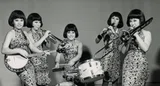
Tokyo Happy Coats “Oku no Hosomichi ” 【Bonus Track 17】 SN Productions co-founder Mr.Shattuck, last testimony<3>。


(12.09.2016./Courtesy of Library of Congress、Veteran's Heritage Project)
This article has been prepared as a Japanese satellite content with the permission of Mr.Roy Baugher, a Tokyo Happy Coats researcher from the United States. The Japanese and English versions of this article have been prepared with the permission of Library of Congress and Imprints of Honor, which conducted the interviews.
About "Alonzo Bain Shattuck Collection"
Title: Alonzo Bain Shattuck Collection
Narrator: Alonzo Bain Shattuck
Interviewer: Barbara Hatch
Location: Fountain Hills, Arizona, USA
Date: 12 September 2016
Citation: Veterans Heritage Project, Barbara Hatch, and Alonzo Bain Shattuck. Alonzo Bain Shattuck Collection. 1944. Personal Narrative.

ー9. Retired from the Army and became a criminal investigator.
AS: The colonel, who was the provost marshal, took a liking to me because I was the only one he had that had any service. Everybody else, new people coming in and second lieutenants, had just graduated from OCS [Officer Candidate School].
AS: And he wanted me to stay, and he said he'd get me a commission. And I said, "You're going to get me demoted from first sergeant to second lieutenant, colonel, thank you, but no thank you." And then he came back to me, and he said, "Well, I'll get you a civilian job." And then what's that? And frankly, the amount of money that they said I was going to get paid was more than I'd ever thought of getting in my lifetime. So I said I'd take it. They said you'd take it for a year, and you could renew it or go back in a year. And it was a good chunk of money, and I figured, “Well, I'll do that.” And I didn't, at the time, they hadn't talked about getting education paid and all that. It was still right after the war. And I worked, actually, the job that I had wound up as, the chief criminal investigator for the Port of Yokohama.
AS: And I took the reserve, and I can't tell you why, I don't know to this day why I did it, but they said, "Oh, you get a reserve commission if you—"
BH: So you were a civilian, but you took that reserve commission.

ー10. Serving in Korean War, black market in Pusan.
AS: And the Korean War started, and they wound up with the Pusan perimeter, and the colonel came to me, and he said, "They need somebody with security and knowledge of port operations. They need them in Pusan. Would you go?" And I was thinking, "What do I want to get in another war for?" And then I thought, my second thought, "If I don't go, they can call me up as a second lieutenant." So I said, "Okay, Colonel, I'll go." I wound up in Pusan during the perimeter and Incheon on D4 [D-day plus 4], setting up security as a civilian. I had a patch, and I used to kid people, it said "Technical Advisor" on the patch on the uniform. I said, "That means you can't shoot at me."
BH: So you were a civilian, but you're still in the reserve. So what did you do in Pusan?
AS: Same thing. Set up the security for the port of Pusan [Busan]. They were losing one and two trucks out of five. They stole everything that wasn't nailed down and some things that were.
BH: Who was stealing them?
AS: South Koreans.
BH: South Koreans. So you weren't there. Were you there when they had the breakout?
AS: Yeah.
BH: Yeah?
AS: That's when they had the breakout right after the Incheon landing.
BH: That's true.
AS: Almost simultaneously. I flew in the first trip I ever had in a jet. I was in the back seat of a jet fighter plane. Flew up to Seoul.
BH: On D-plus? You said D-plus 4, right?.
AS: And went to Incheon.
BH: So what did you see? Give me some details. So when you were in Pusan first, I mean it was surrounded, but it was secure, I guess.
AS: It was secure, yeah.
BH: So the South Koreans were stealing stuff, well, because they were so desperate, I guess, or afraid.
AS: It's also, we all felt the nature of the beast. There was a place outside of Pusan we call Little Chicago, and they would wind up with stuff in Little Chicago in the market, military supplies that we hadn't even seen yet. New things would wind up in Little Chicago before they got distributed through the regular channels.
BH: It's kind of funny in its own way, but I—
AS: One of the pier superintendents who I knew also, he was a civilian that I knew in Yokohama, went over there. He was a rough, tough old guy who had been a pier superintendent for years in the States. Anyway, we were billeted in what had been dependents' houses near, in Pusan. He wasn't in the house I was in, but he was near, and I knew him pretty well from Yokohama. He told me the story. He came home one afternoon, and there was the ROK Guard, the Republic of Korea, they call them the ROK Guard, was beating the hell out of another Korean with the butt of his rifle. Bill asked him, "What are you doing?" He said, "Well, I caught him trying to break into your house." He said, "Well, you don't have to beat him to death for that." But just a minute, and he went in, and he got a carton of cigarettes and gave it to the guard for being so diligent in stopping someone from stealing. The next day he came home, and his guard had another Korean beating the hell out of him.
BH: To get the cigarettes.
AS: The other story that is indicative of what was happening there. The big thing was PX supplies. If they could steal them in a wholesale situation, they would break in the warehouses from the back end. The ROK Guards who were supposed to be guarding it were part of the deal. One time, I heard about it later after I had already left, but they had a "red ball" train supposedly going from Pusan up to Daegu. They had one carload of PX supplies they put in the middle of the train. It was a "red ball," it [the train] was not supposed to stop. A ROK engineer, ROK Guards on the front, and ROK Guards on the back of the train. The train arrives in Daegu, and that car is missing. Nobody knew how it could have happened, but it happened.
BH: Full of PX stuff, wow.
AS: The Turks there, you want to meet some real mean ones, the Turks were notorious, and they did not want to fight with what we would call under normal things with their rifles. They wanted to use their bayonets. They were really tough, the Turks. They had a compound in Pusan, and about the third day that they were there, they caught a Korean inside the compound stealing things. They crucified him upside down on the front of the compound where they had a wall, a gate. If you will excuse me, but they stuck his genitals in his mouth and put a sign up, "This was a thief." They were the only ones that did not have any trouble getting things stolen from them. Everybody else had problems getting thievery. The Turks cured it.
BH: Did you see this guy?
AS: No, I did not see it.
BH: Thank heavens.
AS: I saw a picture of it. I was told about it, but I did not see it myself.
BH: I saw a skull once stuck in the ground, and there was snow on it, and then the snow had fallen off. I asked the veteran, I said, "Who did that?" He goes, "Probably the Turks." They did not mess around, did they?
AS: They did not take any second thoughts.
BH: Well, you turned them loose on the North Koreans. My money is on the Turks. I think they did turn them loose on the North Koreans eventually. I am surprised the war was not over earlier.
AS: They wanted to go in with bayonets.
BH: I guess you were trying to, when you were at Port Security in Pusan [Busan], trying to get the supplies built up for the breakout, right?
AS: Yes, and keep it from being stolen as much as possible. The problem, and I do not want to put it on tape, is that it is not very nice about Americans.
BH: Well, that is okay.
BH: I mean, it is true, and it is honest.
AS: Ok, well, in those days, all of the African Americans were in trucking companies. They, to a great extent, not all of them, but some of them, were in cahoots with the Koreans. That is why we were losing truckloads of material. The truck, the driver, and the material would disappear.
BH: What did you do about it? I mean, you were Port Security. What would be the repercussions?
AS: Well, again, we had, unfortunately, the guards, mainly at the exit and entry of the port, were African Americans also. I changed that. I got a company of MPs [Military Police] in, and the gates set up what I call a waybill that had to be stamped out of whatever warehouse they left, and stamped in at the gate. If it was going out the gate to where they were going, it was a matter of common sense that the military does not always follow.
BH: No organization. Did that—?
AS: It cut down.
BH: Cut down, I am sure.
AS: I did not solve the problem, but I cut it down. Made it more difficult for them to get away with a whole truckload.
BH: At least they could just steal a few things off the truck, right?
AS: Oh, that is—
BH: And not just drive the truck out the gate.

ー11.Cannon Agency. Encounter with Jack Cannon.
AS: Yeah, that continued. No, I worked at the later date, when the colonel who hired me left back to the States. I had arrested a civilian on the south pier who resisted arrest, so I decked him, and took him into the provost marshal, because he claimed he was with the American Embassy.
BH: And this is an American.
AS: Yeah, but he did not show me identification. I took him into the colonel, and when I walked into the colonel's office with him, he claimed to be with the American Embassy without proper documentation. He had a tag on from the gate that said he was with the American Embassy. It turned out he was the head of one of General MacArthur's [Douglas MacArthur] intelligence units.
AS: He was a colonel, and he knew my colonel. They started laughing when I brought him in. Well, that colonel's name was Canon, Jack Canon.
AS: When Colonel Harder, the provost marshal, was leaving, he came and took me into his unit, which was an intelligence unit. And had some interesting things happen with that. He [Jack Canon] was hanging around south pier, which was the only pier that allowed non-military ships came in. I just did not like the looks of what he was doing, and I stopped him. I said, "Who are you?" He said, "I am with the Embassy." I said, "Well, show me your credentials." He said, "I do not have to." I said, "Yes, you do." In those days, to formally, under the regulations, put somebody under arrest, you had to be able to touch them and say, "You are under arrest." Put them on their shoulder or their arm or something. It was part of the regulation, I guess you would call it. Anyway, I touched him on the arm and said, "You are under arrest." And he tried to grab my arm and flip me. I had been taking Judo lessons from a top Judo man daily. At the time, I had nothing else to do. So I decked him. It turned out he considered himself to be an expert Judo man. He was very impressed. I guess that was the reason that I picked him out and also decked him. He wanted me to go to work for him. In the last two years I was in government service, I worked for intelligence.
BH: That is funny.
AS: It was funny.
BH: So did you ever do the things—what was his name? Dannon?
AS: Canon. Jack Cannon. And strangely enough, when the CIA [Central Intelligence Agency] was formed, they took over our unit, and he resigned, and so did everybody else in the unit. It was a joke when they first were formed. He went back as provost marshal of Fort Hood, Camp Hood, until his retirement. I met him again when I was in Houston. He was retired.
BH: So all this time you are really still a civilian. How did you end up staying until 1960?
AS: I went into business for myself.
BH: Okay, so you did this civilian job. So when the CIA took over the intelligence, is that when you left as well?
AS: Shortly after. I resigned. They said I couldn't. I called the head of civil service in Washington, DC, and they said I could, and I did.