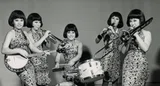
Tokyo Happy Coats “Oku no Hosomichi ” 【Bonus Track 19】 SN Productions co-founder Mr.Shattuck, last testimony<5>。


(12.09.2016./Courtesy of Library of Congress、Veteran's Heritage Project)
This article has been prepared as a Japanese satellite content with the permission of Mr.Roy Baugher, a Tokyo Happy Coats researcher from the United States. The Japanese and English versions of this article have been prepared with the permission of Library of Congress and Imprints of Honor, which conducted the interviews.
About "Alonzo Bain Shattuck Collection"
Title: Alonzo Bain Shattuck Collection
Narrator: Alonzo Bain Shattuck
Interviewer: Barbara Hatch
Location: Fountain Hills, Arizona, USA
Date: 12 September 2016
Citation: Veterans Heritage Project, Barbara Hatch, and Alonzo Bain Shattuck. Alonzo Bain Shattuck Collection. 1944. Personal Narrative.

ー15.Once again, to his younger days.
BH: Gets crisscrossed, because you did such interesting stuff. I thought I would go back and look a little bit at some of your military stuff. So in the Army, you were at Camp Hood. Was there anything particular about basic? I mean, I don't know. Was it hard? Did you—
AS: Actually, for me, it was kind of easy, because I had been for years getting up, going to school in the morning, going from school to the factory. I worked in the factory from 3:30 to midnight. By the time I got home, it was like 12:30, 12:45, depending. I had to get up at 7 to get to school.
BH: So you were used to this.
AS: So in the Army, I had more time to myself and to rest and to sleep than I'd had in years. The only thing I had to get used to, actually, was marching. But walking didn't bother me. In the factory, I had started in this candy factory working on the manufacturing floor, which was handling 100-pound sugar sacks and batches of candy that weighed 80, 90 pounds, and rolling drums of cough drops that weighed 400 pounds. You had to roll them, tip them, and roll and balance them. So I was very strong, very young, and didn't know anybody. On weekends, I was going to the gym, working out with weights. The Army was not particularly difficult. I had taken ROTC [Reserve Officers' Training Corps] anyway.
BH: Oh, you had, in high school?
AS: No, in college.
BH: In college, but, I mean, yeah, okay.
AS: So I knew the basic Army routines and what you had. I was better off than a lot of the guys that were in that didn't know from Adam what was going on. I mean, not that ROTC made you a soldier, I think, but you got to know the basics of the life, the ways of the soldier.
BH: So did—I would think that since you had taken ROTC, you wouldn't have to go to basic. Didn't they send you in the summers to march around?
AS: No, they made me an acting corporal when I arrived.
BH: So I was going to say you skipped a few—
AS: I was an acting gadget.
BH: An acting gadget?
AS: That was what we called ourselves. They called you an acting corporal, but you were still a PFC [Private First Class].
BH: Why gadget? Because you're just a tool?
AS: Just a name that they used, I don't know.
BH: So how did you do with the rifle stuff, since you didn't have—you had vision issues?
AS: Oh, I was all right with it, as long as I had my glasses, and the Army gave me glasses.
BH: So you said you got—on your papers, you said you got to be an expert marksman.
AS: Oh, yeah. I had been shooting when I was a kid, a young kid with my cousin, when I would be down at my grandmother's house. I was eight, nine years old, I was shooting a rifle, .22 rifle.
BH: So you were familiar with being around weapons.
AS: I couldn't do what my cousin did, though. We would go out rabbit hunting, and if he saw a cottontail, he'd throw a rock at it, and make it run, and then shoot it through the head. The guy was incredible. He went in the Army, and he volunteered to go overseas, because they kept him up someplace near Omaha as a trainer for rifles. It was the most fantastic shot I ever saw in my life.
BH: He volunteered to go to Europe?
AS: He volunteered to go overseas. For years, he was there as an instructor, and he got into Southeast Asia and caught everything that man could catch when he came back. He was in the hospital half the time and had to be on special diets.
BH: So he was in Southeast Asia, not during World War II.
AS: Yeah.
BH: During World War II.
AS: Yeah, he was older than I. He passed away relatively young, but from military problems. He had liver flukes and malaria and schistosomiasis. You name it, he had it.
BH: But he was a good shot, you said.
AS: Fantastic.
BH: He was a really good shot. Did you ever have to shoot anyone or any—I mean, you don't talk about using your weapon at all. It seems like with the jobs you had that you didn't have to. Did you ever have to shoot anyone?

ー16.The fight against drugs being smuggled into Japan.
AS: Yeah.
BH: In Japan or in Korea?
AS: Well, in Korea, once. Japan when I was working for the provost marshal, and again when I was working for the intelligence, we had a couple of operations of Koreans coming in with narcotics. That's the way narcotics got introduced into Japan was from Korea, North Korea. There was a general in North Korea who was in charge of a factory that made pure heroin, and they would bring it into Japan. The Communist Party there mainly were the distributors of it to American forces. All planned. Made a lot of addicts.
BH: To the Americans that were stationed in Japan. It's sad, isn't it, that stuff?
AS: Yeah, I have a great hatred for anything to do with narcotics. And I saw these people, what happened to some of them.
BH: So you caught this guy smuggling then, I'm assuming, trying to smuggle stuff in.
AS: Yeah, one way back before it became that, happening like it does nowadays, I picked up 15 kilos of pure heroin that came from this factory in North Korea. I had to be present when we weighed it to put it in the confiscation room, as part of the evidence, or what have you. And the room that we were in to do it was about a little bigger than the size of that kitchen area. Maybe twice the size of the kitchen area was the room that we were in. Myself, the head of CIC in Japan, which is Counterintelligence Program, the head of it in Yokohama, and the head of the CID, Criminal Investigation, in Yokohama, and myself, because no one at that time had ever found that much in one package. They didn't believe it in Washington, so they sent a man from Washington to interview me. "Where did you get it? How did you get it? Why? This is impossible. Nobody's ever seen that much in one batch." But we were weighing this stuff. They were in cans, sealed. And inside was a plastic type or cellophane type bag. We would weigh it in this balance scale, pour it into the receptacle on one side of the balance scale, weigh it, and mark down this package with so many kilos or grams, pounds and ounces. The three of us didn't realize that we were getting high from the powder when you poured it. Some of it went in the air. After about a half hour of this, I looked at—I remember his name was Farmer. Captain Farmer was in charge of the CID in Yokohama, Jim Farmer. He looked at me, and he said, "Shattuck, do you feel funny?" And I said, "Yeah, I'm getting a headache." He said, "Just a headache?" I said, "Well, I was swimming, and my head is going around.” He said, "Me too." And then he turned to the guy who was from CIC. I don't remember who he was. He said, "You feel alright?" He said, "Me too. Let's get out of here." So we arranged then to take it out to where there was some circulation of air. And we put gauze masks on before we weighed the rest of it. But it was incredible.
BH: Couldn't you just weigh it in the plastic bag? No?
AS: I guess you could have. I don't know why we didn't. To be honest with you, but they said we had to weigh it individually. That was the rule.
BH: That was pretty funny. Wow. So then you went to—I'm just backing up, making sure, because I get to write this. So I'm looking if there's any gaps.
ー17.Visiting Leyte, Okinawa, Cebu, and Hokkaido.
BH: What about when you—let me ask you a question about Leyte, because you stopped there on your way over. Did you get off the ship or did you just stay on the ship?
AS: No, we were on the ship.
BH: Did you see any damage in the harbor?
AS: No.
BH: Because there had been a significant battle there.
AS: Yeah.
BH: Had they cleaned it up or was it more inland?
AS: Well, I guess it was more inland. We were out in the bay. We got off that ship onto another ship, but we just went with a lorry from one to the other. That's when my buddy and I got split up. He went to one, and I went to another. I don't recall where he went. I went to Leyte.
BH: Now what about in Leyte? So the invasion had already happened there, correct?
AS: Yeah.
BH: Did you have any time to stay or did they just load you from ship to another ship?
AS: No, we were in Leyte, and then we went on a ship up to Okinawa and then back to Cebu.
BH: So you didn't spend any time in Leyte?
AS: No.
BH: No. Okay. And you didn't spend any significant time in Okinawa either?
AS: No, I got to the end of it, fortunately.
BH: So the war was all but over, but it wasn't—
AS: The Marines were in front of us in Okinawa, and they got the brunt of the problem. We actually had the easy part.
BH: Could you sense that the end was near?
AS: No.
BH: Not at all? I mean, you didn't hear fighting, did you?
AS: No.
BH: You actually heard stuff still going on?
AS: Yeah.
BH: Okay.
AS: The war didn't end until after Okinawa was taken, and we were pulled out. We went to rest bivouac to reform, because we'd lost some men. My unit didn't lose one platoon of forward observers, but some of the other part of the regimental battalions got beat up pretty bad.
BH: So your 200, not so much, but what about the Seabees? Where did they get off?
AS: I don't know. They were on a ship.
BH: You didn't hang with them or anything?
AS: No. They were another animal.
BH: They're military, yeah. They're Navy.
AS: Sure. They were Construction Battalion. That's what they called Seabees. It wasn't an S-E-A-B, it was a Seabee, Construction Battalion. They were engineers out of an engineering group.
BH: They were two-thirds of the ship. You never passed them in the mess or just didn't have any occasion?
AS: The mess wasn't that large. We never really saw them, because we would go in line. We only got one meal a day on board. It was a small ship. They were loaded with men, and they had no capacity for it.
BH: I bet you didn't eat like kings on that ship, did you?
AS: No.
BH: Do you remember a single thing that you ate on board that ship?
AS: A lot of potatoes, Spam.
BH: So it wasn't like a Navy ship at all.
AS: Oh, no. It was never meant to be a transport ship. It was a coastal freighter, the Winged Arrow [USS Winged Arrow (AP-170)].
BH: Yeah, if you didn't even have any kind of decent shower stuff.
AS: We didn't have a mess hall. We went through with our kit, and whatever they dished out, we ate it out on deck.
BH: Because you talked to people like Ralph and those guys, they ate pretty well on board the Navy ships.
AS: Oh, the Navy, the Air Force.
BH: The Army, not so much, but certainly the others.
AS: The short time I was in Leyte, there was a swamp between us and an Air Force camp was on the other side of the swamp. We weren't getting very decent rations there either. We would get bully beef from Australia and dried potatoes and that sort of crap. So a couple of us decided we were going to—we saw across the swamp that they had a big mess hall, and they seemed to have everything, right? So one night we did a raid on their camp. There was five of us, and we got—we got over there, and we saw that the KPs [kitchen police] were just in fatigues with no tops, right? And—ah, come on. So we took off the tops of our fatigues and intermingled with the KPs, and it was a big mess. It was one of the big Air Force groups. And we got into the storeroom and got a couple of cases of what we thought was some canned goods to eat, right? And stole them. Took them back over on the other side, and it turned out what we had was tomato juice.
BH: Oh, no.
AS: But that was still something that we thought was—that was great to have even tomato juice. We were drinking tomato juice until we got—we all got diarrhea.
BH: Oh, no.
AS: We weren't used to anything like it, and we just drank these cans of tomato juice. But we did in Cebu. We got some Air Force guys. We traded samurai swords to them to take the beer ration that we got up in the plane to cool it off. And that was a real plus to get cold beer. But it cost them an airplane ride up with the big cases of beer. And we'd give them a samurai sword for doing it for us.
BH: Was it a real samurai sword?
AS: Yeah, we had a bunch of them. They weren't the officers' samurais, it was the non-commissioned officers' swords.
ー18.Extremely cold Hokkaido and Sapporo beer.
BH: So when you got to Hokkaido, it was summertime.
AS: August the 24th.
BH: 1945.
AS: And it started snowing on the 10th of September. I'll never forget it, and it never melted.
BH: The whole winter never—
AS: The duty was to go out and not shovel snow off the ground, it was off the roofs, so the roofs didn't cave in. By the end of winter, from the doorway, we were tunneling up to get on top of the snow.
BH: So how did you keep your lodging warm?
AS: Very badly. It was Japanese Army barracks, and the walls were just planks of wood. There was no insulation. And we had these Army pot-bellied stoves, which I'm sure you've seen, right? And we would keep them fired up real good. But at night, when you dampened them down, they would create a gas that would make the lid pop, right? So we'd take a bucket of water, and put it on the lid. And it would keep the room warm until maybe midnight, one o'clock in the morning. By the time we got up in the morning, that bucket of water was frozen solid. And our hot water was outside. It was Japanese-style. You went down to the middle of the barracks, and there was a walkway, semi-open, to the bath area, which was a Japanese setup where they had a tank that they fueled underneath to keep the water hot. You had to go from the barracks. It was about 15, 20 feet of open-sided, covered, but open-sided, to that room to get some hot water, which you took to the next little area where you bathed, Japanese-style, with a little bucket of hot water and a towel, right? A towel and a rag. I used to write home to get these kind of glasses, because Army glasses dug into my nose. And I'd get these frames that had this kind of a nose-piece. It was so cold there. It went to 30 below zero in the morning normally. And at 15 below, I walked out, and I had my glasses on. And when I walked out, they fogged. And I went to take them off, and the frames just shattered into little pieces.
BH: Wow.
AS: It was that cold. But you could go out. If there was no wind, we could go out, and if you kept moving, like playing catch or playing with a football, and you kept moving, you could take your shirt off for a while, as long as the wind didn't come. If you got a breeze, you had to get covered up right away. If you stopped, you got colder than you can imagine. But when the sun was out in the daytime, not snowing occasionally, it was a strange situation, very dry. But the snow built up, and the road to the end of town and up to the various groups, because we were a whole regiment stretched out along the road. If a truck or a jeep went off the road, you couldn't get it out. By December, you couldn't get it out. So we just put a flag up to get it out in the spring. It snowed and snowed and snowed. Every day or every night, it snowed.
BH: Well, you're pretty far north when you're up there.
AS: Oh, yeah. We were the most northern regiment of the U.S. Army outside of the Aleutians. We were down there on the same park as the Aleutians.

BH: How long were you there again?
AS: We got there August 24th and left—I left at the end of January. The regiment shipped out the first part of January, the first week in January.
BH: About five months.
AS: Yeah.
BH: Have you been back?
AS: To Hokkaido? No. To Japan? Yes. I had no desire to go back to Hokkaido. They have good beer, though. Sapporo beer is one of the best beers in the world.
BH: It is a good—I mean, I don't drink beer, but I'll take your word for it. So they have that even that early, right? They've had Sapporo beer for a long time.
AS: Sapporo beer was famous from Hokkaido. We were issued a case of beer after about a month, and four bottles of what they called bourbon. But it had a label over the top that said it was .04 percent methyl alcohol. We drank it anyway.
BH: Well, somebody was telling me who was in the Philippines, they had something called nipa and tuba or something.
AS: Tuba juice.
BH: Tuba juice?
AS: Tuba juice It was fermented palm.
BH: Yeah, fermented palm stuff.
AS: We would take coconuts in the Philippines, get a coconut, drill a hole in it, pour out most of the milk, not all of it, fill it with sugar, and set it in the sun. And it would ferment. It got pretty good.

【Continued to 6】