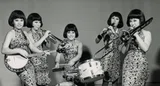
Tokyo Happy Coats “Oku no Hosomichi ” 【Bonus Track 20】 SN Productions co-founder Mr.Shattuck, last testimony<6>


(12.09.2016./Courtesy of Library of Congress、Veteran's Heritage Project)
This article has been prepared as a Japanese satellite content with the permission of Mr.Roy Baugher, a Tokyo Happy Coats researcher from the United States. The Japanese and English versions of this article have been prepared with the permission of Library of Congress and Imprints of Honor, which conducted the interviews.
About "Alonzo Bain Shattuck Collection"
Title: Alonzo Bain Shattuck Collection
Narrator: Alonzo Bain Shattuck
Interviewer: Barbara Hatch
Location: Fountain Hills, Arizona, USA
Date: 12 September 2016
Citation: Veterans Heritage Project, Barbara Hatch, and Alonzo Bain Shattuck. Alonzo Bain Shattuck Collection. 1944. Personal Narrative.

ー19.Life in postwar Japan.
BH: But you weren't in the Philippines very long, were you?
AS: No, not—
BH: Yeah.
AS: A couple of months here and a month there.
BH: Well, some of the old-timers probably showed you that trick, right?
AS: Oh, of course.
BH: Yeah.
AS: You learn fast.
BH: Well, these guys had been around a while, right? So when you went to reserve status, I mean, you're still doing a civilian job, you just have a reserve pay.
AS: Once a year—no, we didn't get paid any. Well, you did two weeks, you got paid.
BH: But you were still in Japan.
AS: Yeah, you did "active duty" two times a year, or once a year. And for me, it was a lark, because especially when I was up in Tokyo in the intelligence unit, they wouldn't let me do anything for that two weeks, go any place. So I would go in the headquarters, put on a uniform, go in the headquarters, sign in, and get assigned to the unit that I worked in as a civilian. I'd take off the uniform, two weeks later I'd go in and sign out. And when I was down in Yokohama, I would take two weeks of active duty, actually go on a duty.
BH: So you didn't know about the GI Bill, so you never really went back and got a college degree.
AS: Yeah, I did at Sophia University.
BH: You said that earlier, you finished college while you were in Japan.
AS: Yeah, and I got some money to pay the tuition by then.
BH: From the military.
AS: Yeah, 1952.
BH: So did you have to go to classes, or did they give you credit for it?
AS: Yeah.
BH: Where did you go to classes?
AS: At the University of Sophia.
BH: Which one?
AS: Sophia. That's a Jesuit school.
BH: And it's in Tokyo, right?
AS: Yeah. But there's Sophia universities all over the world, Jesuit.
BH: Well, the Jesuits were in Japan in the 16th century, so they'd been there a while. Sort of, in and out, but yeah.
AS: But the Portuguese were there before them.
BH: That's true, the Portuguese. Well, the Jesuits, yes, but they were part of the whole Portuguese. Same thing with South America, when they went down to South America.
AS: Yeah, it was very interesting that a lot of the words in Japanese for things foreign are actually words that are taken from Portuguese.
BH: Can you think of any?
AS: "Pan" in Japanese is "bread." "Pan" is "bread" in Portuguese.
BH: Yeah, so that's bread in almost just about every—there's a lot of—it's funny.
AS: Well, I think it comes from basically Latin.
BH: Yeah. So what did you end up majoring in?
AS: Economics.
BH: Okay. Not chemical engineering.
AS: No, they didn't even have chemical engineering yet. I took a course in international trade and economics.
BH: I mean, did you really want to do that, or you just took what they had?
AS: Took what they had.
BH: Yeah. Did you go on and get any graduate credits ever later in life?
AS: I got the credits from them.
BH: Graduate credits.
AS: Bachelors.
BH: Bachelors. You didn't go on and get a master's ever, right? No. Did you graduate high—you told me about high school. Tell me a little more about this science teacher. This science teacher really seemed to take a huge interest in you.
AS: His name was Lothario Pinkus.
BH: Now there's a name. Boy, what a name.
AS: He was actually qualified and invited to teach at the university, and he felt that the high schools were lacking in proper teaching.
BH: So he was invited to teach at Washington?
AS: No, he was at the high school.
BH: I know, but he was invited to teach at Washington.
AS: Oh, yeah. At several universities. I was in his science class, and I became president of the Junior Academy of Science. He had a, what do you call it, a group. He took me under his wing, because he liked the way I was interested in that. I was very good in mathematics and in the science classes. Terrible in English. Actually, my better grades were in Latin, because I thought I had to have Latin to be an engineer. So I studied it, and I didn't really like the English classes or the English teacher.
BH: So was Lothario, Mr. Pinkus, was he, I mean, a native-born American? Was he an immigrant? A name like Lothario, you don't hear that very much.
AS: I think—
[INTERRUPTION]
AS: —present to me. [shows Hatch two books]
BH: Oh, Mr. Pinkus. Well, you said he was a direct descendant of a Union officer.
AS: No, no, that was my great-grandfather. I was a direct descendant of my great-grandfather.
BH: From the German of Ernst Haeckel.
AS: This is Haeckel's History of Creation.
BH: Have you read the whole thing?
AS: Several times.
BH: 1876. Wow!
AS: There's two volumes.
BH: Wow, goodness. So it's science. It's science, it's not creation in the biblical sense.

ー20.Construction of Kinkakuji Temple in Brazil.

AS: This is the one I built in Japan. [shows Hatch a photograph and documents]
BH: Oh boy, does that—this one you built in Brazil.
AS: I made it in Brazil.
BH: That looks like the Golden Pavilion, and it sure does. I've been there in Kyoto. I'm trying to remember if the water is as brown as the one in Japan. Well, they must have loved that, because this is all in Portuguese, right?
AS: Yeah.
BH: So you were a builder by this point, so that's why you could do this. Interesting, wasn't it interesting?
AS: I put my pictures in there.
BH: Really?
AS: This is one of the waterfalls. It's 40,000 square meters. 4,000. 4,000 square meters. Well, I guess this one doesn't have it.
BH: It will be on the last page. That's usually the way it works.
AS: Hmm. Must be a different version. Because I did have my pictures of founder and builder and CEO. And another one. Oh, well, it must have been the English version. This was the entrance to the park. [shows Hatch a photograph]
BH: Oh, yeah. Oh, it's beautiful.
AS: Waterfalls and Japanese koi.
BH: Were the builders of Japanese descent, or were they—?
AS: Well, I hired—I've got to remember the name of it. It was an American engineering company. First of all, I went to Japan, and I got a copy of the time when they rebuilt the Kinkaku-ji one when it had been burned down. If you've ever read the history of it, a mad monk burned it down. And the government rebuilt it, and I was able to get from the priest there a copy of all the—the whole setup to rebuild it. And I had this American company—you know the name if I can remember it. In a moment I got a blank. Do the concrete structure, because I was concerned about having a fire, and we were in the middle of trees all around and everything. And then I brought two Japanese—one was local, but he was from Japan and had been in the same thing, and I brought one from Japan. I spent five years putting the wooden surface top on it. All this is wood. The railings are ipe, which is like ironwood. The roof, instead of being wooden shingles like it is in Japan, I used copper sheeting, but it turned dark and it looked like shakes.
BH: Yeah, just to be a little more fireproof.
AS: Yeah. You know what is funny? When lightning would strike this building, which it did frequently because of the copper roofs—these are both copper—the inside would light up. Scared the hell out of you.
BH: Yeah, I bet. Were you ever inside when that happened?
AS: Once. Once, but a lot of people would come and told us when they were in there.
BH: Is it still standing?
AS: Oh, yeah.
BH: Yeah?
AS: It's built concrete. It has a basement, which it doesn't have in Japan. And it goes down the [inaudible], what do you call them, piles, or 14 meters, the bedrock.
BH: Where is it in Brazil?
AS: Itapecerica da Serra, which means "slippery rock."
BH: Okay. Near what's the name?
AS: It's 24, 25 kilometers outside of Sao Paulo.
BH: So, do you have any—
AS: And it's built on the side. This is it. If you remember in Japan, it goes up.
[phone rings]
BH: I didn't think my phone was on now.
[phone rings]
[INTERRUPTION]
AS: —David. Forces Expeditionary Brasileiro, a battalion of volunteers who fought with Mark Clark. [laughs]
BH: Did Mark Clark fight in Europe?
AS: In Italy.
BH: Yeah.
AS: This is just an aside story. I happened to see it laying there. [shows Hatch a photograph] This is me in the middle. This guy in back is one of the two Americans who came over after the war that were in the—in those days, the Secret Service was in charge of narcotics. They aren't anymore, but they were. And they came over, and I ran a whole thing on narcotics after we found that heroin. And this is with the mayor of Tokyo, took us on a fishing trip. The fishing trip was to a place where they grew trout. They had pools of trout. You could put your hand in and grab them. That was the fishing trip.
BH: So that mayor of Tokyo, he's one of the occupation forces, because he's a Caucasian, right? He's not—
AS: No, no. No.
BH: Which one is the mayor? This is you here, right?
AS: That's me in the middle.
BH: In the middle, okay.
AS: This is an American in the back and an American in the front. And this is the mayor of Tokyo at that time. This is the man who ran the—it was a breeding farm for trout.
BH: For trout, yeah.
AS: But they owned by the city of Tokyo. It wasn't fishing. It was a party. And you could put your hand in a pond and pull out a trout.
BH: Oh, that's right.
AS: There's one with the American woman that had a column in the English newspaper there that did a thing on the Kinkaku-jii.
BH: You spell your name with a Z, but in Brazil they spell it with an S, I'm guessing, right? Alonzo?
AS: No, my name is with a Z.
BH: It's with a Z.
AS: S is Spanish. Z is—I've been told Basque.
BH: Okay.
AS: According to my mother, my father's grandfather was a Basque.
BH: Okay.
AS: That's where I get Alonzo from. That's what my mother told me. I don't know. Military, military. [looks through various photographs]
BH: So you got all your military stuff mixed in there with all your civilian stuff.
AS: Well, I just—you know, I lost so much stuff moving around. You know, this was my mother in Japan.
BH: She came to—
AS: I brought her to Japan, yeah.
BH: Wow, she looks so young.
AS: She was a pretty woman.
BH: Yeah, she's very pretty. Where'd you get that one? This—is that your ship you were on going away?
AS: No, that was—there was a—you know, during the war, they built some ships out of concrete, and they were still hanging around after the war. Some of them got loaded with ammunition, bombs that never got unloaded. And they didn't know what to do with them. They took them out in Yokohama, or Bay of Tokyo, and used them for target practice. And they couldn't sink the damn things. Well, they did eventually, but boy, it took a long time. Oh, come on. Where is the stuff I'm looking for?
BH: Did you ever learn to read Japanese?
AS: Read it? No.
BH: Speak it? To some degree.
AS: This is—yeah, the man here is Admiral Decker, who was in charge of Yokosuka Naval Base. I'm next to him there. I was the master of the Masonic Lodge on the Naval Base in Yokosuka, Japan.
BH: So you're this one?
AS: Yeah. That was Kenny.
BH: So Admiral Decker.
AS: Denton C. Decker. [looks through photographs and documents]
AS: You haven’t seen one of these, 1952, when Ridgway came and took over Governor MacArthur.
BH: So this is an original. This is not one of those—
AS: No, that's the original newspaper.
AS: This is a shrine club that started me in the entertainment business.
BH: So that's you with the glasses, right?
AS: Yeah. I think I have something over here that might be interesting. These things are all fading out. This is my unit. They were all civilians. We were the criminal investigators of Port Yokohama. I was the chief investigator. I was the first one hired by the colonel. Here's a picture right after the war.
BH: I can see those sergeant stripes.
AS: T5 [Technician Fifth Grade]. Here's Colonel Hart. The colonel's provost marshal that got me the job on the right. He had been in the California Highway Patrol, an officer, before the war.
BH: Decker. Admiral Decker, right?
AS: Admiral Decker.
AS: You can have one of these if you want. I've got a couple left.
BH: Oh, yeah, thank you.
AS: This is a Buddha. This is my mother in her uniform. They wore hats to [inaudible], beauty operators in those days.
BH: They had a lot more status then, than now, although they still have to go to school and get certified and all those things.
AS: This is one of the patrol boats. In addition to my other duties, I had the harbor patrol for a while in Yokohama. Yeah, this is in Hokkaido.
BH: Oh my goodness.
AS: I should have some others in this one I'm looking for. Haven't gone through this in a while. This was our biggest patrol boat in the harbor patrol. Where am I?
BH: So your military, strictly military story pales in comparison to your civilian jobs, in a way.
AS: Yeah.
BH: But the military launched you into that.
AS: They sure did. Oh, come on. I got a real funny one here. Some place, right after the—when I met up with my buddy again in Tokyo, we took a picture behind the prime minister's official residence.
BH: You have any surface pictures? Like, did they take some formal shot of you in a uniform? Although I could use the one of you standing there with your buddy. That would work too. This one. That'll work.
AS: I didn't even remember this one. Fort Meade, Maryland handbook. I don't know how that survived when I lost so much other stuff. I know I got it here someplace.
BH: Prophylactic stations. Cigarette rationing.
AS: That had to be 1945. '44. '44. Yeah, that Buddha, Buddha [inaudible]. Outside of—Okay. Okay. Yeah, this—I didn't take this picture, but I had it. This was in Leyte where they were burying, where the bulldozers, Japanese bodies.
BH: Yeah.
AS: When we were in Cebu, the war ended.
BH: Uh-huh.
AS: About four miles, five miles from our camp, was the colonel took the surrender, formal surrender of the Japanese that had been bypassed during the war. They were left without food or ammunition, and it was the largest single surrender by numbers at one time of the Japanese forces. And they were only about five miles from where we were bivouacked four or five miles. But they didn't have anything. In fact, we shot a few of them that tried to sneak into our camp to get food. We set up an MLR, the main line of resistance, around the camp, because we knew there were a bunch of them up there.
AS: But we didn't know how many until he took the surrender. It was Colonel Hamilton. I guess if we'd known how many were up there, we would have been a little worried. I was hoping to find a picture that I took when MacArthur was relieved of command and left, of the Japanese lining the street. They really respected him. They really did.
(Interview Ends)
I would like to thank everyone who read this to the end.
I would also like to thank the Library of Congress, Imprints of Honor, and Mrs.Barbara Hatch for allowing me to reprint this interview, and Mr.Roy Baugher for his help in arranging this.
Once again, I would like to express my condolences to Mr. Shattuck. R.I.P.