
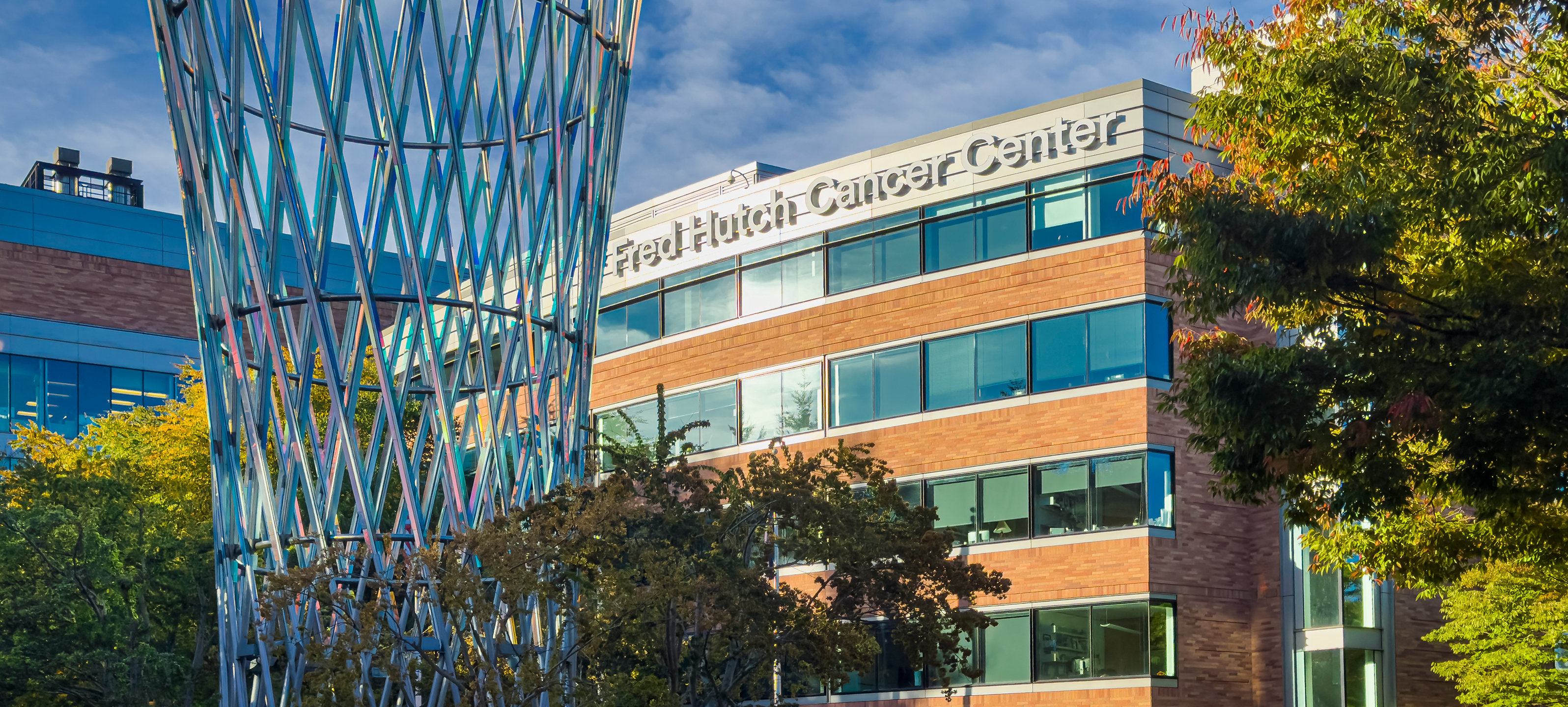
Fred Hutch Cancer Center
Learn more about the organization
Fred Hutch Cancer Center
Published
March 14, 2024
Working together to end cancer faster
About one in five people will be diagnosed with cancer in their lifetime, and the disease is a leading cause of death worldwide. In line with its mission to empower every person on the planet, Microsoft is applying machine learning, generative AI, and other cutting-edge tools to detect cancer, personalize treatment, speed access to life-saving care, and more. It also backs pioneering researchers. In the Puget Sound, Microsoft is collaborating with Fred Hutch Cancer Center to accelerate breakthroughs in cancer prevention and treatment.
“Cancer touches everyone. Hearing that you or a loved one has cancer is among the worst things. We’re here to help people navigate this disease,” says Kelly O’Brien, Vice President and Chief Philanthropy Officer at Fred Hutch Cancer Center. “We work to not only provide the care available today but also improve the care—and cures—possible in the future.”
Microsoft has supported this work since the 1980s. Since then, the company has provided Fred Hutch $20.1 million in grants and matched employee giving. Microsoft also sponsored the cancer center’s 2018 gala, which raised $10.4 million in a night. “For us at Microsoft, this is an opportunity for us to help the Hutch do what it has always done, to help the Hutch do what it does best: move faster to cure cancer,” Microsoft President Brad Smith said during the event.
Microsoft employees volunteer through board leadership, raise funds, and spread the word about the cancer center’s transformative work. Recently, the company has worked with Fred Hutch and others to convene regional and national medical research initiatives to share de-identified data, collaborate, and propel research.
“Microsoft is one of our most significant historical and ongoing donors,” O’Brien says. “Together, we are combining biomedical science, computer science, and data science to cure cancer.”

Boosting an “innovation culture”
Both Microsoft and Fred Hutch are celebrating their 50th anniversary this year. As neighbors in the Puget Sound, both organizations work to build a better future. “Innovation furthers not only our individual missions but our work together,” O’Brien says.
Fred Hutch leaned on Microsoft as it grew. Microsoft CEO Satya Nadella served on the Fred Hutch board of trustees from 2016-2022, guiding the cancer center’s expansion and adoption of technological advances in the age of big data. “The expertise of Microsoft colleagues has been truly formative for us as we bring together life sciences and technology,” O’Brien says.
Microsoft employees also contribute to the Fred Hutch Innovators Network, a group of young professionals who fund promising new research projects. They take a startup approach to research, investing in high-risk, high-reward ideas. This funding empowers experts to transform intriguing ideas into proofs of concept that can then generate additional, larger scale funding—and discoveries. “Microsoft employees empower our work, helping us thrive together,” O’Brien says.
Experimentation leads to progress felt around the world—and sometimes in your own arm. Fred Hutch successfully analyzed the COVID-19 virus and led the national network of clinical trials that resulted in a safe and effective vaccine, paralleling its ongoing research on HIV/AIDS and other infectious disease. Fred Hutch experts also worked with Microsoft, the University of Washington, Seattle Children’s Hospital, and other civic leaders to educate the community and save lives. O’Brien says, “Microsoft helped us to share our work globally during the early days of the pandemic.”
“Microsoft employees empower our work, helping us thrive together.”
—Kelly O’Brien, Vice President and Chief Philanthropy Officer at Fred Hutch Cancer Center
Asking and answering big questions
Worldwide, the number of new cancer cases is expected to reach 35 million by 2050. Many questions remain about how to improve prevention, screening and early detection, and improve cancer care for this growing number of patients. Data and computing are key to nearly all of them. No institution can address these challenges alone, so Microsoft is spearheading development of new research infrastructure to accelerate progress.
In 2019, Microsoft convened the Cascadia Data Discovery Initiative (CDDI) to advance biomedical data science and health technology innovation in British Columbia, Washington, and Oregon. The initiative works to remove bottlenecks in the research pipeline by developing a data governance framework, data sharing methods, and other structures to foster collaboration. AI- and machine learning-driven analysis through the CDDI is overcoming limits in treatment and advancing precision healthcare for breast, ovarian, and uterine cancers.
In 2024, Fred Hutch brought together top cancer centers, Microsoft, and other technology leaders to launch the Cancer AI Alliance (CAIA). While AI can uncover insights and make connections at scale, it requires massive amounts of data that is too often siloed in different research institutions. “A $10 million Microsoft commitment is helping CAIA to establish a responsible framework to securely steward this data, jumpstart new research projects with the goal of improving outcomes for patients”, O’Brien says.
“Microsoft financial support, in-kind computing power and professional services, and expertise enable us to do things we wouldn’t have the resources to do otherwise,” she adds.

Fueling prevention and treatment breakthroughs
From pedaling in Fred Hutch’s annual Obliteride 5k and cycling fundraiser to contributing through the Microsoft Give campaign to talking to a friend about the top research cancer in their backyard, Microsoft employees are engaged in the campaign to end cancer. Many are motivated to honor a loved one’s battle or celebrate their own recovery. “Of all the ways Microsoft employees give, every one of them is part of the work happening at Fred Hutch,” O’Brien says.
All those contributions add up. “You never know which dollar is going to help with the next breakthrough,” she says.
Many employees contribute to the cancer center’s greatest need fund, a “vote of confidence” that Fred Hutch will deploy dollars where they make the deepest impact. Others target their giving to a particular opportunity or disease. One former executive and software architect gifted a $75,000 recognition award from Microsoft to Fred Hutch for melanoma research, while support from another employee has helped a breast cancer researcher better understand metastatic cancer and generate millions of dollars in additional federal funding.
“Microsoft employees open up Fred Hutch to others, raising awareness for the need for cancer research in their own neighborhood and globally,” O’Brien says. This visibility encourages others to get involved, either by contributing financially or visiting the doctor for a cancer screening.
Every avenue of support is needed to build a world free of cancer, O’Brien says. “Microsoft’s collective generosity makes a difference in curing cancer in so many ways. It supports our vision of fewer people being diagnosed with cancer, more people diagnosed earlier, and more manageable treatment. We’re creating that future together.”
One Future

Philanthropic leadership for communitywide impact


