





React Native Development Company

One iOS and Android app from a single React Native codebase, with design, integrations, QA, store releases and upgrades. Rated 4.9 out of 5 by our clients.

Trusted by

Estimate your project

React Native development backed by real delivery

17+

Years in the market

Building web, mobile and AI products since 2008.

3,500+

Projects delivered

From MVPs to enterprise platforms.

900+

Clients worldwide

Product teams in 50+ countries.

4.9/5

Average client rating

How our clients rate their work with Netguru.

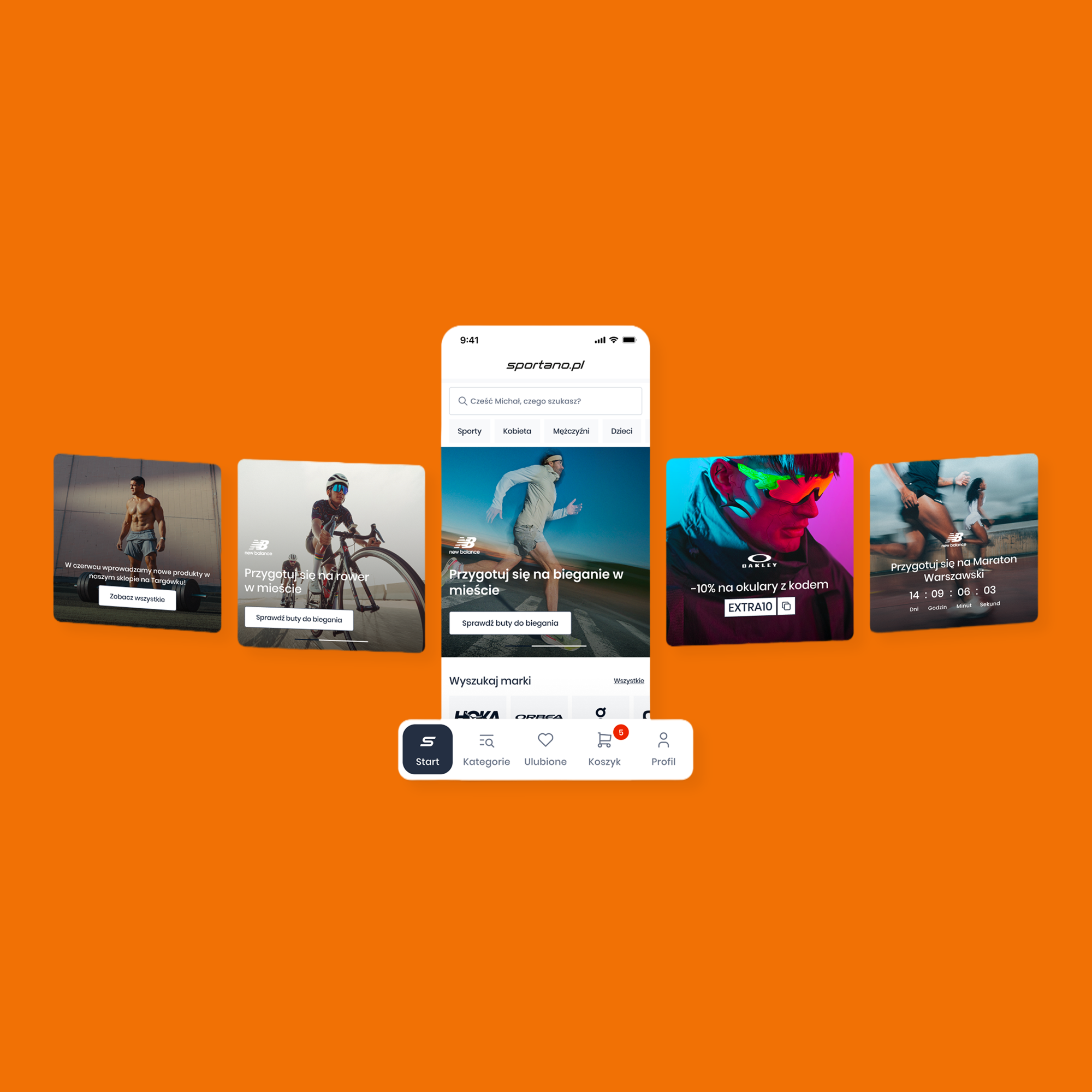
Sportano: one React Native app for 900+ brands, 5k downloads in week one

Sportano, a sports retailer selling more than 900 brands across 60 sports categories, had no mobile app of its own.

Netguru built one React Native codebase for iOS and Android, from research to designs tested with real users to a modular build with Sportano's engineers. The app had 5,000 downloads in its first week and holds a 5.0 App Store rating.

  • 900+

    Brands in the store

  • 5k

    Downloads in week one

  • 5.0

    App Store rating

Our collaboration with Netguru was smooth and highly productive.

Grzegorz Kupidura

CTO at Sportano

Read case study
Sportano orange square preview

How a React Native project runs from idea to store

Duration depends on scope, and discovery turns it into an estimate. Your organisation owns the Apple Developer and Google Play accounts and approves each store release.

  1. Discovery

    Workshops define user roles, integrations, compliance needs and scope. This is usually the shortest phase. You receive a scope document, an estimate and a delivery plan.
  2. Design

    Product designers map flows and build clickable prototypes that follow iOS and Android conventions. It overlaps with discovery. You receive tested prototypes and a shared design system.
  3. Build

    Sprints in TypeScript, using Expo and EAS Build for cloud builds where the project fits them. This is the longest phase. You receive working builds on your own devices.
  4. Test

    Automated and manual QA on real iOS and Android devices, plus security checks. It runs through the build and tightens before release. You receive a test report and a list of open issues.
  5. Launch

    We prepare store listings and submit builds to the App Store and Google Play with you. You receive a live app and a release runbook your team can repeat.
  6. Post-launch

    We monitor crashes, fix issues and plan iOS, Android and React Native upgrades. Support terms sit in the statement of work. You receive a maintenance plan and an upgrade roadmap.

VisionHealth: a React Native health app in clinical and commercial versions

VisionHealth helps people with chronic lung disease use their inhalers correctly; by its own research, 90% of patients get it wrong.

Netguru built separate versions of the app for clinical trials and for commercial use in React Native and TypeScript, with a guided module that teaches correct inhalation.

  • 250M

    Patients potentially supported

  • 90%

    Inhale incorrectly

It’s great how Netguru adapted to our highly regulated development lifecycle, as we have a lot of overhead, which is probably not usual in other fields than medical.

Alexandros Sivris

CTO at VisionHealth

Read case study
VisionHealth React Native app

Engineering standards behind every app

Buyers can judge technical depth from these practices. Our React Native tech stack guide explains the tooling in more detail.

TypeScript and code review

Typed code, strict compiler settings and peer review on every pull request keep a shared iOS and Android codebase readable for the next developer.

Automated testing and CI/CD

Tests run on each change, and release automation builds and ships to TestFlight and Google Play internal tracks, using Expo and EAS Build where suited.

Performance

The Hermes engine and profiling on mid-range Android phones keep start-up and scrolling smooth, not only on the newest iPhones.

Accessibility

Screen reader support through VoiceOver and TalkBack, contrast checks and WCAG expertise inside the team make the app usable by more customers.

Security and privacy

ISO 27001 certified processes, OWASP Top 10 checks and GDPR compliance guide how the app stores tokens, handles personal data and talks to your APIs.

AI features where they fit

On-device or API-based features such as search, summaries or recommendations are added when they serve a clear user task, after privacy review.

What our clients say

Rated 4.9 out of 5 by our clients.

Netguru's mobile experience and React Native expertise, combined with close coordination on integrating the Sportano Mobile App with our systems, produced a robust solution that fully meets our objectives.

Grzegorz Kupidura

CTO, Sportano

Netguru has been the best agency we've worked with so far. They are able to design new skills, features, and interactions within our model, with a great focus on speed to market.

Adi Pavlovic

Director of Innovation, Keller Williams

They leave no stone unturned when it comes to understanding the business context. Thanks to their unique approach, we were able to reduce the workload on our operations team whilst improving the user experience.

Tiago Goncalves Cabaço

VP of Design, Careem

Why companies choose React Native

The reasons that usually decide it, and where a native or Flutter build fits better.

One codebase, two platforms

iOS and Android ship from shared TypeScript code, so features and fixes reach both stores in the same release.

Shared skills with your web team

React Native uses React and TypeScript, so web developers can review code, and some logic can be shared with your web app.

Native modules where they matter

Swift and Kotlin modules cover device features that libraries do not, so the app is not limited to what the framework offers.

Performance on current versions

The New Architecture and the Hermes engine improve start-up time and memory use, especially on mid-range Android phones.

One team to maintain

A single codebase means one team, one test suite and one upgrade plan instead of two parallel native apps.

When it is not the right fit

Apps built on heavy 3D graphics or deep platform-only features are better served by native development, and we say so in discovery.

How you can work with us

Three ways to start. Each one comes with the same delivery standards and a named delivery lead.

Fixed-scope project

A defined scope, timeline and budget, agreed after a paid discovery phase. It suits a first release or a well-specified module.

Dedicated team

A cross-functional team of React Native developers, a product designer, QA and a delivery lead that owns a roadmap with you sprint by sprint, under time and materials.

Team extension

Senior React Native developers who join your in-house team, follow your process and tools, and are matched to the skills your roadmap needs.

React Native development company: questions buyers ask

What does a React Native development company do?

A React Native development company designs, builds, tests, launches and maintains mobile apps for iOS and Android from one TypeScript codebase. Scope covers UI/UX, QA, integrations with your web systems and backend, store releases, upgrades and ongoing support.

What does a React Native developer do?

A React Native developer builds app screens and logic in TypeScript, connects them to APIs and writes native modules (Swift and Kotlin) when a device feature needs them. They also test, profile performance and prepare iOS and Android builds for release.

How much does React Native app development cost?

Cost depends on drivers, not a fixed rate: scope and number of user roles, integrations, design depth, compliance and security needs, team shape and engagement model. A discovery phase turns these drivers into an estimate you can plan against.

How long does a React Native project take?

Timeline depends on scope, integrations and design depth, so we agree it after discovery. An MVP with few user roles moves faster than an app with several roles, payments and legacy system links.

What team size does a React Native app need?

Most projects need React Native developers, a designer, a QA engineer and a project manager, with size set by scope. We confirm the exact shape in discovery and adjust it as the roadmap changes.

Should I choose time-and-materials or fixed-price?

Choose fixed-price when scope is stable and time-and-materials when it will change. We usually recommend fixed-price for an MVP and a dedicated team model or time-and-materials once real users shape the roadmap.

React Native vs Flutter: which should I choose?

We recommend React Native when your team already writes TypeScript or JavaScript and you want code reuse with web. Flutter suits teams that prioritise a custom UI. See our Flutter app development services.

Who owns the code and IP?

Ownership is set in the contract, and we recommend the statement of work assigns source code and IP to the client. When you compare vendors, check relevant case studies, ISO 27001 certification, IP assignment and support terms.

Is React Native still relevant in 2026?

Yes, it remains a practical choice for one iOS and Android app from a TypeScript codebase. The React Native New Architecture and the Hermes engine are the foundation we plan new projects around.

What support do I get after launch?

Post-launch support covers crash monitoring, bug fixes, OS updates and React Native upgrades. Exact terms are agreed in the statement of work, and you can keep the same team under a dedicated team model.

Talk to our React Native expert

Tell us about your product, and we will talk through scope, the right team and the engagement model.

Barbara Rybicka

Commercial Director

Click for the details