


Custom Web Application Development Services

Custom web application development for SaaS platforms, customer portals and internal tools, from first release to scale. Rated 4.9 out of 5 by our clients.

Trusted by

Estimate your project

Custom web application development services from first workshop to maintenance

Six service lines, one team, so scope, design, and code stay connected.

Discovery and UX

A discovery workshop turns your workflow into a scoped backlog and a clickable prototype. Designers test the main flows with real users before production code starts.

Backend and API engineering

Domain logic, data models, and an API-first architecture let a web app, a mobile client, or a partner system reuse the same endpoints.

Integrations and legacy systems

Connections to third-party integrations (ERP, CRM, payment gateways) are scoped in the first weeks. Legacy systems move over in stages, so daily operations keep running.

QA and testing

Unit, API, and end-to-end tests run on every pull request, backed by manual exploratory testing before each release.

DevOps and cloud

Infrastructure as code, a CI/CD pipeline, and monitoring on AWS, Google Cloud, or Microsoft cloud services give you releases that are routine.

Maintenance and support

Dependency updates, security patches, bug fixes, and a roadmap of improvements keep the app current after launch.

Web application development backed by real delivery

17+

Years in the market

Building web, mobile and AI products since 2008.

3,500+

Projects delivered

From MVPs to enterprise platforms.

900+

Clients worldwide

Product teams in 50+ countries.

4.9/5

Average client rating

How our clients rate their work with Netguru.

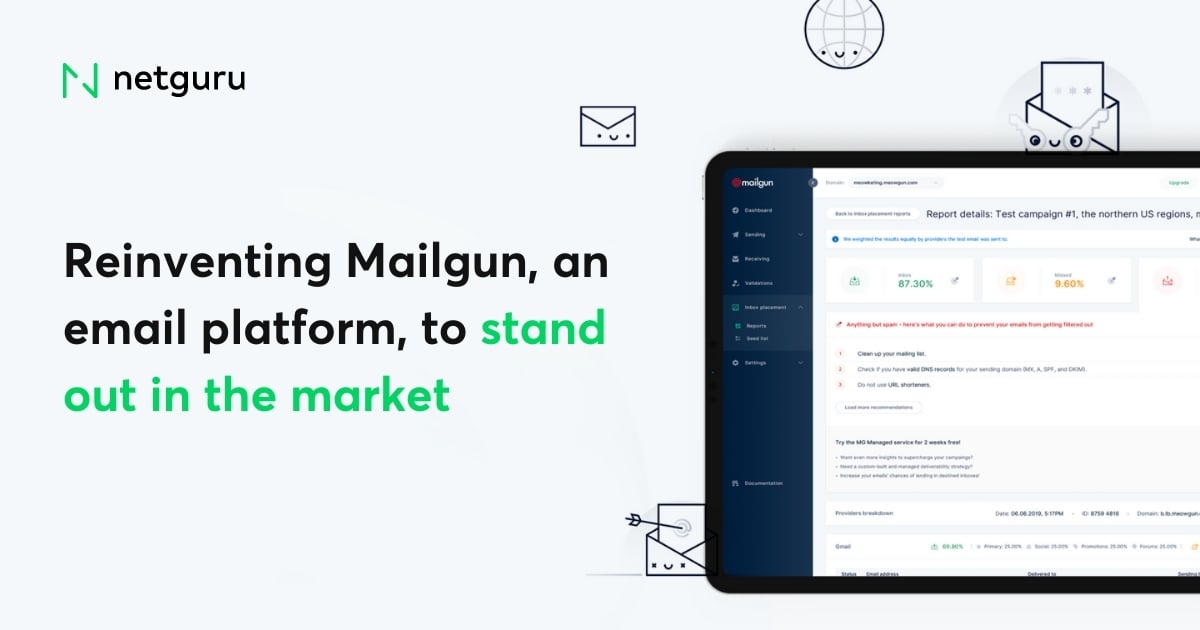
Mailgun: a flagship web application rebuilt for a new audience

Mailgun, which with Mailjet serves 290,000 clients in 150+ countries, needed its main web application reinvented, not restyled, and opened to marketers as well as developers.

Netguru designed and built the new application, with a full style guide and a UI component library the team keeps using.

  • 290,000

    Clients

  • 2010

    Founded

Time zone differences between the US and Poland might seem an inconvenience, but it was actually an advantage for us.

Chris Farmer

Product Manager at Mailgun

Read case study
Mailgun case study

How a project runs, step by step

Each phase ends with something you can review, so progress never rests on status reports alone.

  1. Discovery workshop

    Stakeholders, users, and engineers map workflows, constraints, and integrations. You receive a scoped backlog, a risk list, and the inputs for an estimate.
  2. Design and prototype

    Designers build user flows and a clickable prototype, then test them with real users. You receive approved screens and a design system ready for development.
  3. Architecture and setup

    Engineers choose the stack, define the API-first architecture, and set up environments and a CI/CD pipeline. You receive a running skeleton with automated builds.
  4. Iterative delivery

    Sprints produce working software, demoed each cycle, with QA inside the sprint. You receive working increments to click through and give feedback on.
  5. Launch

    Performance checks, a security review against OWASP Top 10, a data migration rehearsal, and a staged release come first. You receive a live app, runbooks, and a rollback plan.
  6. Support and growth

    The team stays on for fixes, updates, and the next phase of your roadmap. You receive monitoring, a maintenance plan, and an ordered backlog.

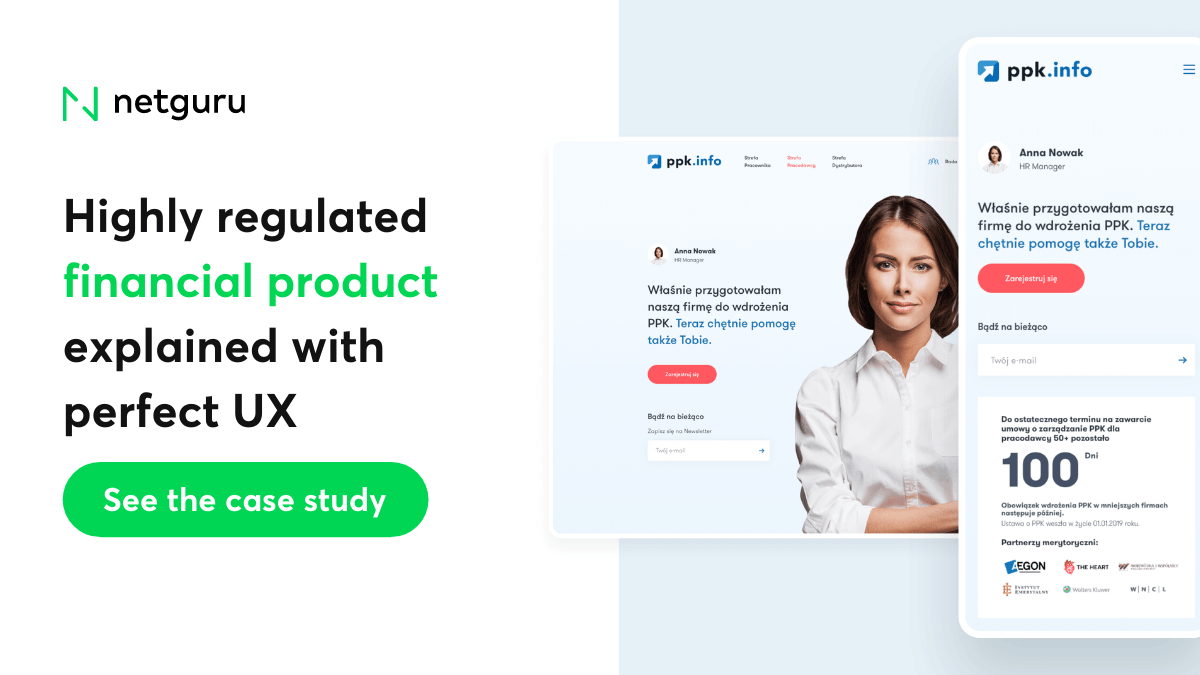
Aegon: a pension programme portal delivered on its fixed deadline

Aegon needed a web portal that explains a heavily regulated government savings programme, while the scope kept changing and the deadline did not.

Netguru built the portal with a contributions calculator, user questions and an integration with Aegon's CRM. Every requirement shipped inside the agreed timeframe.

  • 100%

    Of requirements delivered

We decided to work with Netguru after a recommendation we have received from within a company.

Natalia Bielecka

Project Team Leader

Read case study
Aegon web platform case study

Engineering standards that prevent project failures

Scope drift, integration surprises, and rushed releases each have a named control in how we work.

Secure SDLC

Threat reviews, code review, and dependency scanning follow OWASP Top 10 from the first sprint. Netguru holds ISO 27001 and OWASP TOP 10 certifications.

Access control

Role-based access control, single sign-on, and audit logs limit each user to the data they need. Roles are defined in discovery and not patched in later.

GDPR, SOC 2, and HIPAA

GDPR compliance is among our certifications. For SOC 2 or HIPAA projects we build the controls and logging your audit needs, and your auditor signs off.

Automated testing

Unit, API, and end-to-end tests gate every merge, so regressions stay out of production. AI-assisted test drafting is used where it fits, with an engineer reviewing the output.

Performance and accessibility

Page-speed budgets and WCAG 2.2 checks run in every sprint, so fixes stay cheap and users on any device get a usable app.

CI/CD release pipeline

Every merge is built, tested, and deployed through the pipeline, so a release is routine and a faulty one can be reversed.

What our clients say

Rated 4.9 out of 5 by our clients.

Netguru's understanding of our product vision and technical excellence has played a key role in expanding Booksy's B2B ecosystem. Together, we've transformed complex operational needs into simple, scalable solutions that truly support our business clients.

Konrad Howard

Co-Founder & Chief Innovation Officer, Booksy

Working with the Netguru Team was an amazing experience. They have been very responsive and flexible.

Marco Deseri

Chief Digital Officer, Artemest

Their responsiveness is really great. There's almost no difference between working with our team members in-house and them being remote.

Dmitry Muzhikov

CPO, Alteos GmbH

How you can work with us

Three ways to start. Each one comes with the same delivery standards and a named delivery lead.

Fixed-scope project

A defined scope, timeline and budget, agreed after a paid discovery phase. It suits a first release or a well-specified module.

Dedicated team

A cross-functional team of full-stack engineers, a designer, QA and a delivery lead that owns a roadmap with you sprint by sprint, under time and materials.

Team extension

Senior web developers who join your in-house team, follow your process and tools, and are matched to the skills your roadmap needs.

Custom web application development: your questions answered

What are custom web application development services?

Custom web application development services cover the design, engineering, testing, deployment, and upkeep of a browser-based app built around your specific workflow. Unlike off-the-shelf software, which you configure, a custom app is built to your requirements.

A typical engagement includes a discovery workshop, UX design, backend and API engineering, third-party integrations (ERP, CRM, payment gateways), QA, DevOps, and maintenance. Our helps you judge which path fits.

How much does custom web application development cost, and should it be fixed price or time and materials?

Cost follows scope: the number of user roles, integrations, design depth, compliance and security needs, and the shape of the team. We do not quote figures without a discovery phase, which turns these drivers into an estimate you can compare.

We usually recommend fixed scope for work that is well defined after discovery, and time and materials when the product will change as users respond. Our compares the pricing models. Run costs such as hosting and maintenance come on top of the build.

How long does it take to build a custom web application?

Duration depends on the number of user roles, integrations, design depth, compliance needs, and how quickly your team reviews and decides. A small internal tool and a multi-role SaaS platform sit far apart, so we do not quote week counts before discovery.

After the discovery workshop you receive a scoped backlog and a phased plan, with a first release defined as the smallest version users can work with. Name a product owner early, because slow decisions move the timeline.

Who owns the code in a custom web application project?

You should. We cover code ownership and IP transfer in the statement of work, and we recommend you require the same clause from any partner. It should include source code, design files, documentation, and cloud accounts.

We also recommend working in your own repositories and cloud accounts from the first sprint, so nothing needs handing over at the end.

What support is available after a web application launches?

Post-launch support covers monitoring, security patches, dependency updates, bug fixes, and a roadmap of improvements. The team that built the app can keep supporting it, which saves relearning the code.

Support terms, hours, and response expectations belong in the agreement, so settle them before the build ends.

How big a team do I need to build a custom web app?

Team size follows scope and the delivery model. A typical team has engineers, a designer, a QA engineer, and a product or delivery lead, with your product owner in every sprint review. Smaller tools need only part of that mix.

We recommend starting with a small core team after discovery and adding people when the backlog demands it, because larger teams add coordination overhead.

How do I choose a custom web application development company?

Judge a partner on evidence. Use this checklist:

  • Case studies for apps similar to yours, such as SaaS platforms, customer portals, or internal tools
  • A security certification such as ISO 27001, and a development process aligned with OWASP Top 10
  • Code ownership and IP assignment in writing
  • A statement of work with scope, milestones, and a change process
  • Clear support terms after launch
  • Named people from an in-house team, and references you can call

Red flags include a fixed price before any discovery, no access to the repository during the build, and vague answers on who does the work. Our goes deeper.

Should I build a custom web application or buy SaaS?

Buy SaaS when your process is standard and an existing product covers most of it. Build custom when the workflow gives you an edge, SaaS needs costly workarounds, or you need control over data, integrations, and user experience.

Many teams do both: they buy the commodity parts and build the app that carries their differentiator. Our sets out the trade-offs.

Which technology should we use for a custom web app front end?

Our default is Next.js. It brings server rendering, routing, and good page speed into one framework, which suits SaaS platforms, customer portals, and progressive web apps. We pair it with an API-first architecture so other clients can reuse the same backend.

We choose differently when your team already runs another stack we deliver, or the app is a small internal tool. See our .

How are security and compliance handled in custom web application development?

Security starts in design. We follow a secure SDLC aligned with OWASP Top 10, with threat reviews, code review, dependency scanning, and role-based access control defined in discovery. Netguru holds ISO 27001 certification and GDPR compliance among its certifications.

For SOC 2 or HIPAA projects, we build the controls, logging, and documentation your audit needs, and your auditor certifies the result.

Talk to our web application development expert

Tell us about your product, and we will talk through scope, the right team and the engagement model.

Barbara Rybicka

Commercial Director

Click for the details