Showing posts with label eso. Show all posts
Thursday, May 29, 2014
Comet 67P Churyumov-Gerasimenko - First amateur images 2014
As the European Space Agency's Rosetta Mission ramps up in a busy week of astronomy, Observatory W96 and Observers A. Maury, J.-G Bosch, J.-F. Soulier were the first amateurs to report positions of 69P (this apparition) to the MPC. Amateur images of Comet 67P have also been acquired by the Professional-Amateur Collaboration in Astronomy (PACA) for comet 67P led by Dr Padma Yanamandra-Fisher in partnership with Amateur Astronmers. The PACA group uses social media to connect amateur and professional astronomers to provide observation follow-up, monitoring and collaboration on science missions.
Comet 67P is about to be visited by the Rosetta Probe and ESA released their first photos, 2 weeks ago, of the comet starting to come to life as it heads on in towards the sun. The Rosetta mission is to follow the comet round the sun during the part of its orbit where the ices and dusts begin to discharge and form the tail. In november 2014, Rosetta will deliver a landed named Philae that will touch down on the nucleus of the comet to sample the particles as they become active.
Pictured here at a very faint magnitude 21.2 you can see Comet 67P, and the position of the Rosetta spacecraft is also marked (even though it is way too faint to see). ESA this week began a number of engine burns to slow the spacecraft as it approaches the comet.
The star field is quite crowded, and one of the most interesting parts of the video is the amount of "traffic" in this part of the sky. There were about 6 clearly identifiable asteroids in the full field of view, I have labelled a couple of the closer ones for reference. One asteroid in the field of view caught my eye as it seemed to dip in brightness, so it has been noted for further follow up as it approaches opposition in July.
Capturing the comet at such a faint magnitude required a deep "stacking" of images to account for the movement of the comet. "Stacking" is a process used to add a number of images together to improve the signal to noise ratio of the target. The comet was travelling so slowly relative to our point of view that I was able to resolve it with 12x300 second images. These images were then stacked in three groups of 4 at the movement of the comet - 0.16arc"/min at a position angle of 226 degrees. My images were quickly followed up by Rolando Ligustri, Bacci Paolo Backman. The astrometry (positional information) was included in MPEC 2014-K54
Previously in 2012, amateurs using the the Faulkes Telescopes had photographed 67P at aphelion (its furtherest point from the sun), also a remarkable effort!. In January 2014 the large telescopes in Chile, European Southern Observatory (ESO) and the Very Large Telescope (VLT) recovered 67P and have been following it regularly, this was the first occasion that amateurs had obtained images on this apparition.
For more information about the program check out the Year of Southern Comets article at iTelescop.net. PACA has a Facebook and Flikr group for members and a website under construction, it is open to any amateur astronomers who have their own telescope, are familiar with photometry and astrometry, are members of iTelescope.net, or have access to other telescope facilities and are prepared to work as a team on the science effort.
The Rosetta Spacecraft was named after the Rosetta Stone which assisted historians and archeologists decipher the Egyptian hieroglyphs, scientists hope that in the same way the data gathered will assist in our understanding of the early solar system.
Labels:
67P,
AARTScope,
astronomy,
astroswanny,
Churyumov-Gerasimenko,
comet,
comet (siding spring),
esa,
eso,
first amateur images,
itelescope.net,
PACA,
paranal,
photos,
rosetta,
solar system,
space,
video
Monday, July 4, 2011
Blondes in Space!

Image: The APEX Telescope, Chajnantor, Chile. Credit: J. Vieira/APEX (MPIfR/ESO/OSO)
I am going to have so much fun with this, and as a blogger, my role is to make the science "fun and engaging" for a whole new generation of non-sciency people!

I could have gone with any of:-
Blondes in Space!
Hair Salon at the end of the universe!
So long and thanks for all the perms!
The hairdresser's guide to the galaxy!
Photo Credit: Newfreephotos.com
Ah.....where do I start.
Reece Witherspoon in Legally Blonde, showed us how important it was, - you can win lawsuits with a good knowledge of haircare products.
Australian cricketers know they are about to loose the Ashes when the English cricketers start spending more money on hydrogen peroxide - yes those blonde tips. There is a mathematical relationship between confidence and expenditure on hydrogen peroxide.
However, life on this planet depends not just on a good stylist, hydrogen peroxide also plays a key role in the chemistry of water and ozone in our planet’s atmosphere. Ozone protects us from harmful radiation, but can fluctuate in our upper atmosphere and this chemistry is widely studied here on earth. So want about Space - is it out there?
Submillimetre astronomy is a relatively unexplored frontier in astronomy and reveals a Universe that cannot be seen in the more familiar visible or infrared light. It is ideal for studying the "cold Universe": light at these wavelengths shines from vast cold clouds in interstellar space, at temperatures only a few tens of degrees above absolute zero.
The European Southern Observatory (ESO) today announced that astronomers had detected Hydrogen Peroxide - H2O2 in a gas cloud in our own galaxy, near the naked eye star, Rho Ophiuchi in Ophiuchus. This is a beautiful area of the night sky instantly recognizable by keen astro-photographers.
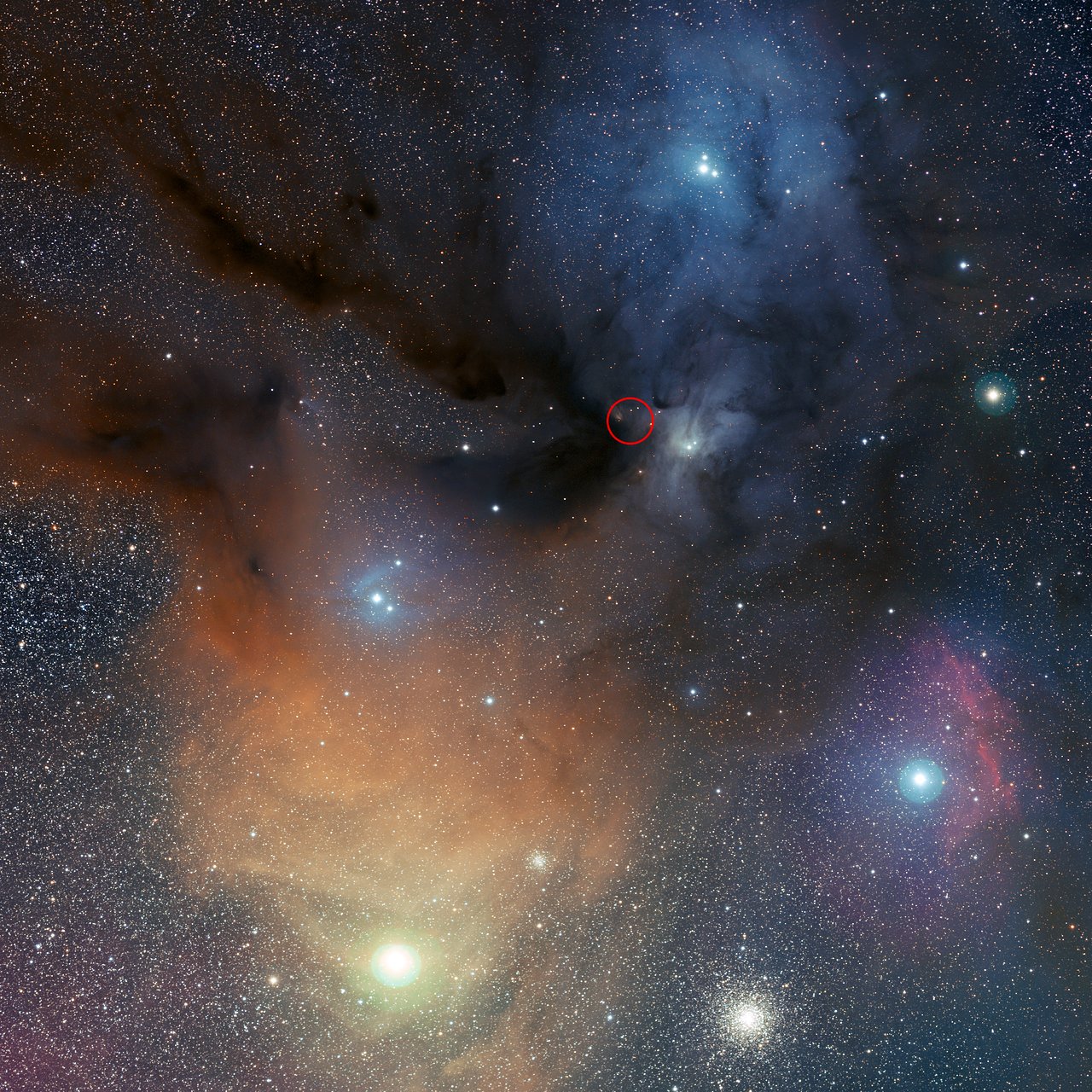
Image Credit: ESO/S. Guisard (www.eso.org/~sguisard)
How did they do that - flux capacitor hooked up to a hair dryer?
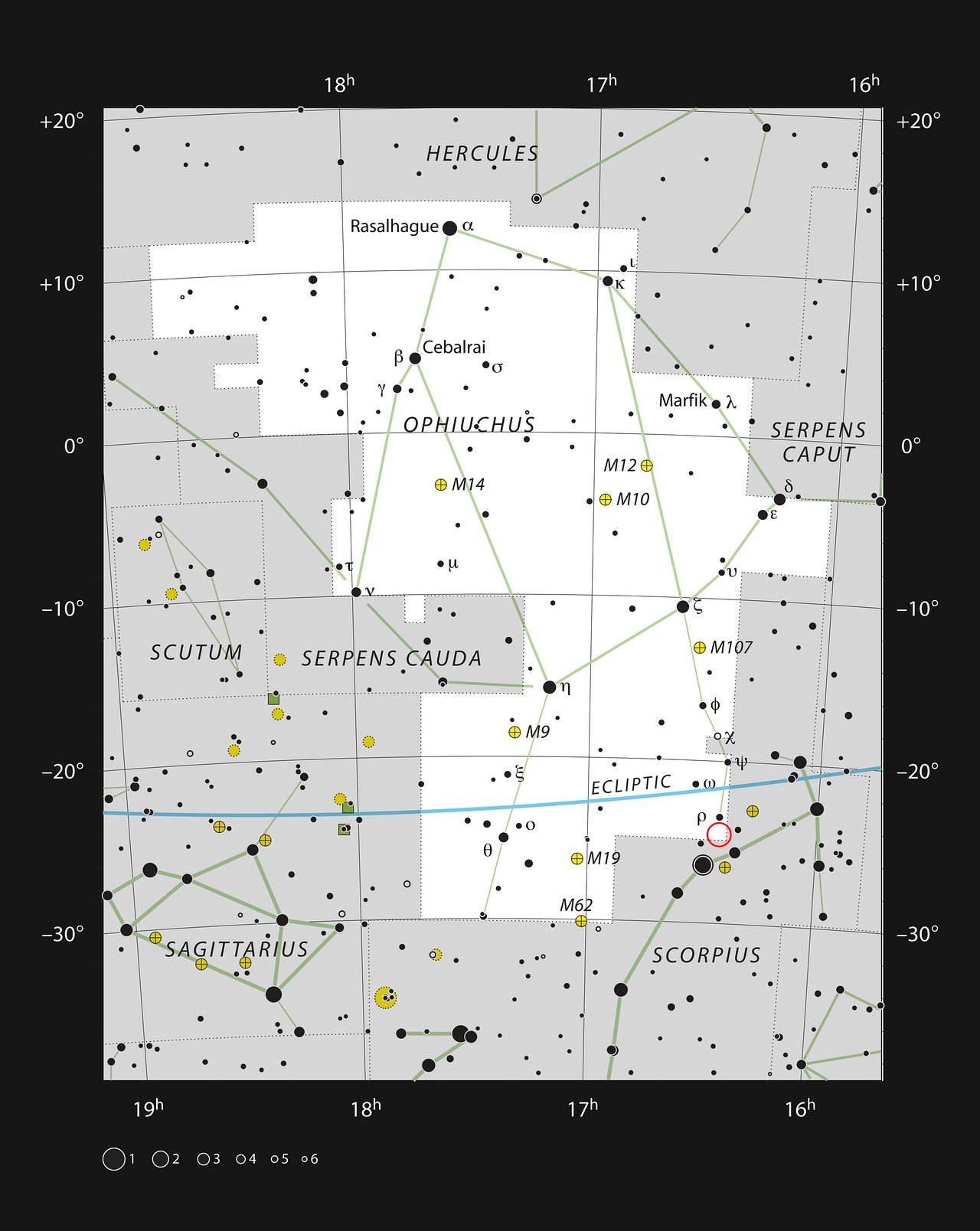
An international team of astronomers made the discovery with the Atacama Pathfinder Experiment telescope (APEX), situated on the 5000-metre-high Chajnantor plateau in the Chilean Andes. They observed a region in our galaxy close to the star Rho Ophiuchi, about 400 light-years away. The region contains very cold (around -250 degrees Celsius), dense clouds of cosmic gas and dust, in which new stars are being born. The clouds are mostly made of hydrogen, but contain traces of other chemicals, and are prime targets for astronomers hunting for molecules in space. Telescopes such as APEX, which make observations of light at millimetre- and submillimetre-wavelengths, are ideal for detecting the signals from these molecules.Image Credits: ESO, IAU and Sky & Telescope
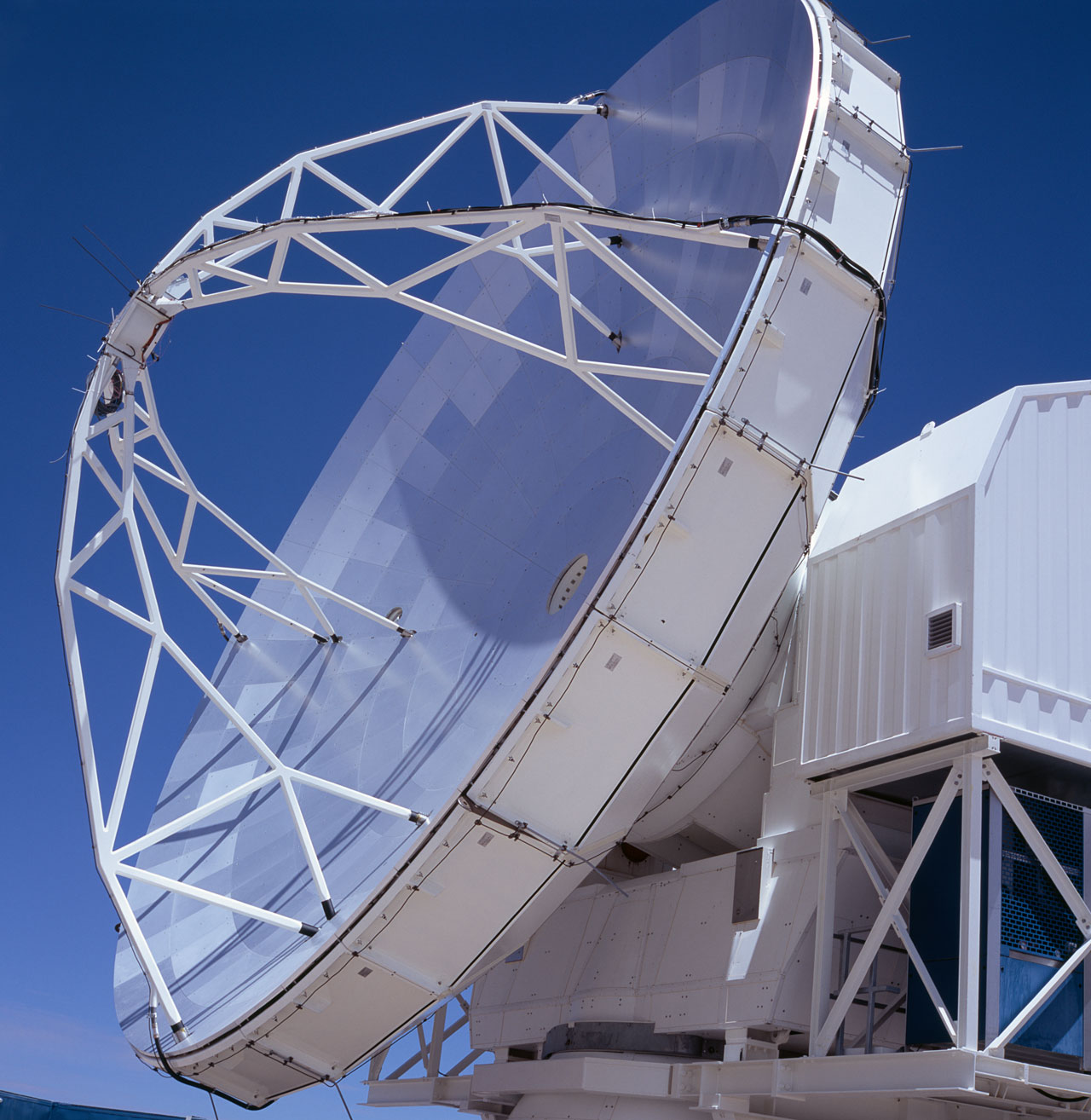
Now that is one serious telescope, APEX is a collaboration between the Max-Planck Institute for Radio Astronomy (MPIfR), the Onsala Space Observatory (OSO) and operated by ESO.“We were really excited to discover the signatures of hydrogen peroxide with APEX. We knew from laboratory experiments which wavelengths to look for, but the amount of hydrogen peroxide in the cloud is just one molecule for every ten billion hydrogen molecules, so the detection required very careful observations,” says Per Bergman, astronomer at Onsala Space Observatory in Sweden. Bergman is lead author of the study, which is published in the journal Astronomy & Astrophysics.
ESO, the European Southern Observatory, is the foremost intergovernmental astronomy organisation in Europe and the world’s most productive astronomical observatory. It is supported by 15 countries: Austria, Belgium, Brazil, the Czech Republic, Denmark, France, Finland, Germany, Italy, the Netherlands, Portugal, Spain, Sweden, Switzerland and the United Kingdom. ESO carries out an ambitious programme focused on the design, construction and operation of powerful ground-based observing facilities enabling astronomers to make important scientific discoveries.
Hydrogen peroxide is thought to form in space on the surfaces of cosmic dust grains — very fine particles similar to sand and soot — when hydrogen (H) is added to oxygen molecules (O2). A further reaction of the hydrogen peroxide with more hydrogen is one way to produce water (H2O). This new detection of hydrogen peroxide will therefore help astronomers better understand the formation of water in the Universe.
So why all the fuss you ask?
“We don’t understand yet how some of the most important molecules here on Earth are made in space. But our discovery of hydrogen peroxide with APEX seems to be showing us that cosmic dust is the missing ingredient in the process,” says Bérengère Parise, head of the Emmy Noether research group on star formation and astrochemistry at the Max-Planck Institute for Radio Astronomy in Germany, and a co-author of the paper.
The new discovery of hydrogen peroxide may also help astronomers understand another interstellar mystery: why oxygen molecules are so hard to find in space. It was only in 2007 that oxygen molecules were first discovered in space, by the satellite Odin.
Congratulations to the international team on another great, exciting discovery, using the ESO/APEX telescope at Chajnantor.
So I'll sign off with - do Astronomer's really have more fun? Absolutely!
Wednesday, December 1, 2010
ESO all steamed up about GJ 1214b

ESO today announced a stunning breakthrough in Spectrophotometery with a world first - analysis of the composition of a "super-Earth" exo-planet's atmosphere,...... and its steamy or hazy.
GJ 1214b is the first "super-Earth" to have its atmosphere analysed by astronomers and possibly water, in the form of steam, is the most likely explanation for what was found in the atmosphere.
In 2007 on Astronomy Cast, Dr Pamela Gay, talking about exo-planet research predicted "we will soon find our own little waterworld just waiting for a b-grade movie to be filmed on it." Well, waterworld it maybe, but this one has alot more steam than an Alfred Hitchcock shower!!!
On the 19th of November 2010 astrophysicists passed a major milestone with the discovery of the 500th exo-planet. An exo-planet is an extrasolar planet that orbits a star outside our own solar system. What are these planets, how do we find them, what are they made up of and how do we understand them?
A super-Earth is a rocky planet of 5-10 earth masses. These are of particular interest to astronomers as their likely orbits can fall in the potentially habitable zone around its parent star, where water could exist as a liquid.

Scientists use three primary methods to find planets around other stars, a radial velocity method, watching for micro-lensing events, and observing transits where the planet interrupts the line of sight causing its host star to dim.
GJ 1214b was discovered in 2009 on the HARPS instrument on ESO's 3.6m telescope in Chile. Initial suspicitions that GJ 1214b's density was too low to be composed only of solid material, therefore being a good candidate for an atmosphere, have now been confirmed by an international team of astronomers using the FORS instrument on the ESO's VLT (very large telescope).
Researchers Jacob Bean (Harvard Smithsonian Center for astrophysics), Eliza Miller-Ricci Kempton (Georg-August-Universitat, Germany) and Derek Homeier (University of California) have co-authored a paper to be published in tomorrow's edition of Nature explaining their detailed research.
"This is the first super-Earth to have its atmosphere analysed. We've reached a real milestone on the road to characterizing these worlds," said Bean.
The team were looking for one of three possible scenarios:
- a small rocky planet shrouded in water/steam
- an atmosphere of hydrogen obscured by dense high clouds and haze
- a mini neptune like planet with a small rocky core and a rich hydrogen atmosphere
Astronomer's use spectral analysis to determine the make up of an exo-planet's atmosphere. By monitoring the light of the parent star and looking for absorbtion lines at specific frequencies during the transit of an exo-planet, they compare the normal/reference light of the star for any differences and changes.
"Although we can't yet say exactly what that atmosphere is made of, its an exciting step forward to be able to narrow down the options for such a distant world to either steamy or hazy" said Jacob Bean. "Follow-up observations in longer wavelengths are required to determine which of these atmospheres exists on GJ 1214b".
Photo Credit ESO/L Carcada
Tuesday, October 26, 2010
Faster meets further!

Technology is awesome. It constantly amazes us, the shiny, the newest, the sleekest, the most advanced, the greenest, all point to our fascination to push the boundaries.
Human ingenuity, vision, ideation, all drive each of us in different ways. Passion and emotion often over-ride commonsense and process. Fast cars, expensive toys, remote destinations, are also often the domain of James Bond films.
So trick question.......what do fast cars, great design, astronomy and James Bond films have in common........
P A R A N A L !!!!!

The European Southern Observatory (ESO) tapped into all of these emotions with a unique blend of the fastest and the furtherest, an electric super car and the world's most productive optical telescope - both impressive structures that evoke our emotion and passions.
So some history here for the movie buffs may assist set the scene.
Who could forget the Aricabo Radio Telescope arising out of the "CGI lake" in the James Bond movie Goldfinger, water draining away every where, only to contact a satellite to laser a few cities before being blown to bits by the hero and his beautiful assistant.
Then more recently in Quantum of Solace with Daniel Craig in the lead role - Superspy meets beautiful woman, and on their first date find, yet again, another evil villain holed up in a Telescope control room that must be instantly dispatched with lots of special effects. Is it any wonder that astrophysicists are developing a complex and have to watch "Big Bang Theory" for therapy. Quantum of Solace (a very "sciencey" name) was filmed at ESO's Paranal site.
Daniel Craig described Paranal as "a very special place" and that goes some way to highlighting why you might find a group of telescopes there. The structures of Telescopes are imposing, impressive and unique and provide the essential backdrop for the action scenes in action movies.
Now when we talk about renewable technology, we are not talking about billion dollar telescope sites be blown up on James Bond film sets and then being open for the pressing business of Astrophysics the next day......but Mr Bond does likes his fast cars - now he can have an electric one.
The supercar, has also often drawn the same emotions out of the alpha-male, though this time its not the "racing green color" but racing green endurance. This week the ESO brought them both together for a unique opportunity.
Speed versus distance.
There they were - two pieces of highly advanced technology side by side in all their glory. The worlds fastest ELECTRIC supercar and the most productive ground based observatory. The "renewable" film set and the renewable energy super car. Enough of the parallels and metaphors.....it was just plain gorgeous!!

The ESO team described their exciting day as follows: "The SRZero electric supercar arrived at Paranal on October 27 after touring the Pan-American Highway from Alaska's Prudhoe Bay and on their way to Ushuaia. The Racing Green Endurance (RGE) adventure could not have been complete without a stop at Paranal, where the RGE team had the opportunity to observe the fascinating southern skies under the best conditions and test the supercar’s limits by performing at an altitude of 2600 metres above sea level."
So what's the science angle here. The ESO also today shared some of their finest work "on wheels" with some of the deepest ever images of spiral galaxies taken with the HAWK-I camera on the VLT (very large telescope). These infra-red shots of these very distant spiral galaxies weren't just released to seed inspirational new designs for mag wheels for super cars, they also show the various types and stages of galaxy development. HAWK-I stands for High-Acuity Wide-field K-band Imager and is highly sensitive in the infra-red range.

So this week we saw the best set of wheels on earth and in the heavens. Thanks to the folks at the ESO and their imaginative marketing, drawing our attention to the best of breed technologies, and tapping into our passion for the shiniest, boldest, and contrasting it with the grandest and most majestic.
Photo Credits: ESO/ H.H. Heyer
ESO/ Glenn Arcos & www.racinggreenendurance.com
Source ESO Used with permission.
Labels:
astronomy,
eso,
james bond,
nasa,
observatory,
paranal,
srzero
Subscribe to:
Posts (Atom)
Search
Custom Search

