November 17, 2026
|
5 min read



Blazingly fast way to build, track and deploy your models!
If you are building with more than one LLM, you have probably looked at OpenRouter. One API key, one billing relationship, hundreds of models. It is a good way to start. The trouble tends to show up later, when the app is in production and someone asks where the traffic goes, why a request failed, or who is spending what.
This guide covers what OpenRouter does today, where teams run into limits, and five alternatives worth comparing. For background on the category, see our explainer on LLM gateways and routers.
OpenRouter is an LLM aggregator. It gives you one OpenAI-compatible API for proprietary and open-source models, so you do not need separate keys and SDKs for each provider. According to its pricing page, it lists 600+ models across 80+ providers. It also routes requests for a given model between hosting providers based on price, latency or availability.
For a head-to-head view, see OpenRouter vs AI Gateway.
OpenRouter sits between your app and the model providers. It does not host models itself. A request goes through three steps:
Newer plans have closed some gaps. Business adds EU and US in-region routing, and Enterprise adds SSO/SAML, managed policies and contractual SLAs. Zero data retention routing is available on every plan.
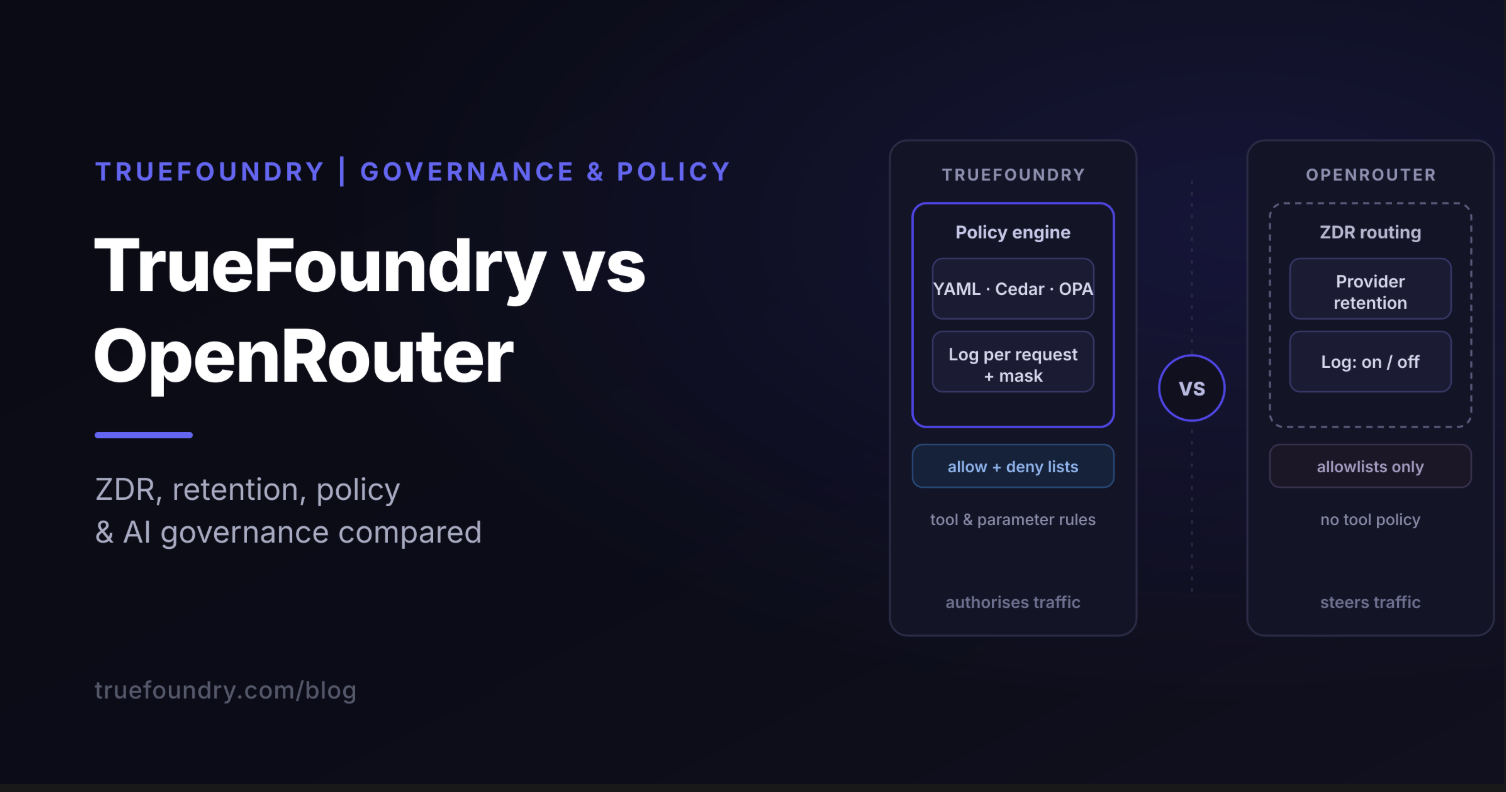
OpenRouter is still a public aggregation layer. That is a strength early on and a constraint later. Teams that compare options, including Vercel AI Gateway vs OpenRouter and LiteLLM vs OpenRouter, usually cite four things.
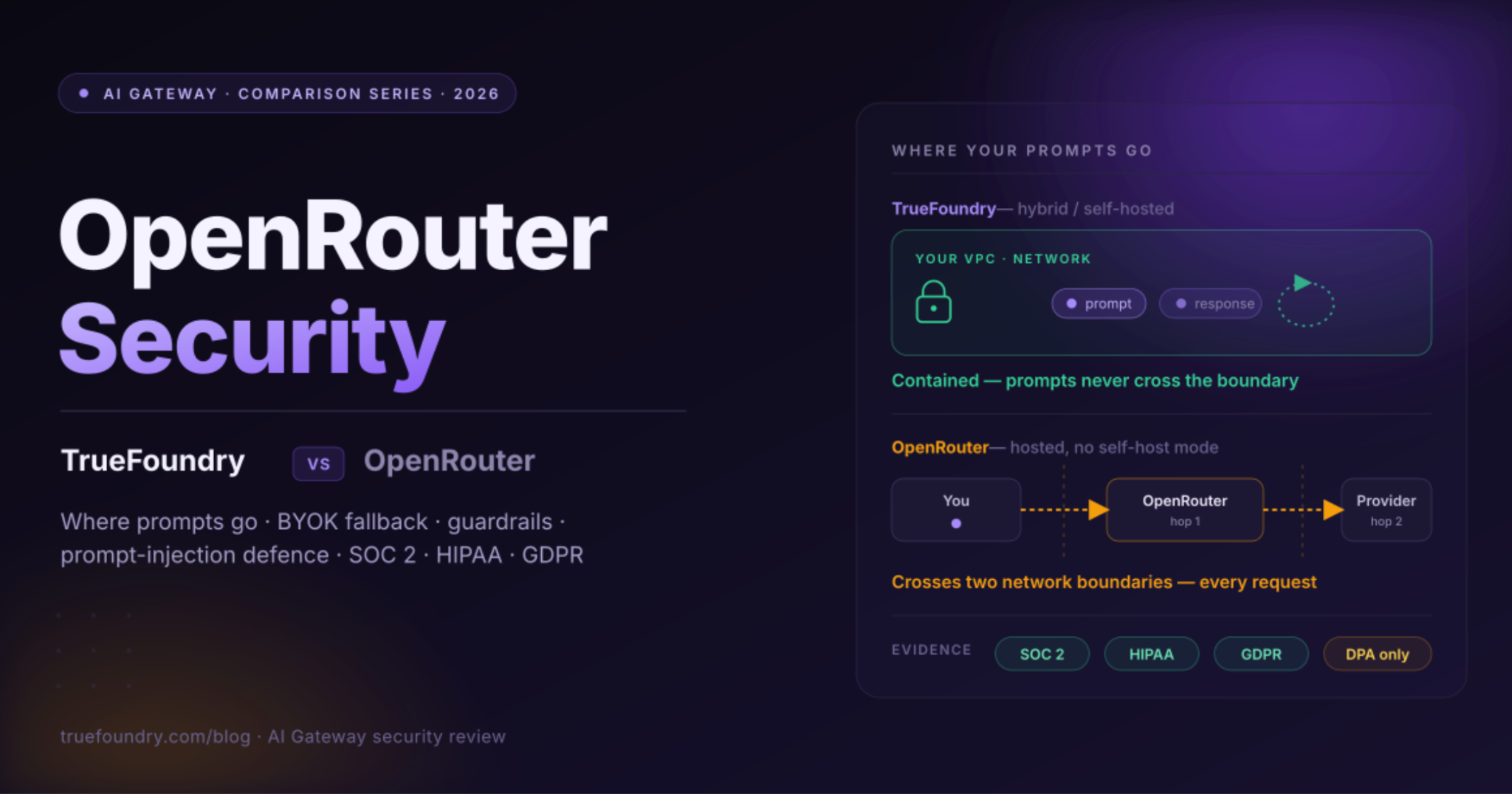
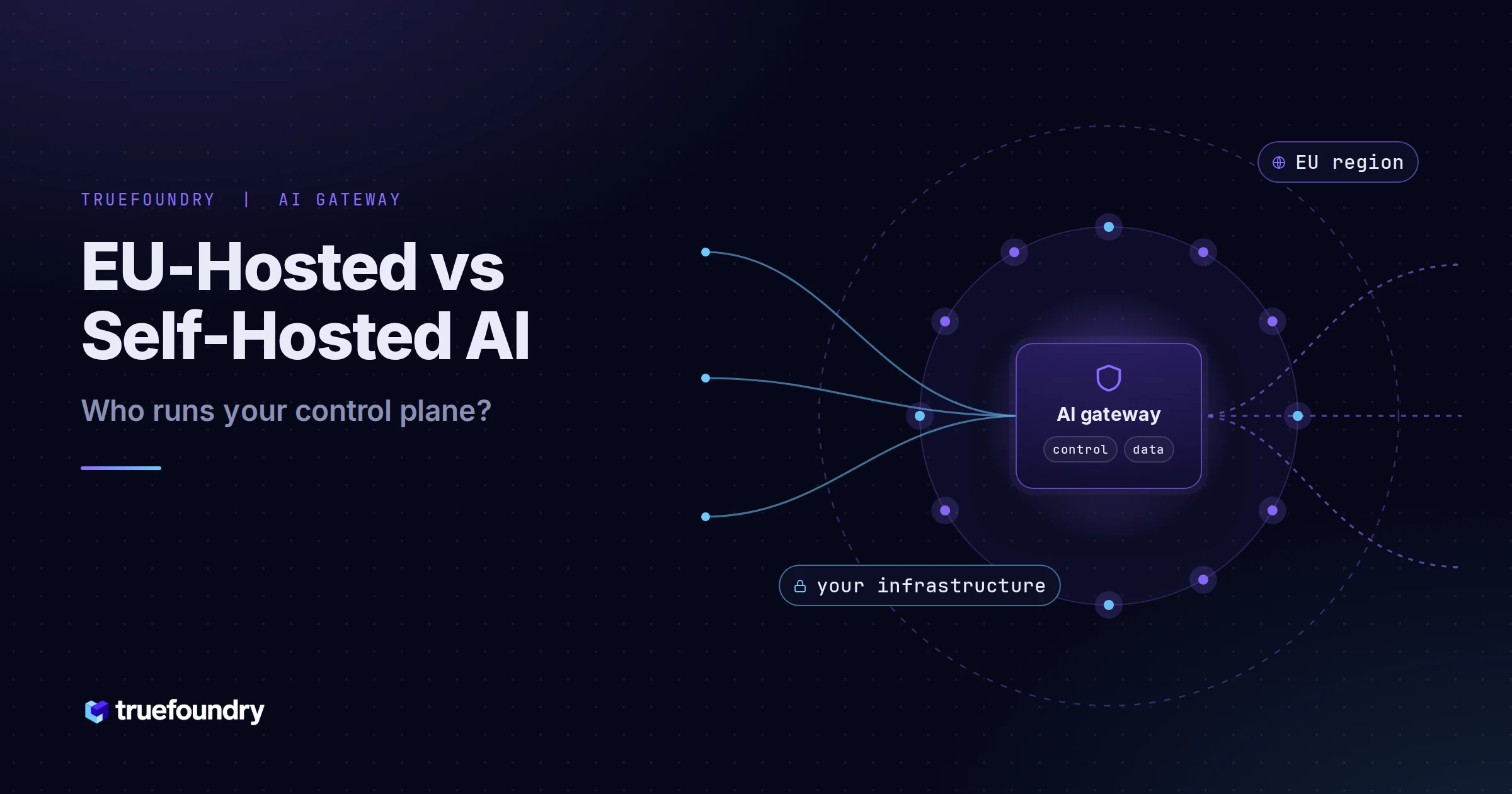
Your traffic goes through a third party. Every prompt passes through OpenRouter before it reaches the model provider. Regional routing and zero data retention help, but the gateway itself is not something you can run in your own VPC or on-prem. Private endpoints are an Enterprise add-on. For teams under GDPR, HIPAA or strict data residency rules, that extra hop can slow down a security review.
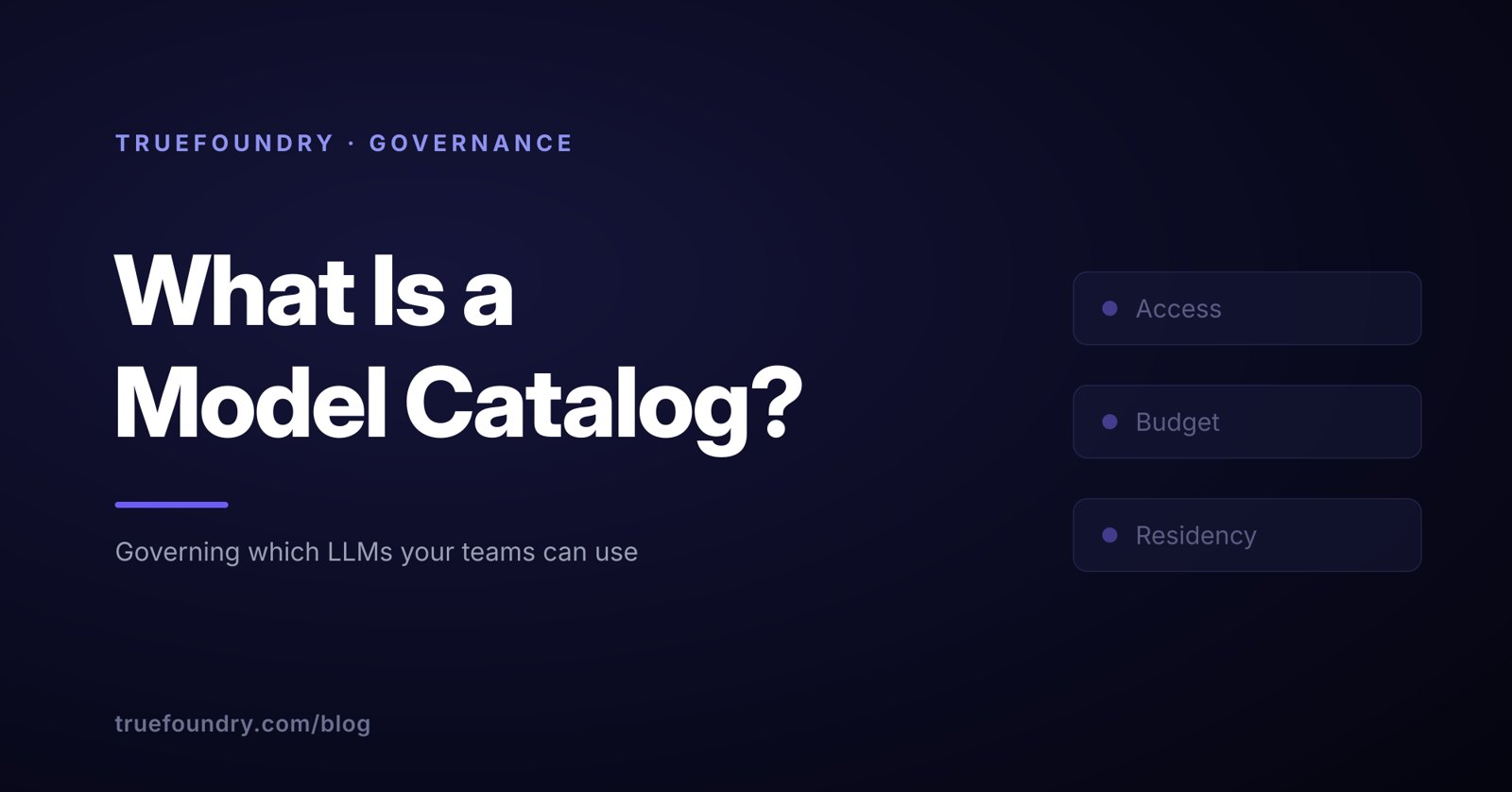
Identity and access control are tiered. Budgets and spend controls come with Standard, but SSO/SAML and managed policy enforcement are Enterprise-only. If you want team-level model permissions without an enterprise contract, you will be working around it.
Observability stops at usage and cost. You can see what you spent. It is harder to see why one request was slow, which provider it landed on and where a multi-step agent failed. Production teams usually want traces they can send to their own stack through OpenTelemetry.
A fee on top of inference. A 5.5% credit fee is small at prototype scale and noticeable once monthly spend gets large. Gateways you run yourself let you pay providers directly.
OpenRouter pricing is worth a closer read if cost is your main driver.
Before comparing names, decide what you need. This checklist covers the things that most often decide the choice:
TrueFoundry's AI Gateway is built for teams that have outgrown a public aggregator. You deploy it in your own VPC, in your own cloud account or on-prem, so prompts and logs stay in infrastructure you control. It still gives you one endpoint for Anthropic, OpenAI, Gemini, Bedrock, Vertex AI and more, with 250+ models available in the playground.

Routing goes past price and latency. You can set fallback chains, team-level quotas and rate limits, and every request is traced end to end with OpenTelemetry export. It also covers agents: the MCP Gateway puts the same access control and audit logging on tool calls to internal systems. TrueFoundry says the gateway adds around 10ms of latency and handles 350+ requests per second on a single vCPU.
Best for: enterprises that need data sovereignty, SOC 2-ready controls and agent governance in their own infrastructure.
Portkey is a control plane for LLM apps with a strong reliability focus. Its Config object lets you define retries with backoff, fallbacks between models and load balancing without touching application code. Virtual Keys let you give each team or environment its own scoped key, so one team's experiment cannot drain the whole budget. It also ships observability across cost, latency and errors, prompt versioning and a playground, and the core gateway is open source.

Best for: SRE and platform teams that want routing, retries and monitoring quickly. See TrueFoundry vs Portkey and Portkey pricing for details.
LiteLLM is the open-source favorite. It is a Python library and proxy server that calls 100+ LLMs in the OpenAI format, with budget tracking and load balancing across deployments. You run it yourself, which means no extra hop and no platform fee, and you can shape it into your own private OpenRouter.

One thing to weigh in 2026: LiteLLM's PyPI package was compromised twice this year. Versions 1.82.7 and 1.82.8 shipped credential-stealing malware in March (HiddenLayer write-up), and version 1.107.0 was reportedly published with a similar payload on October 21 (Rescana summary). Both were pulled. If you use LiteLLM, pin exact versions, verify hashes, avoid pulling the latest tag in production, and keep cloud credentials out of the proxy's environment. Our LiteLLM pricing guide covers the cost side, and TrueFoundry vs LiteLLM compares the two directly.
Best for: developers and startups that want a customizable open-source proxy and are prepared to own its security and upgrades.
Vercel AI Gateway is a hosted gateway that charges no markup and no platform fee on tokens. You pay the provider's list price, including when you bring your own key. It adds budgets, fallbacks, usage reporting and OpenTelemetry trace drains. Extras such as regional hosting and team-wide zero data retention cost more.
Best for: teams already building on Vercel that want simple, zero-markup access to many models. It is a managed service, so the data-control questions from the OpenRouter section still apply.
Kong is the long-time API management standard, and its AI Gateway applies the same plugins you already use for web traffic, including rate limiting, authentication and logging, to LLM requests. Security teams can set guardrails centrally, such as detecting and redacting PII before a prompt leaves your network. Semantic routing can send a request to a cheaper or faster model based on what it asks.

Best for: platform teams already running Kong that want AI traffic governed alongside their microservices. See Kong alternatives and TrueFoundry vs Kong.
Helicone used to be on lists like this one. In March 2026 it joined Mintlify and moved into maintenance mode, with security updates, bug fixes and new models but no new features, and customers were pointed toward migrating (see Mintlify's announcement). If you already use it, plan a move. For a new project, pick something under active development.
For a deeper side-by-side, browse our AI gateway comparison series.
OpenRouter remains a fast way to reach a lot of models. Once you are in production, the questions change: where does the traffic run, who can use which model, and how do you debug a bad request. If you need private deployment and governance, look at TrueFoundry or Kong. If you want an open-source proxy, look at LiteLLM or Portkey's gateway, with the security notes above in mind. If you live on Vercel, its gateway is the shortest path. Whichever you choose, test it on a slice of your real traffic before you commit.
TrueFoundry AI Gateway delivers ~3–4 ms latency, handles 350+ RPS on 1 vCPU, scales horizontally with ease, and is production-ready, while LiteLLM suffers from high latency, struggles beyond moderate RPS, lacks built-in scaling, and is best for light or prototype workloads.




The latest news, articles, and resources sent to your inbox