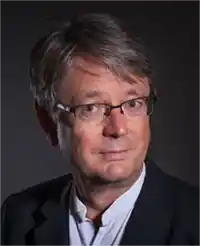
This interview was recorded by Garry Phillipson on 8th August 1999 and was first published on Skyscript in March 2026.


Across more than four decades of practice, Lee Lehman’s work consistently emphasised astrology as a disciplined craft rooted in technique, but realised through judgement. Trained in science, with a PhD in botany from Rutgers University, she brought a rigorous and questioning approach to astrological practice, and played a central role in bringing traditional methods back into contemporary use.
Her work encompassed natal, horary, electional, medical, and mundane astrology, with a strong emphasis on practical application. She taught her own medical astrology course through the STA School of Traditional Astrology, and acted as a founding professor and Academic Dean at Kepler College, where she contributed to the development of structured astrological education.
Her publications include The Ultimate Asteroid Book (1988), Essential Dignities (1989), The Book of Rulerships (1992), Classical Astrology for Modern Living (1996), and The Martial Art of Horary Astrology (2002), alongside later works on medical and electional astrology.
This interview was recorded in August 1999 and published posthumously in March 2026, shortly after Dr Lehman’s death on 18 March.
Q What is your background outside of astrology?
A Outside of astrology I have a PhD in botany. Both of my parents were teachers – my father at university, my mother at an elementary school. So I had pretty much grown up expecting to get a doctorate in something. I got interested in medicine when I was about eight years old – I had a run-in with a scooter and lost! I was playing on it, and I cut up my knee. When I was taken to the hospital, the doctor who sewed me up was a woman, and that was the first time I’d seen a female physician. So I decided at that point that I could do that. From there on I tracked in on the sciences, and didn’t end up in medicine but ended up in botany, because I got seduced by environmentalism. Before, I would have ended up in medicine, and probably would have saved myself a great deal of grief by having to unlearn allopathy.
Q Do you feel as though your scientific background gives you an edge that many astrologers don't have?
A It has certainly changed the way that I approach astrology. There’s a tremendous advantage to it in the sense that I have a very serious approach to research. I do like to see numbers, and I do like to look at populations. But the other thing is, I had reached a point with science of realising that there is very little that is done using the scientific method, which can in any way represent ultimate truth. It’s beyond some of the religious or philosophical questions that we astrologers normally think about; it simply becomes obvious, when you are on the inside doing the experiments, that there isn’t an air-tight experiment. There just isn’t.
For example, when I think back about ten years or so, when James Randi went after the homeopaths: he went into one of the laboratories and basically just trashed the thing. I remember reading about that in Science magazine. I realised that, had anyone applied that level of scepticism to any biology lab, any place on the globe, the same thing would have happened. It’s just that ‘real science’ has certain rules of engagement, so that everybody suspends disbelief around some critical issues. Since everybody operates that way, it’s like this collective mask. But since astrology is outside the pale, they actually apply a different standard to us than they would to themselves.
On the one hand, this gives me some real insights into why the so-called scientific approach to scepticism isn’t appropriate for us. At the same time, it leaves me sceptical of our methods too, and so I like a little more in the way of a method than the statement ‘it works for me’.
Q Do you think it’s possible for astrologers to talk with the scientific sceptics on their own terms, and if so, what do you think astrology’s strongest suit is?
A I think a lot of the issue with the sceptics is that we, as a community, have been willing to cede too much to them. What we have is really a political issue more than a knowledge issue, or a philosophical issue.
Let me go back to what I meant when I said that any scientific experiment would be destroyed in the same way by that level of scepticism, because I think this then reflects on the answer to why the sceptical approach is – in my opinion – very insidious. Interestingly, it has had much more of an effect over here (in the UK) than it ever had in the States, because he just never had that level of influence in the States.
What I mean is, for example, when I was doing my post-doc, I was working at the Public Health Research Institute in New York City. I was doing very mundane work, working on protein synthesis in a particular virus that had been isolated from the East River in New York. Most of the people on my floor were doing similar kinds of protein and DNA or RNA analysis. The method of choice for doing these analyses was something called electrophoretic gel, which is simply a matrix in which you could separate out different nucleic acids or proteins using an electrical field. Then, if you had made the isotopes radioactive to begin with, as we did, you could put a photographic plate on it and get results.
OK – sounds extremely cut and dried, sounds extremely uncontroversial. But the reality is that what everybody would do is this: you might run a hundred, two hundred, experiments that were pretty much clones of each other. Then you would get one absolutely stunning result. That one result would be published. The other 199 would never be mentioned. Everybody would take this as absolutely normal. Yet obviously, if you had had someone in there who was sceptical of the whole thing, they’d be saying “you just threw out 199 experiments to take one!?”. Obviously, this is an extreme double standard.
This is why I say we’ve made a mistake in allowing too much, as far as the way that criticism occurs. What that period in the lab taught me is that, had I stayed in science, I would have been extremely dangerous. Because what I learned was that I could design any experiment to produce positive or negative results – almost at will; and I could do this simply by the way I designed the experiment.
For example, if you are of a sceptical nature, it is extremely easy to design an astrological experiment that will fail. I saw several of these pop up at the old UK research conferences when I used to go to those, back in the 80s. There was one, for example – a study that was done on Pluto and the Moon. They were asking people a series of ten questions, and it was, “Are you obsessive about [blank]?”. That was the question. It was so stupid, because if you ask the Pluto-Moon person, they are going to say, “No! I'm not obsessive!”. But if you ask their friends…! This is the issue of self-attribution. And this was designed by somebody who, in anybody else’s experiment, would have been crying, “Foul! Self-attribution!”. This is what I mean by different standards, and what I mean by “how to design an experiment to fail”. That particular experiment, when it was analysed, failed. Well, duh! I looked at the sheet when it was being passed out and said, “This is going to fail”.
So this is one side of it: you can very deliberately design an experiment to fail. The other side of it, however, is that I don’t think that many astrological statements should be approached statistically anyway. Because I think one of the questions that we don’t stop to talk about is the whole issue of when the quantitative methods apply. Perfect case in point: horary. If somebody is asking me a question about “will they get married to somebody?”, they aren’t interested in a statistical answer! They are interested in an absolute answer. I cannot take the rules of horary and simply boil them down to say, “Well, this chart had seven ‘yeses’ and three ‘noes’, so that means that 70% of the time this will be a ‘yes’”. I wouldn’t be getting paid very well if that were my approach.
I think we can only ask these questions when there are enough of us in the astrological community who have the mathematical background to be able to ask the questions intelligently, so as not to be intimidated by a word like ‘statistics’. Then we can really take the material and say, “OK, this is an interesting idea; this isn’t an interesting idea”. I think a lot of the quantitative studies that we can do, and should do, are more along the lines of giving us some insight into how something is working – rather than making an absolute statement like “Well – having this in the Gauquelin sector produces the following result”. Most of the time, when you are working on a statistical level, you can’t end up with that conclusion anyway because it isn’t a valid statistical statement.
G This is all very interesting to me. I’ve been working on an interview by email with Geoffrey Dean and some of his fellow researchers, and what you are saying is highly relevant to many of the points that have come up.
A I stopped playing with him. It’s politics again. I don’t know what Geoffrey does for a living, but he has a tremendous amount of free time. And there’s a point at which having the last word is extremely advantageous.
Q With what you are saying about scientific experiments generally being fixed – has that been written up anywhere?
A No. But you know, how do you do this? What I saw was just standard operating practice. And with the work I did for my PhD – I can tell you that with any experiment I ran, I could have told you ten fatal flaws if asked. The thing that always amazed me was that nobody asked! I guess I’ve always been a bit of a crier of “The Emperor has no clothes!”. I can remember when I was on my post-doc, I would do things like walk into labs where they were studying flu viruses and say, “So – how come everybody didn’t get flu this year, when we were all exposed?” You’d get this little mantra about, “Well, people have different immunological capabilities…”. I always knew that that was just a cop-out, just a way of saying “We don't have a clue, so here’s some jargon”.
What was fascinating to me was that I couldn’t see anyone else in the lab who was even interested in this. What this told me is that it’s so easy for people to learn a procedure, a technology, a word, a concept – and then, you’re in the ‘in-group’, whose rules are: “We of the ‘in-group’ can manipulate this stuff however we want, and whatever we say is true. And all of us will see it exactly the same way, because we will train you to see it that way. So we’re all going to share this viewpoint, that this is reality, and our viewpoint is right, and the reason that you on the outside don’t see it this way is because you haven’t received the training”.
It’s a very insidious point of view, and in a sense I would call it cultic. This is no different from what people sometimes accuse religious cults of doing to their members. It’s the same thing!
Q Hmm, scientists as the new priesthood.
A Oh yes, very much. Except that they’re not encouraged to think of themselves that way; “We’re just looking for the truth”.
Q You have, I gather, a wealth of experience in teaching astrology. What do you find is the most difficult thing for people to deal with in the process of learning astrology?
A I believe that successful teaching of astrology is the teaching of a martial art. I actually discovered this experientially while studying horary with Olivia Barclay. Olivia and I had various philosophical and other differences, which aren’t relevant here; suffice it to say that Olivia, because she is such a profoundly talented artist, has a visual memory that most of us can only imagine. What that means is that her approach to learning, and to reality (as far as I can tell) is that of an artist. So she sees things. She can see pages of Lilly. And when she says “page 312, line 17”, you know that it is page 312, line 17. That’s simply the way that she works.
Most of us don’t learn that way. So I struggled with her material for some time (because I don’t learn the way that she does). Where horary started to click for me was when I had certain immediate insights into what was happening. I started referring to those insights almost immediately as “horary satoris”. They were the “what is the sound of one hand clapping” sort of immediate things, where you can work it and work it, and then you get it. And in the process of ‘getting it’, you can’t ever tell somebody else how to get it. But what you can do, is put them into the field of contemplating it.
I had done some Aikido training a long time ago. I realised that there is a fundamentally different approach in the East to how martial arts are taught, and to how most things are taught to us, as Westerners. The martial arts approach is to give you a certain number of things to do – let’s call them ‘positions’, or ‘forms’; and you would practise these forms, and you would do them hundreds and hundreds of times. If you were even mildly self-observant, you would notice for a while that you were not doing them very well, and that you were basically a klutz! Then, at some point, you would become the form. And it was at the point that you would become the form that your teacher would ask you to test. Because their approach is that the test is the demonstration that you are already there. Our approach is that the test is to prove that you are there.
So when I saw what was happening to me while studying with Olivia, I realised that the very same thing was going on for me then as had been going on for me in the martial arts. Now this, of course, is nothing to do with the fact that I have Mars rising, you’ll understand! – but this is when I realised that the teaching of astrology works when you, as the teacher, provide a field, or an environment, for your student to then be able to sweat; and that the sweating process is basically, ‘examples, examples, examples, examples’. Because it’s only through actually working with charts that you get it. And I can’t tell you whether a particular student will get it the first time, the hundredth time, the thousandth time. But if they consistently work the material, they will get it.
There are certain things you can do as a teacher to make it an easier process for them, but you can’t force the learning. You can only provide resources and moral support along the way.
Q Do you feel that each person has to forge their own approach to astrology, that different techniques sit with different people?
A My current martial arts instructor made a comment a few weeks ago – actually at our last testing. He said, “You know – this is called martial art for a reason”, and went on to say that artistry is the process of adapting techniques. I think the same thing is true with us. There is information out there, there is history out there, there are citations, there are procedures, there are ideas that have come across, sources, and all this other stuff. But ultimately, the synthesis is individual. And that is the art of astrology. You can’t get to the art of astrology without mastering the technology of astrology; but ultimately, astrology done well is an art.
Q How did you initially get into astrology?
A I was actually in grad school at the time. I got interested in somebody who just happened to have a copy of Llewellyn George’s A to Z Horoscope Maker and Delineator and said, “And just what is your birthday?” They read out just the planetary descriptions, and I thought, “Jeez, that’s just a little too far away from random access”. I was working on a political action committee at the time, and was able to get the charts of virtually everybody on the committee. So for the first nine months, I was reading introductory books on astrology and comparing the charts, then watching the people at the meetings and saying, “OK – this person has Mercury in Libra, what about them is that?”.
I think political action committees are wonderful ways to see planets! (laughs)
Q And I gather that you practised as a ‘modern astrologer’ for quite a while before you got interested in classical astrology?
A Yes, that’s true. In fact, I had the dubious distinction of writing a review of Bob Zoller’s book on the Arabic parts when it first came out, where I questioned the need for classical astrology. But what had happened was, I had published my asteroids book – this was in ’88 – and [what] I had discovered was that every time I was invited to speak at a conference, the title was ‘Asteroids and the (blank)’. I was, frankly, getting rather bored with this. It occurred to me that either I would be doing this for the rest of my life, or I had better come up with another idea. I was talking this over with Maggie Meister, and we came up with the idea of essential dignities – because we couldn’t think of a single book on them, and we couldn’t think of anybody who was actually an expert on them. I thought, “Well! If you want to get noticed, pick a field that nobody’s doing” – which is something I also tell people when they want to break into speaking on astrology. If you’ve got a lecture on secondary progressions, you can join three thousand other people. Or you can do something that nobody has a lecture on.
So I decided to do dignities. I still wasn’t planning to do them classically, but I found that the classical material was the only stuff that made sense. And the more that I tried to work the material, the more it became clear that the classical material was so ahead of everything else. That is basically when I shifted over.
Q What is your attitude towards the asteroids now?
A The asteroids are fun, a lot of fun. They can be a mini-divination tool. If I’m doing a relationship reading, I still run Sappho, Eros and Amor. Where I became disturbed – and this was after I’d studied classical for a while – is that I realised that a lot (not all) asteroid people are using the asteroids as a substitute for actual chart delineation; that instead of having to figure out what to do with Venus and Mars, they are going to tell you all the asteroids that are conjunct Venus and Mars. I refer to this process as ‘roidomancy’!
I don’t want to detract from some of my friends who are doing good asteroid research, but I think it shouldn’t be approached as a method of application instead of good, solid chart delineation.
Q Could you give me an idea of what you do when someone comes for a natal reading?
A First of all, most of my work is by phone – but that is also true of my horary and electional work. My typical session is about an hour. I am not an exclusive classicist – with horary and electional I am, but with natal I am not. So I’m using a mix of techniques. I am certainly going to be looking at a fairly detailed classical delineation of the natal chart. For dynamic work, I mainly use profections and transits, but I also use the lunation cycle, because I’ve simply had, and seen, too many hits on the lunation cycle to think that the technique doesn't work.
So I have a bit of an eclectic mix there so far as what I do. It depends, really, on what the client wants. I very much believe that people will show up at the right astrologer. Especially since I’m not working with local people very much, I figure that anyone who’s going to show up with me has to go to a little bit of effort to get to me. So I will tend to get people who are more interested in … well, it’s not really the more extreme areas of life, but I tend not to get too many “who am I?” kinds of questions. I don’t tend to get easy relationship questions. I don’t get mild readings, I get people who have health problems, or who are looking for predictive work in their businesses. So that’s what I do.
Q What’s your attitude towards Sun-sign columns?
A I write one. There, that was simple, wasn’t it! I look at it this way: there’s science, there’s science-fiction; there’s astrology, there’s astrology-fiction. Sun-sign columns are astrology-fiction. But like science-fiction, there is an element of realism there. And I think, potentially, a good Sun-sign column can bring someone into our community. A bad Sun-sign column is random access.
G Quite a few of the people I’ve interviewed were introduced by Sun-sign columns.
A Sure. That’s the point. I think there are times when we take ourselves way too seriously.
Q Could I take a note of your birth data?
A 9th September 1953, 4.45 am, (that’s rectified from a birth certificate of 4.35 am) Wakefield, Nebraska. [The chart shown is Lee’s later rectification, to 4:41 am]

Q And what in your chart would you home in on, as explaining why you approach astrology as you do?
A I've got a wedge, an almost perfect wedge. It runs from 24 Gemini to 25 Libra. I’m a triple Virgo with Mercury in Virgo, and a Mars-Pluto conjunction at the ascendant in Leo from the 12th house side. That probably explains almost everything, except for also being a Saturn-Neptune conjunction. There is a level of Saturn-Neptune where you know that none of this is real anyway. And it does tend to keep you from getting too serious about it.
Q Would you think of yourself as a magician?
A No. I guess where I would not relate to that as a concept is that I don’t see what I’m doing astrologically as being an attempt at changing reality. What anybody may do with the information they get is up to them, but I would see myself as far more neutral.
Q What would you consider to be your biggest success in astrology?
A My students. Unequivocally. I’ve been saying for some time that we needed graduate students to start really getting a handle on some of the astrological problems. And some of my students are turning into those graduate students, and I’m thrilled.
Q You were talking earlier about there being certain advantages in coming from a scientific background. Do you try to instil some of that in your students?
A One of my courses is a course in gaming – the prediction of the outcome of games and sporting events, which some of my students are also using on the market. That course is completely quantitative. It starts out in a database program, it ends up in a spreadsheet – so the whole thing is a real heavy-duty dose of numbers. But the people who have taken it from me have, for the most part, not been as quantitatively inclined as I am, and none of them have had scientific training (though at the same time, none of them is afraid of a spreadsheet). What it has done for them is make them think about astrological problems differently.
I have two groups of students who have been through anywhere from two or three of my courses, up to five. As they get past the second course, you watch their minds work differently. Somewhere between the mundane material and the gaming material, they start thinking quantitatively. They start thinking, “Can I work with a whole group of data?” What’s interesting is that I’m not really pushing the numbers too much, but they become much less afraid of them.
Q Going back to the subject of successes with astrology, do you have an anecdote or two about readings which have turned out to be particularly accurate?
A Well, in a sense, every horary which works out is in itself a miracle. Because horary is something that is so off-the-wall, the fact that it works at all says to me that there is some divine power, with a really twisted sense of humour! There are questions that are off-beat; I wrote one up a while ago on placing in a dance competition. Nick Campion had decided to use my chart to see whether he would win in the dance competition afterwards, and that was kind of fun. So you get some oddball things like that. But the majority of people who come have the usual issues, and I guess that every time you can help someone is a wonderful thing and a miracle, and every time you can't – well, you wish you could!
Q So far as sports go, do you work out race (or match) charts as a regular thing?
A I haven’t been that obsessive about working with horse races. I do have all the times of the Kentucky Derby back to about 1903, so it’s a good data set. I did some preliminary work on it about five or ten years ago, where I basically just grouped the charts into long odds, medium odds and short odds, and I was seeing some differences in terms of the three groups. So it’s just one of those projects where I’m waiting for a student to hand this off to. Because I just don’t have time to pursue it. But I think that might be one way to go. I’m not happy with the methods proposed to get the horses’ names from the ascendant, second house, and third house (or another system that uses the tenth, eleventh, and twelfth). Too many of the horse names make no sense astrologically, so I don’t buy those. Most of what I’ve done have been one-on-one competitions – some individual matches, like tennis matches, but mostly team sports.
Q If you had to take half a dozen astrological tomes to a desert island, whose work would you take?
A Lilly. Bonatti. I’m not sure what I’d be doing astrologically on a desert island, mind… Ramesey. Those would be the first three I’d pick. From there, it would depend on where I was at the time; I tend to be a voracious reader, and my answer for the other three would probably be whatever I’m fascinated with at the moment.
Q What changes would you like to see within the world of astrology?
A I would like to see the psychological group and the classical group talking to each other a little more profoundly. I think, unfortunately, there’s been a shade too much name-calling and a shade too much arrogance on both sides. I started out with essentially a Jungian approach to astrology, and I don’t feel that I violated any great tenets by moving over to classical, yet to a lot of people it looks that way. One of the things I feel very strongly is that we spend a lot of time on the issue of fate versus free-will, have various arguments, and it’s really a false dichotomy anyway. It’s a dichotomy that was basically foisted on us by the Catholic church, and we’re still extracting ourselves from that. Fate may not be as fated as we think, and free will is never as free as we’d like it to be. So I don’t think there’s necessarily any contradiction there.
Q What changes would you like to see in astrology’s place within the world?
A I’d love it if it stopped being entertainment only. I would love it if we could tell Randi to go play with his own toys. I think that the whole position we’re in, as far as being isolated, is unfortunate. However, I also have to ask how much of it is our own fault – because I think it’s always sexier to talk about astrology at these conferences than to talk about political action. The reality is that, when you see the consistent polls indicating what percentage of people believe in astrology – the idea that we have a lousy public image is ridiculous. I think we have to ask why we are continuing to tolerate it.
Q Do you see the university posts that are being talked about at the moment as being a way out of this?
A I’m very hopeful about Kepler College. It’s still not a completely done deal financially, but I certainly hope that things get off the ground. At first, it’s going to seem extremely odd to the academic community that something like this could even exist. But the thing is, I'm not totally convinced the university community is as monolithic in its opposition to astrology as many people assume. Everybody in my department, as a botanist, knew I was doing astrology. I did tarot readings, even for some of my committee members, and everybody knew I did it; there was never any flak about it. Of course, it wasn’t in the astronomy department, and it wasn’t public – I didn’t have ‘Tarot Readings’ on my office door! But I think we would find that a lot of people are not actually as hostile as we tend to believe.
|
Garry Phillipson is a tutor and supervisor for MA and PhD students of Cultural Astronomy and Astrology with the Sophia Centre. His interests include the philosophy, practice and history of astrology; and religious thought and practice, particularly Theravadan Buddhism, Advaita Vedanta and neo-Advaita. Garry read philosophy at the University of East Anglia and completed his PhD in 2020. His doctoral thesis, ‘Astrology and Truth’, discusses the truth-status of horoscopic astrology in the context of western epistemology. He is the author of Astrology in the Year Zero (London: Flare, 2000, now available in second edition) and has written and spoken about astrology, and strategies for its comprehension, in many settings. Along with Kirk Little he curates the website Cosmocritic.com – a repository of freely downloadable resources with a focus on the philosophy of astrology. |