Showing posts with label New Frontiers. Show all posts

Tuesday, December 29, 2009

New Frontiers Mission Candidates Selected

Candidates for the third New Frontiers mission (the first two being New Horizons and Juno) have been selected by NASA's Science Mission Directorate.  As stated in the press release, these missions include:
  • The Surface and Atmosphere Geochemical Explorer, or SAGE, mission to Venus would release a probe to descend through the planet's atmosphere. During descent, instruments would conduct extensive measurements of the atmosphere's composition and obtain meteorological data. The probe then would land on the surface of Venus, where its abrading tool would expose both a weathered and a pristine surface area to measure its composition and mineralogy. Scientists hope to understand the origin of Venus and why it is so different from Earth. Larry Esposito of the University of Colorado in Boulder, is the principal investigator.
  • The Origins Spectral Interpretation Resource Identification Security Regolith Explorer spacecraft, called Osiris-Rex, would rendezvous and orbit a primitive asteroid. After extensive measurements, instruments would collect more than two ounces of material from the asteriod's surface for return to Earth. The returned samples would help scientists better understand and answer long-held questions about the formation of our solar system and the origin of complex molecules necessary for life. Michael Drake, of the University of Arizona in Tucson, is the principal investigator.
  • MoonRise: Lunar South Pole-Aitken Basin Sample Return Mission would place a lander in a broad basin near the moon's south pole and return approximately two pounds of lunar materials for study. This region of the lunar surface is believed to harbor rocks excavated from the moon's mantle. The samples would provide new insight into the early history of the Earth-moon system. Bradley Jolliff, of Washington University in St. Louis, is the principal investigator
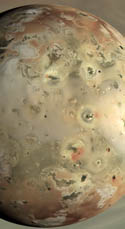
As a result of the restriction of using solar panels for this round of missions, each of these candidate missions will be sent to targets in the inner solar system or the asteroid belt.  While outer solar system missions with short primary missions are possible with a combination of solar panels and batteries (as has been suggested for potential Enceladus sampling missions or Saturn atmospheric probes), none were selected for this round's New Frontiers mission.  Io was a possible target for this round, but the solar panel restriction made an orbiter or a flyby spacecraft unlikely, and I don't think any were seriously proposed this time around.  The next New Frontiers mission after this one is currently expected to allow the use of radio-isotope power sources.

Out of these three potential missions, I would really like to see the SAGE mission approved.  No spacecraft has landed on Venus since before I was born (I am excluding the VEGA balloons here since they were primarily atmospheric probes).  And the descent imaging could be some of the most dramatic images that we could expect for the next decade.

Check out Van Kane's post on this subject for more information.

Link: NASA Chooses Three Finalists for Future Space Science Mission to Venus, an Asteroid or the Moon [www.nasa.gov]

EDIT: As Ted points out in the comments, the VEGA probes did land on the surface, but they didn't return images of the surface, so they still don't count.  I am still looking forward to the descent images from SAGE.

Friday, February 6, 2009

LPSC 2009: Argus New Frontiers Mission Concept

The abstract for this year's Lunar and Planetary Science Conference are now online. LPSC is one of the largest planetary science conferences of the year, along with DPS in the fall and AGU in May and December. This year's Io posters will be a diverse bunch with mission concepts, geologic mapping, and plume modeling, and statistical analyses of Io's landforms on display.

The first LPSC abstract I want to discuss here is titled "Argus: A New Frontiers mission to observe Io" by Nicholas Borer et al. This poster will present a mission concept developed by participants of the 20th Annual Planetary Science Summer School last year. This concept was previously presented at DPS and was briefly discussed here.

The Argus concept shares many similarities with the Io Volcano Observer. Like IVO, Argus would orbit Jupiter and would perform repeated flybys of Io to answer the mission's science questions. These science goals include investigating Io's geology, geochemistry, and atmosphere as well as the process of tidal heating. However, because of the increased cost cap that a New Frontiers AO would afford it, Argus would be able to perform an expanded mission at Io compared to IVO. For example, Argus would fly by Io around forty times over a two-year period, acquiring 6.8 Gb of data each flyby (which is actually only 1/3rd of the planned per orbit data return of IVO, but then again, IVO's orbits at their shortest are three times longer). This would follow a nominal September 2018 launch and a five-year, VVEGA interplanetary trajectory to Jupiter. The instrument payload seems similar to IVO, though Argus would have a Near IR spectrometer for surface compositional measurements and a UV Spectrometer to map the Io Torus and measure the composition of Io's atmosphere and volcanic plumes. Because the magnetic field environment at Io is not a priority for Argus as it is for IVO, Argus doesn't have a magnetometer suite in its concept payload.

Another note about the instruments: BEST...INSTRUMENT NAMES...EVER!! I mean, come on, I-SPI for the visible imager!! CheESE for the near-IR spectrometer! I used to be good at coming up with acronyms. When we were first describing the circular features on Titan that may or may not be impact craters, we needed a term for them that wasn't based on structure since all we saw were near-IR albedo. Zibi Turtle, one of my supervisors, came up with Suspisciously Circular Features (SCFs). Mine was Circular or Round Albedo TERains or CRATERs. Hers was accepted because mine was a bit...too clever. The acronyms for the various instruments seem so creative that I wonder how much time they actually spent sitting around, coming up with acronyms (TIRIMISU, LIME, and SUSHI for the thermal imager, the Ion and Neutral Mass Spectrometer, and the UV Spectrometer, respectively, for the other instruments).

My main concern for this mission is that they used planned heritage from the radiation shielding of Jupiter Europa Orbiter to provide cost savings for the mission to keep it below the New Frontiers cost cap. I guess the other concern would be when this could launch. The next New Frontiers AO will not allow radioisotope-powered missions, only solar-powered ones. While the concept doesn't say what the power source is, the high radiation dosages this mission will receive would seem to preclude solar panels. The abstract does refer to the need to have the spacecraft in safe mode for battery recharging during much of the cruise period of each orbit. Maybe they want to have solar panels that will charge batteries for each flyby, but will then be inactive during the flyby. Not sure how that would keep the panels from being fried by Io's radiation environment. So, assuming it uses radioisotopes for power, Argus would have to compete in the next New Frontiers AO, where it would then have to compete against Argo, a flyby mission of Jupiter, Saturn, and Neptune.

Link: Argus: A New Frontiers mission to observe Io [www.lpi.usra.edu]

Saturday, January 10, 2009

The Cost of the MSL Launch Slip

Van Kane has a couple of posts from yesterday's special Planetary Science Subcommittee (PSS) meeting on the effects of the Mars Science Laboratory (MSL) launch slip. Van listened in on the telecon, and posted about it on his Future Planetary Exploration blog. This new cost overrun could adversely affect the next Discovery Announcement of Opportunity and increase risk for Juno, a New Frontiers-class mission bound for Jupiter.

In December, the launch for the next-generation Mars rover slipped from September-October 2009 to late 2011. This launch slip increased the cost of MSL by $400 million, which must be absorbed, some how, by NASA's planetary science budget. At the PSS meeting yesterday, several recommendations were presented for where this $400 million would come from. Before deciding on where the funds would come from, NASA set a few (very good) ground-rules: currently planned missions would be launched as scheduled, though the Juno and MSL launch windows over lap, which will need to be worked around; the New Frontiers AO will proceed as planned; R&A funding won't be touched (considering that this is where my salary comes from, I for one love this rule); and the Outer Planets Flagship mission will proceed as planned.

According to Van, the vast majority of the over run would be accommodated by using funds currently allocated for technology development for future Mars missions, such as mid-size rovers and the sample return mission. The rest, approximately $47 million, could come from delaying in the next Discovery mission AO (affecting the Io Volcano Observer proposal) by a year, reducing the reserve funds for the Jupiter-bound Juno mission, or delaying the International Lunar Network mission.

Presentations from this special meeting have not yet been posted online.

Link: Future Planetary Exploration [futureplanets.blogspot.com]

Monday, December 15, 2008

Potential Io missions

Van Kane has a great post on his blog, Future Planetary Exploration, on the potential for future New Frontiers-class (or Discovery-class) missions to Io. This is the first in a series of posts on mission concepts and the likelihood of an Io mission. Definitely worth checking out.

I will try to post more on the solar paneled Io mission concept later today.

Link: Io Missions: Part One [futureplanets.blogspot.com]

Tuesday, November 25, 2008

While I've been Away

Sorry I haven't posted in a few weeks, here is a recap:
  • The New Frontiers-3 Draft AO is now online. The Announcement of Opportunity states that following classes of mission proposals will be accepted: Aitken Basin Sample Return, Venus in Situ Explorer, Comet Surface Sample Return, Network Science, Trojan/Centaur Reconnaissance, Asteroid Rover/Sample Return, Io Observer, and Ganymede Observer. The cost cap has been set to $650 million in FY09 dollars and will be not be permited to use radioisotope power sources. This would make a potential Io Observer difficult, but NOT impossible due to the radiation environment at Io (I will get to why it isn't impossible in a later post). Despite the National Research Council's recommendation, the AO was not opened up to "all missions except to Earth and the Sun that fit within the budget and power source constraints," as Jim Green promised back in March.
  • Van Kane has a great post comparing the virtues of the Saturn/Titan and Jupiter/Europa missions now vying for the flagship mission spot. I think Van hits the nail on the head here. I will post a similar recommendation post soon.

Tuesday, October 14, 2008

DPS NASA Night

NASA Night at DPS just ended a few minutes ago, and I took the opportunity to view the presentations online. In a bit, it should also be archived for everyone to view here. NASA Night is an opportunity from program heads at NASA HQ in Washington to speak to the Planetary Science community about what NASA HQ is doing with respect to the Planetary Science Division at NASA and for them to get input from the community. These events can often be contentious as changed made by NASA HQ with how things are done and what missions and announcements of opportunity are coming up can effect people's funding and lively hood.

There were two presentations given at NASA Night. The first was given by the director of NASA's Planetary Science Division (PSD), Jim Green, and the second was given by the director of SARA (the grant program at NASA), Max Bernstein. There was a question and answer session following each talk.

Jim Green's talk provided the most meat at NASA Night. He discussed the problems the Mars Science Laboratory has been having lately, the upcoming New Frontiers and Discovery Announcements of Opportunity (AO), the next Decadal Survey, the Outer Planets Flagship Mission, and the new travel and conference funding for NASA employees. Obviously he covered quite a bit of territory.

As is known by now, the Mars Science Laboratory recently incurred yet another cost overrun, more than the overguide threshold requied by NASA. This resulted in a review with the adminstrator. From this meeting last week, the adminstrator agreed to keep MSL on the current launch schedule for 2009. However, funding issues remain. The PSD will perform a review of the extent of the overruns, as the JPL estimates appear to lack credibility. Once this is done, the PSD will determine how to cover the costs. Green assured the audience that he will use the Planetary Science Subcommittee's recommendations to only get the funds from missions outside the Mars Program (like Juno) as a last resort, with funding mostly coming out of JPL and the Mars Program (possibly affecting MAVEN). The PSD will then worth with the White House Budget Office and the Congress to finalize a resolution, though with MSL now 30% (or more) over the initial budget estimate, Congress could decide to cancel MSL. At the moment, there are no plans to descope instruments on MSL.

Green next discussed the next Decadal Survey. Decadal Surveys act as a guide for NASA when selecting missions and instruments over the next 10 years. The last Decadal Survey in 2001 promoted Pluto/Kuiper Belt flyby and Jupiter missions as the top priorities for the New Frontiers program, which resulted in the selection of New Horizons and Juno. The last survey also excluded the Mars program from the priority list, since at the time (and still to this day) the Mars program is separate from missions to the rest of the solar system. The next Decadal Survey, scheduled for 2011, will include Martian and Lunar missions. Extrasolar planets will be covered by the Astrophysics Division.

Green next discussed the Discovery and New Frontiers programs. Green briefly covered the DSMCE program (pronounced DOS-MICE). This was a mission concept study program to see what kinds of Discovery-class missions could be performed if the proposers were given two free Stirling Radioisotope engines for energy, rather than solar panels, which have been used for all previous Discovery-class missions. One of the concepts they are looking at is the Io Volcano Observer, a study led by my advisor, Alfred McEwen. Reports from these studies are due in December. The next Discovery AO is planned for 6 months after the New Frontiers AO. Green said that the decision to use government-furnished Sterling engines for this next AO has not been made yet. The next New Frontiers AO is currently being developed. The draft AO will be released soon, and will be available for public comment for three months before the final AO is posted.

Green then briefly covered the Outer Planets Flagship Mission selection. Nothing new to report since the PSS meeting a couple of weeks ago. Green did confirm that the change in the planned launch window, from 2016-2017 to 2018-2022, was done so that the NASA-provided mission components would launch closer in time to the ESA-provided components.

Finally, Green reported that NASA is severely restricting funding for NASA employees to go to conferences as well as sponsorship of conferences. This restriction includes attendance at DPS, LPSC, and AGU. This would limit the number of civil servant employees at these conferences, such as those from JPL and Ames. Jonathan Lunine, during the Q&A session, brought up the argument that this restriction, which maybe temporary, would limit grad students exposure to federal civil servants, which could make employment at NASA facilities less attractive. In additional, the restriction could cause a drop in membership to professional organizations like AGU and AAS as NASA employees would no longer benefit from the reduction in attendance fees at conferences.

Don't forget, the Galilean Satellites session is scheduled for tomorrow morning at 5:30am EDT.

Tuesday, September 16, 2008

Io at DPS

The abstracts for next month's Division of Planetary Sciences Meeting are now online. Several talks and posters are about everyone's favorite moon. The abstracts for DPS (and the upcoming AGU meeting in December) are much shorter than those submitted for LPSC, which would be better described as mini-papers. So there is less to say about the abstracts themselves. A few abstracts do stand out:
  • Julie Rathbun and John Spencer have a talk scheduled for the morning of October 15 titled, "Io Eclipse Observations: Determining the History of Loki’s Flux at Multiple Wavelengths." The abstract just summarizes Loki's importance to Io's total heat flux and Rathbun and Spencer's theory for Loki's observed activity. The talk will cover their work on separating Loki's contribution to the observed heat flux from the other volcanoes on the sub-Jovian hemisphere. They will then discuss Loki's extracted brightness at three wavelengths in the near-infrared.
  • Erinna Chen et al. will present a poster covering her group's summer school Team X project, a New Frontiers-class Io mission concept. The mission, which they call Argus, would use a high-inclination orbit around Jupiter and would flyby Io at least 40 times. The mission would use Advanced Stirling Radioisotope Generators (ASRG) as a power source, pushing the mission to after Discovery 2013. The payload included in the study would consist of a narrow-angle camera, a thermal imager, an NIR spectrometer, a UV spectrometer, and an INMS-like instrument, similar to the IVO Discovery mission concept, but with more advanced instrumentation and 4-10 times the number of Io flybys, so presumably the increased cost between the Discovery mission concept and this New Frontiers mission would be taken up in increased payload size and radiation shielding.
While I will not be at the conference, I am a co-author on three abstracts: "Evidence for Past Lake-Level Change in Titan's Ontario Lacus" by Jason Barnes et al., "Tiger Stripes and Cassini ISS High-Resolution Imaging of Enceladus" by Paul Helfenstein et al., and "Cassini Imaging Observations of Titan’s High-Latitude Lakes" by Elizabeth Turtle et al. Of these, I spent the most time working on the last one, and includes the coolest discovery we have made at Titan from Cassini images:
Differences between the two ISS observations may be due to changes on the surface as a result of precipitation from a large cloud system observed in Fall 2004 (Schaller et al., 2006), although diffuse clouds or atmospheric scattering could also play a role.
The meeting will occur between October 10-15 in Ithaca, New York on the Cornell University campus.

Link: Division of Planetary Sciences Meeting 2008 [dps08.astro.cornell.edu]

Saturday, March 15, 2008

Highlights o' the Week

It has been a busier week than usual thanks the Lunar and Planetary Sciences Conference, quite a few images added to my Galileo Io Images website, and some news on the New Frontiers 3 front.
Enjoy the weekend! I got to get back to playing Halo 3 (yeah, I've gotten a little tired of playing Guitar Hero 3 for the time being).

Thursday, March 13, 2008

Io Observer recommended, still won't happen

The Space Studies Board released their recommendations for the mission options for the next New Frontiers mission Announcement of Opportunity, due out in June. They recommended a wide-variety of missions highlighted in the Decadal Survey from a few years ago including: Lunar South Pole-Aiken Basin Sample Return, Venus In Situ Explorer, Comet Surface Sample Return, Network Science (a multi-lander mission to either Venus, Mercury, the Moon, or Mars), Trojan/Centaur Reconnaissance, Asteroid Rover/Sample Return, Ganymede Observer, and drum-roll please, an Io Observer. Nice to see that an Io Observer is still at least among the top eight missions for its class.

It, however, still won't happen this time around due to the restriction placed on the program by the lack of available plutonium for RTGs or nuclear-electric propulsion sytems (only enough currently for the Mars Science Laboratory, the next Discovery mission, and the next Flagship mission to the outer solar system). I do like the addition by the study group of "Innovative Mission Ideas", basically suggesting to NASA that the New Frontiers AO be as open as possible to all types of (preferably non-Mars) missions that fit within the cost cap.

The link to the report is below. Just click on "Read this book online, free." Thanks to Bruce Moomaw for the tip.

ADDED: I should note that Pamela over at Astronomy Cast Live posted on that blog that Jim Green, the Director of the Planetary Science Division at NASA, stated during a meeting either last night or tonight, that the New Frontiers AO will be open to all missions except to Earth and the Sun that fit within the budget and power source constraints. Preference will be given to those proposals that fit within those nine mission profiles mentioned above. Now, we just need to figure a way to do an Io Observer mission with solar panels (and not fry them in the process...).

ADDED: Quick correction. The SSB recommended a Trojan Asteroid/Centaur reconnaissance mission, not a sample return.

Link: Opening New Frontiers in Space: Choices for the Next New Frontiers Announcement of Opportunity [www.nap.edu]

Saturday, March 1, 2008

No Io New Frontiers Mission this time around

Spaceref.com has a press release from NASA's Science Mission Directorate on the upcoming New Frontiers AO. The article conveys a couple of points. First, it announces the eligibility requirements for New Frontiers mission PIs and the availability of pre-screening to see if an individual meets those requirements. Basically you have to have either a 4-year stint in a "mission leadership role" (think Steve Squyres) or two, 2-year stints in a "mission or instrument leadership role." I use the exact quote here because I have no idea what "leadership role" means in this context, whether you have to have been a PI or whether co-Is are eligible, or mission scientist (think Bob Pappalardo during the Cassini Extended Mission). The other news in the press release is the news that the New Frontiers 3 Announcement of Opportunity is expected by June. Maybe it will even be June of this year. I'm not holding my breath, but Alan Stern seems to have been running a tight ship thus far.

I guess the Io-related tidbit here is the news that RTGs will not be allowed on the next New Frontiers mission. So whatever new frontiers we are aiming for, it had better be closer to the Sun than Jupiter or be a short mission. This news effectively eliminates an Io Observer mission from the list of potential candidates. As others have reported, it seems likely that this AO will again restrict the submissions to a list of mission profiles, likely a South Polar-Aiken Basin lunar lander, a Venus atmospheric probe/lander, a comet sample return mission, and probably a Saturn atmospheric probe.

A little bummed by the news, but the fact that an Io mission was probably not in the cards this time around wasn't unexpected by me. Hopefully next time, though if the Jupiter System Orbiter is selected as the next flagship mission, a dedicated Io mission would likely drop in priority.

Link: NASA Offers Pre-screening of Principal Investigator Revised Requirements for New Frontiers Opportunity [www.spaceref.com]