Showing posts with label Blogs. Show all posts

Friday, September 3, 2010

The Remains of the Week

Here is a wrap-up of outstanding issues from this week:
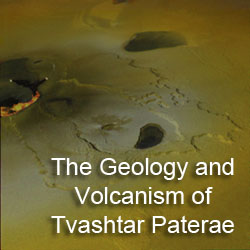
  • Ted Stryk requested that I include the C3 and C21 data covering Tvashtar to my comparison chart in order to provide a longer baseline from which to look at surface changes.  Ted, ask and ye shall receive:
   
C3ISTOPMAP01 - 11/06/199621ISALBEDO01 - 07/02/199925ISGIANTS01 - 11/26/1999
   
27ISTVASHT01 - 02/22/200032ISTVASHT01 - 10/16/2001Surface Changes at Tvashtar

Thursday, August 26, 2010

The Errata of the Day

Happy Thursday everyone! Only one more day till Friday...  Just thought I would post a few quick notes:
  • Jupiter and the Moon are particularly close tonight in the late evening and night sky.  The simulated view to the right shows the sky to the southeast at around 11:06pm local time (since the moon is moving slowly across the field of background stars, YMMV).  And nothing special happens right at 11:06pm, that's just when I pressed stop in Celestia ;-) The close proximity of the Moon to Jupiter (and Uranus) makes it a bit easier to locate those planets, so it is worth taking a look, even for those who don't have telescopes (like myself).  Jupiter is approaching opposition, which occurs on September 22.  On that date, Jupiter will be opposite the Sun from the Earth, meaning the planet (and its attendant moons) will rise over the horizon at sunset, reaches its highest point in the sky at local midnight, and set below the horizon at sunrise.  This is also the best opportunity to observe Jupiter because it will reaches its largest size in the night sky.  In fact, this will be Jupiter's closest approach to Earth than at any other time between 1963 and 2022.
  • The Carnival of Space #168 is now up over at Weird Sciences.  Read up on Trojan kuiper belt objects, bistatic experiments on the Moon, and the Laser Interferometer Space Antenna (LISA).  I submitted my write up on a method for creating true color images of Io for this week's Carnival of Space.
  • Emily Lakdawalla of the Planetary Society Blog is this week's featured Woman in Planetary Science.  I'll admit, I never read that blog much because, well, I'm not a woman in Planetary Science.  But after reading a few of the profiles, I see that many of the experiences are pretty universal, and can be useful for both men and women who are considering a career in this field.

Friday, August 20, 2010

The Remains of the Week

I just wanted to fire off a quick post with other Jupiter/Io-related news that is hitting the intertubes this week:
  • The Carnival of Space, hosted here last week, is hosted this week for the 167th Edition over at Space Tweeps, a group of Tweeters who post quick space news on Twitter.  A couple of posts that caught my eye include one from Paul Schenk showing off some new videos he created using topography and color data from Cassini and another from the IAG Planetary Geomorphology Working Group discussing hematite-rich regions on Mars (like the area Opportunity is sprinting across this week).
  • We are approaching next month's once-every-13-months alignment with Jupiter known as opposition.  As we get closer to the opposition on September 22, many amateur planetary astronomers are pointing their scopes up at Jupiter to catch the best views of the planet on offer this year. One of my favorites showing Jupiter with Io is this one at right from Anthony Wesley, an astrophotographer out of Australia (who is best known for discovery not one but TWO impacts on Jupiter).  It was taken on Wednesday from Exmouth, Western Australia.  You can find more images of Jupiter by astronomers from around the world over at the ALPO-Japan and from the Cloudy Nights forum.
  • I want to thank Emily Lakdawalla for re-publishing my post on Io's true-color processing.  She even dug up a nice chart showing the spectral curves of the cones in your retinas :)
  • Finally, Björn Jónsson created a nice, 12-frame color mosaic from Voyager 1 data of Jupiter.  Very nice!  I hope he posts more.
Link: Carnival of Space #167: The Space Tweeps Edition [spacetweepsociety.org]
Link: ALPO-Japan's Jupiter Section [alpo-j.asahikawa-med.ac.jp]

Monday, August 9, 2010

The Carnival of Space: Issue #166

Welcome one and all to Io and the Gish Bar Times for this week's Carnival of Space - a weekly series of articles highlighting the best space exploration blogs have to offer.  Each week a different blog hosts the festivities, and this week the Gish Bar Times was selected as the host.  The Carnival is organized by Universe Today, and you can check out their website for information on how to participate in future editions of the Carnival of Space and for back issues.

Now when Fraser selected my blog to host this week's Carnival of Space, I was in a quandary over how to organize the submitted articles.  Last time I hosted back in October, I faced a similar, perplexing problem.  How do I make it unique?  For that edition, I settled on ordering the subject planetary/stellar bodies by the amount of energy output, placing fairly inert bodies like the Moon and the asteroids first, then more energetic moons and planets next, then stars, and finally the universe in general.  So for this issue of the Carnival of Space, that just wouldn't do.  For this Carnival, let's try out the old tried and true, Chronological order.

So welcome, stay awhile, explore the Gish Bar Times and the great space articles discussed below.  And as always, don't feed the space bears! Yes, they are part of the carnival, but they have this special diet, I really don't want to get into it...  Anyways, enjoy!

We begin this journey through time, space, and space blogs by visiting the Rundetaarn, a nearly 400-year-old Danish observatory in Copenhagen, built during the waning years of the Thirty Years' War.  Ian Musgrave has posted a series of photos from his visit to the observatory on his blog, Astroblog.  The Rundetaarn was built in the early days of telescopic astronomy, only three decades after Galileo's discovery of Io and the other Galilean satellites.  One important task that the early astronomers at Rundetaarn and backyard astronomers today needed to perform was determining true north.  The Urban Astronomer has a treatise on a simple method for determining true north by using the Sun at local noon, a method simple enough to be possible on almost any solid surface in the Solar System.

Over the next few hundred years, telescopes were used to make a number of momentous discoveries, far too many to recount here.  One such revelation in the 19th Century was the connection drawn between short-period comets and meteor showers.  The story of the Perseids and their parent comet, 55P/Swift-Tuttle, is explored at Simostronomy.  Alan Boyle over at the Cosmic Log provides an observer's guide to this year's incarnation of the Perseid meteor shower, which peaks this week.

Also in the 19th Century, German astronomer Samuel Heinrich Schwabe and Swiss astronomer Rudolf Wolf discovered that solar activity waxed and waned with a period of 10.7 years.  This periodicity is known as the Solar cycle.  At solar minimum, the number of sunspots is low, approaching zero at times.  At solar maximum, as we are expected to reach in the next few years, solar activity is high with more than 100 sunspots at a time observed as well as severe coronal mass ejections (CMEs), which create concentrations of charged particles that seem like gusts and gales in the solar wind.  The Sun's activity at solar maximum can wreck havoc on the electrical systems of orbiting satellites.  The Chandra Blog explores the effects of the upcoming solar maximum on the X-ray space observatory, and how this Solar cycle maybe weaker than expected.  Of course, tell that to people in the mid-northern and mid-southern latitudes of our planet last week as a powerful CME touched off spectacular auroral displays.  PlanetBye presented a series of pictures from Scandinavia of the incredible aurora borealis that were visible last week.  Unfortunately, I live too far south in the United States to have seen them in person, so thanks to Bente Lilja Bye for hosting these great pictures.  As he and other aurora watchers waited for last week's display, Stuart Atkinson over at Cumbrian Sky recounted his experiences of amazing set of aurora borealis over the UK in April 2000.

We move on now to the 20th Century where a major development in our exploration of space was the commencement of manned spaceflight.  In 1961, US President John F. Kennedy committed his country to the goal of landing men on the Moon before the end of the decade.  The effort succeeded despite its champion's tragic death, but when it was initially proposed, there were several competing schemes for accomplishing this goal.  David Portree over at Beyond Apollo took at look at one such idea called Lunar-Surface Rendezvous (LSR) and presented by the Jet Propulsion Laboratory that would have included a number of unmanned probes for each manned landing site.  In the end, only Apollo 12 landed near an earlier unmanned landing site, visiting Surveyor 3.  The most recent manned spaceflight development, new equipment and capabilities continue to be added to the International Space Station, even as the Space Shuttle winds down.  Kentucky Space has a video showing the installation of the NanoRacks system on the station, a new platform that NASA says went from "concept to on-orbit capability in less than 10 months."  collectSPACE discussed a humanoid robot called Robonaut 2 that will be going to the space station with the Shuttle Discovery on STS-133 in November.  Perhaps the coming of even testing models of humanoid robots should go in the paragraph about the end of the world at the end of this post ;-)

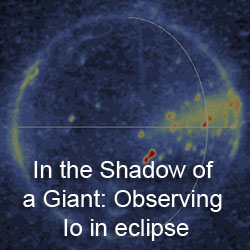
Of course, humans are not the only ones exploring space, as our robotic emissaries beam back images of the planets and moons of our solar system.  This week, on my own blog, I discussed what we can learn at Jupiter's moon Io while the satellite is in eclipse, how Io is not quite as smelly as this summer's news reports suggest, and the volcanic history and geology of one of Io's volcanoes, Zal Patera.

Despite the doomsayers, the end of manned spaceflight is not nigh, as engineers and scientists are looking to the future of human exploration of the solar system and beyond.  One group is the Space Studies Institute, which is getting ready for the Space Manufacturing 14 conference on the technology and policy needed for space settlement.  Habitation Intention has an interview up with Dr. Lee Valentine, the executive vice-president of the Space Studies Institute.  Of course, getting to other places in the solar system is half the battle, and Next Big Future has a pair of articles on a study by high school student Erika DeBenedictis on low-energy trajectories and a video by Reaction Engines demonstrating their designs on a proposed Mars mission.

We may even find that we are not alone in this universe as we begin our exploration of our own little corner of it.   Centauri Dreams examines Project Argus, which would use quite a number of radio telescope to provide more continuous temporal coverage of the entire sky in order to look for short radio bursts from extraterrestrial civilizations.  WeirdWarp this week discussed the possibility of finding artifacts from aliens on nearby worlds in the solar system, particularly on the Moon (with shades of 2001: A Space Odyssey). Finally, Weird Sciences has a pair of posts suggesting that extraterrestrial contact is not a crazy idea, even given the vast distances to even the closest star systems.  They also discuss the possible evidence we have on hand for life elsewhere in the solar system.

All good things must eventually come to an end.  A pair of blogs this week looked at our end in the distant future.  StarryCritters examined a composite image of the Antennae Galaxies (NGC 4038 and 4039), created from data taken by the Hubble, Chandra, and Spitzer Space Telescopes.  These galaxies are in the process of colliding, creating spectacular displays at visible, X-ray, and infrared wavelengths, much as the Milky Way and Andromeda Galaxies will in a few billion years time.  It also doesn't help that our universe isn't getting any younger and that we are all headed toward a very dimly lit distant future, all thanks to entropy as discussed in a podcast [MP3 file] over at Cheap Astronomy.

Thanks everyone for coming out here to the best moon in the solar system for this Carnival of Space!  I hope everyone enjoys these wonderful articles.

Wednesday, August 4, 2010

The Mud Volcano from the Carnival of Wonders of the Solar System

I just wanted to throw up a few quick notes from the news and other blogs this Wednesday evening:

The Cumbrian Sky, a great astronomy blog by Stuart Atkinson, is this week's host of the Carnival of Space.  Check it out for some great photos taken over the last week from the Opportunity rover, still trucking along through Barsoom on its way to Endurance crater.  The Carnival of Space is a series of posts that is hosted each week by a different space or astronomy blog.  These posts highlight the best articles in the space and astronomy blogosphere that week.  This week, the Carnival of Space looks at the near-future of space exploration, the anniversary of the Voyager encounters with Saturn, and the distinction between Earth-like planets and Earth-sized planets (Stuart's own post on this latter topic has the funniest scientific graphic involving a kitten ever made).

Speaking of blogs, Emily Lakdawalla's Planetary Society blog has a new post up in reporting on the possibility of mud volcanoes in northern plains of Mars.  I personally assumed they were pingos, but Emily's article, covering a paper by Oehler and Allen, makes mud volcanoes as the origin of the many flat, rounded mounds that dot the lands seem pretty reasonable.  I am not a Martian geologist so I can provide any useful commentary, however.  Mud volcanoes are cool though.

Finally, the documentary series, Wonders of the Solar System, is premiering tonight here in the United States on the Science Channel.  I brought this up a couple of week ago on this blog, and you can see that original post to view a trailer for the five part series.  The show airs at 9pm EDT/6pm PDT, and re-airs for an encore at 12am EDT/9pm PDT.  The first episode is called, "The Empire of the Sun," and covers solar science and the long reach of the sun in the solar system through the solar wind and the Sun's magnetic field.  The other four episodes of the series air over the next four Wednesday at the same times.
  • Wednesday, August 11: "Order out of Chaos" - the formation of the Solar System; Saturn's rings
  • Wednesday, August 18: "The Thin Blue Line" - Planetary atmospheres
  • Wednesday, August 25: "Dead or Alive" - Planetary geology (impact cratering, volcanism, long segment on Io)
  • Wednesday, September 1: "Aliens" - Astrobiology, Water, the Mars/Europa episode
Link: Carnival of Space #165 [cumbriansky.wordpress.com]

Thursday, July 29, 2010

Carnival of Space #164 @ Next Big Future

The latest edition of the Carnival of Space, the 164th, is now online over at Next Big Future.  This week, space blogs focused on issues such as an updated Lunar Sample Atlas, terrestrial extremophiles, the Mars rover Curiosity, and the distribution of exoplanets discovered by the Kepler telescope.

Looking elsewhere on the web,  The New York Times Art&Design reporter Edward Rothstein reviewed an exhibition at the National Air and Space Museum in Washington titled, "Beyond: Visions of Our Solar System".  The art exhibit includes 148 images from various space missions, including an image of IoNew Horizons imaged the Jupiter system from a distance of 2.4 billion kilometers on June 24, 2010.  Even from that great distance, Europa and Ganymede were visible and Jupiter was 12 pixels wide in LORRI camera images.

Link: Carnival of Space 164 [nextbigfuture.com/]

Monday, March 15, 2010

Carnival of Space #145 @ Crowlspace

The Crowlspace blog is hosting this week's Carnival of Space, the 145th edition.  The Carnival of Space presents the best posts across the span of space-related blogs.  So don't forget to check it out and get caught up on the latest news! This week, read up on handling lunar samples, Opportunity leaving Concepcion crater, Herschel topography, and inappropriate nebulae.

Thursday, March 11, 2010

Carnival of Space #144 @ Discovery News

The Discovery Channel's Space News blog is hosting this week's Carnival of Space, the 144th edition.  Ian O'Neill went with an Oscar theme this time around (can't imaging why...).  The Carnival of Space presents the best posts across the span of space-related blogs.  So don't forget to check it out and get caught up on the latest news!

Monday, March 1, 2010

Carnival of Space #143 @ Next Big Future

The 143rd edition of the Carnival of Space, a weekly series highlighting the best in the astronomy and space blogosphere, is now online at Next Big Future.  You know the drill.  Some great posts on 3D visualization of Martian dust avalanches based on a shape-from-shading DEM from HiRISE data, bad movie science, umbraphiles, and Russia now funding its nuclear programs.

In other news, LPSC started today.  While I am here in Tucson, I've been able to follow the results that have been presented at the conference using Twitter.  You can too using the hash topic, #LPSC.  Today there have been some great tweets from NASA Night when people from headquarters discussed the new NASA budget, getting most of their questions about the change in focus for the Exploration Directorate.  A few people to follow include: @elakdawalla (blogger from the Planetary Society), @jhjones (who set up the Outer Planets missions display), @aggieastronaut, @DAstronomer, @barbylon, @starstryder, @The_Stargazer, @WomenPlanetSci, @astraea_sophia.

Finally, Callisto is today's (March 2) Wikipedia Featured Article. This makes it the last of the four Galilean satellites to be featured on the popular online encyclopedia.

Link: Carnival of Space #143 [nextbigfuture.com]
Link: LPSC news on Twitter [twitter.com]
Link: Callisto (moon) [en.wikipedia.org]

Thursday, February 25, 2010

The Gish Bar Times Two-Year Anniversary

Today marks the second birthday for the Gish Bar Times.  You can check out the original Welcome message that I posted two year ago.  The last year has seen a number of commemorations of various anniversaries related to Io, including the flybys of Voyager 1 and 2 in 1979, the Galileo flyby in October 1999, and the discovery of Io by Galileo in 1610.  Focusing on these anniversaries in the last year has been a large driver of content here on the blog in addition to the usual discussions over new papers and meeting abstracts.

Now during last year's birthday message, I said that I would expand our content to include more discussion of the other Galilean satellites of Jupiter.  To some extent I did this, with posts on the delivery of oxygen to Europa's ocean, but for the most part, I've continued to stay focused on Io here on Gish Bar Times.  I think in the end, the focus will remain on Io, but if there is an interesting story regarding the other Jovian moons, I won't hesitate to post about it, but it won't be prominent in our coverage.  Last year, I was concerned about maintaining readership levels while maintaining a focus on one Jovian moon, but in the last year, we have gone from 51 unique visitors per day in 2009 to 107 so far this year.  In each of the six months, the number of unique visitors has exceeded those of any previous month except for February and March 2009 when the Outer Planet Flagship Mission was selected.

So what can you expect over the next year?  Well, recently I have gotten into writing more articles on various Io topics, such as surface features or the exploration of Io.  I think what you can expect is more connection between my write ups on Wikipedia and posts here, which I think will be of interest to readers here.  If I am wrong about that, let me know, but I think that could help both in the coverage of Io on Wikipedia and provide new and interesting content for the blog.  So in the next year, expect to see more overview articles on the various volcanoes of Io.  Of course, we will continue to cover the Outer Planet Flagship Mission, the Discovery mission AO, and new papers and mission abstracts.

In the next few days, you can expect some minor changes to the layout of the blog, to make it feel more like a website than just a simple blog.  The first step in this plan was done on Monday when we moved the site to its new URL: http://www.gishbartimes.org.  That move is now complete, and some of the tools I had that were temporarily gone are now back online.  This includes comment deletion, so spammers, your window of opportunity to run wild here has now closed.  I will add additional features, such as static pages and a table of contents below the title.

So with two years down, here's to another!

Tuesday, February 23, 2010

Budgets, Carnivals, and Cryovolcanoes, Oh My!

Here are some short little news items that are hitting the interplanetary interwebs today:
  • Ian Musgrave's Astroblog is this week's host for the Carnival of Space, #142 of its name.  The Carnival of Space is a collection of links to the best space blog posts from the week that was.  In this edition, learn about the launch of the Solar Dynamics Observatory, the (then) ongoing STS-130 shuttle mission to install the Cupola at the International Space Station, and why the oxidation of iron creates a positive spectral slope in the visible (aka, "Why is rust red?").
  • Today, the Cassini Imaging and the Composite Infrared Spectrometer (CIRS) teams released a series of images from the November 21 encounter with Enceladus, a cryovolcanically active moon of Saturn.  This set of images includes some awesome mosaics, including one showing a series of water-rich jets erupting from fractures within the moon's south polar region and another combined with CIRS data to show thermal emission from one of these fractures, Baghdad Sulcus.  Also don't forget to check out two mosaics of Enceladus' leading hemisphere, an area not seen at high-resolution previously, and an 3D anaglyph (don't forget your red-blue 3D glasses) of a portion of Baghdad Sulcus.
  • Yesterday, NASA released further details on its proposed budget for the next fiscal year, FY2011, including the breakdown for Planetary Science.  Overall, the next year will see budget increases for the Planetary program with out-years showing shallower increases, that according to Van Kane, would barely cover inflation, possibly decreasing the budget's purchasing power. The Mars program and precursor missions (mostly Lunar) will see major increases, with more modest increases over the five projected years for the Outer Planets Program (Cassini, EJSM, and ROSES, a research grant program).  Until FY2013, the budget is inline with the project needs of the Europa/Jupiter System Mission for its Phase Pre-A and A when studies will be conducted to mitigate the radiation risk further, instruments selected using an Announcement of Opportunity, and the preliminary concept design finalized.  Starting with Phase B in FY2014, the budget does start to deviate from what is required for JEO, staying in the $150 million range when it should closer to $300 million (or $425 million if one includes reserves) in FY2014 and $400 million (or $600 million if one includes reserves) in FY2015.  While a bit discouraging, keep in mind that budget projections for years so far out are...very sketchy.  I don't trust them any farther than I can throw them; who knows who could be in the White House at that point.
Link: Carnival of Space #142 [astroblogger.blogspot.com]
Link: Enceladus Rev121: Forest of Jets [ciclops.org]
Link: FY11 NASA Budget Proposal Details [futureplanets.blogspot.com]

Tuesday, February 16, 2010

Carnival of Space #141 @ Starry Critters

The 141st edition of the Carnival of Space, a weekly series highlighting the best in the astronomy and space blogosphere, is now online at Starry Critters, a blog dedicated to the latest images of our wonderful solar system.  You know the drill.  Some great posts on the latest shuttle launch, STS-130, Hubble observations of polar aurorae on Saturn, and a tribute to the now-stationary Mars rover, Spirit.

Link: Carnival of Space #141 [www.starrycritters.com]

Monday, February 8, 2010

Carnival of Space #140 @ Lights in the Dark

The 140th edition of the Carnival of Space, a weekly series highlighting the best in the astronomy and space blogosphere, is now online at Lights in the Dark, a blog dedicated to the latest images of our wonderful solar system.  You know the drill.  Some great posts on the latest age estimate for the universe, the mechanics of black holes, and early coverage of the latest shuttle launch, STS-130.  <Schwarzenegger voice> Go there.  Go there now!!!</Schwarzenegger voice>

I should also point out that at some point this week, I will post articles on the two remaining LPSC 2010 abstracts about Io that I haven't discussed yet.  They will take just a wee bit longer for a few reasons.  First, they cover modeling of Io's atmosphere, which as usual is difficult for me to summarize.  Second, both abstracts have related papers now in press in Icarus, so I can summarize the papers, not just the 2-page LPSC abstract.  Given the above, this will make the process even longer.  Finally, in about 5 minutes I am going to head out to Gamespot to pick up Bioshock 2 and Dante's Inferno, two games that will soak up a lot of my non-work time.  So bear with me a bit on this...

Link: Carnival of Space #140 [lightsinthedark.wordpress.com]

Monday, February 1, 2010

Carnival of Space #139 and the FY2011 NASA budget

The 139th edition of the Carnival of Space, a weekly series highlighting the best in the astronomy and space blogosphere, is now online at Mama Joules, a kid-friendly astronomy blog.  You know the drill.  Some great posts on orbital terminology, the premature reports of Spirit's demise, and early reports of the President's NASA budget for FY2011.  Gotta love the white board drawings illustrating the concepts of "gravity" and "flyby".

Speaking of the President's NASA budget for FY2011 (10/2010-10/2011), it was released today and a number of my fellow bloggers have commented about it including Van Kane and Phil Plait.  For information from the horse's mouth, check out this presentation from the NASA website, the NASA FY2011 factsheet from the Office of Management and Budget website, and the more detailed budget breakdown on the OMB site (though its breakdown is less helpful, IMHO).  For me this budget is a mix of good and bad.  Let me be clear there is a lot of good in this budget, though of course that assumes you trust the out-year budget estimates...  I like the precursor mission concept.  This could put some of the Mars, Moon, and near-Earth asteroid exploration from the Science Mission Directorate to the Exploration one, increasing the amount of money available for other targets.  The budget increases for space technology and extends the lifetime and capabilities of the International Space Station, which I support.  While the space station wasn't very popular when it was started, now that it is near complete, the ISS represents an important asset in space and we should use it for as long as we possibly can.  The ISS should be in use until we are basically holding the thing together with duct tape, a la the Mir space station.  The earlier plan to abandon the station in 2016 would have turned the ISS into an even larger waste of money.

Finally, the planetary science budget, which controls how much money all of your favorite missions in progress (Cassini, New Horizons, MER, MRO) and in construction (EJSM) get, increases by $140 million in FY2011 compared to this year's budget.  Looking at the out-year projections, the budget could increase by a $164 million between FY2011 and FY2015, but again, out-year projections are generally just guesstimates of future budgets, and should be taken with a GIANT grain of salt.  However, the NASA presentation does make it clear that they intend to use this money to restart Plutonium-238 production, essential for outer-planet missions, as well as continue operations for existing spacecraft like Cassini and funding for the Europa/Jupiter System Mission (EJSM).

Now, for the bad...  The budget cancels the Constellation program which include new heavy-lift rockets like Ares and crew vehicles like Orion to replace the shuttle.  This program was intended to support future manned missions to the Moon and Mars with a focus on long-term habitability as opposed to the Apollo-like short trips.  This program will be replaced by a combination of funding for commercial ferries to the space station and technology development to get the technologies in place to go to the Moon.  The good news is that this would shorten the time NASA would need to rely on Russia to get to the International Space Station following the Space Shuttle retirement from 5 years to 2-3 years with some cost savings.  However, I am concerned that it will be more difficult to maintain the out-year budget increases for science if federalized manned spaceflight is cut, as NASA could lose some its protection from powerful senators from Texas and Florida.  Then again, Constellation, with its payoff not coming for another five years, has always been a budgetary target, and it really comes as no surprise that Obama would cut it.  After all, George W. Bush proposed it, and since he was evil, Constellation must be a bad idea... Wait, that makes no sense...

In conclusion, I like the budget increases we are seeing for the planetary science budget, particularly the restart of the plutonium-238 production (though that was also proposed last year by the President, but got shot down by Congress).  However, I believe that the cancellation of Constellation and the move from a federal manned spaceflight program to a privatized one will make the projected out-year budget increases more politically vulnerable.

Link: Carnival of Space #137 [mamajoules.blogspot.com]
Link: NASA Fiscal Year 2011 Budget Estimates [www.nasa.gov]

Monday, January 25, 2010

Carnival of Space #138 and other news

The 138th edition of the Carnival of Space, a weekly series highlighting the best in the astronomy and space blogosphere, is now online at Nancy Atkinson's new blog.  You know the drill.  Some great posts the Mars rover Opportunity's latest travels, Martian dunes as imaged by HiRISE, and the Southern Cross from various exoplanets.

I also wanted to take this quick post opportunity to point a few other news items.  There was a paper in Nature Geosciences titled, "Origin of the Ganymede–Callisto dichotomy by impacts during the late heavy bombardment," by Amy Barr and Robin Canup.  I haven't downloaded this paper, but a great summary can be found at ScienceBlog.  Essentially, they found that Ganymede's closer distance to Jupiter and thus being deeper in Jupiter's gravity well, led to more and larger cometary impacts than on Callisto early on in the history of the Solar System.  These impacts helped to cause more complete differentiation on Ganymede by bring rock closer to the core and water closer to the surface.  Fewer large impacts on Callisto meant that it was less differentiated.  Today, Callisto has a more ancient surface with few signs of internal activity, while Ganymede has a convecting iron core producing an internal magnetic field and a surface covered in lanes of grooved terrain separating more ancient terrain.

Finally, there are a couple of new Io-related papers in press in the journal Icarus.  The first is "A Comprehensive Numerical Simulation of Io’s Sublimation-Driven Atmosphere" by Andrew Walker et al.  This paper details a new Monte Carlo simulation of the atmosphere of Io.  The other is "Monte Carlo Modeling of Io’s [OI] 6300 Ã… and [SII] 6716 Ã… Auroral Emission in Eclipse" by Chris Moore et al.  This paper will also look at modeling of Io's atmosphere.  In this case, the authors are attempting to recreate observations of Io's aurorae, seen in eclipse in May 1997.  Both these papers have associated LPSC abstracts so I will combine the discussion of them into one post in the next week.

Link: Carnival of Space #137 [noisyastronomer.com]
Link: SwRI researchers offer explanation for the differences between Ganymede and Callisto [www.scienceblog.com]

Tuesday, January 19, 2010

Carnival of Space #137 @ One Astronomer's Noise

The 137th edition of the Carnival of Space, a weekly series highlighting the best in the astronomy and space blogosphere, is now online at One Astronomer's Noise.  You know the drill.  Some great posts include looking at the Southern Cross from a new perspective, T Scorpii, and some great astrophotography.

Link: Carnival of Space #137 [noisyastronomer.com]

Monday, January 11, 2010

Carnival of Space #136 @ Simostronomy

The 136th edition of the Carnival of Space, a weekly series highlighting the best in the astronomy and space blogosphere, is now online at Simostronomy.  You know the drill.  Some great posts on the 6th anniversary of the Mars rover Spirit's landing, the refined age of the solar system, and faint galaxies on the edge of the visible universe, brought to us by Hubble, upgraded last year.

Thursday, January 7, 2010

The Quadricentennial around the Intertubes

Of course I am not the only blogger to make note of today's anniversary.  Here are a collection of links from other commentators for this special day:
I am sure there are others I am missing.  Feel free to send those links along I will update this post with the links.  As mentioned in a few of the links above, now is a great time to view Jupiter in the southwestern sky just after sunset, before Jupiter reaches conjunction.  Jupiter appears as a -2 magnitude star to the unaided eye about 20 degrees or so above the horizon.  With a telescope or with a decent pair of binoculars, you should be able to see a pair of moons on each side of Jupiter, tonight, unless you are socked in by a snow storm ;-)

EDIT 01/07/2010 2:33 pm: Added Bing.com commemoration and JPL Blog post.  Tip o' the hat to Jani Radebaugh and Daniel Fischer.

Happy Io Discovery Day, everyone!

    Sunday, January 3, 2010

    Carnival of Space #135 @ Steve's Astro Corner

    The 135th edition of the Carnival of Space and the first of 2010 is now online at Steve's Astro Corner.  The CoS provides links to the best in the space blogosphere from the last week.  Based on the posts highlighted, I take it that Jupiter hasn't turned into Lucifer?  Yet...  Still, this week, we are treated to articles on last week's "Blue Moon" partial lunar eclipse, the TiME Titan lander, and on new sunspots on the Sun (now coming out of a rather quiet solar minimum).

    With 2010 now underway, commemorations to the Arthur C. Clarke book and Peter Hyams movie are already well underway, from a monolith in the snows of Nibley, Utah to one on Europa Lane.  Remember no one WANTS to go to Europa, so why bother landing there ;-)

    Finally, as you can see above, I've been playing around with making a new top banner for the blog.  Expect another blog post later today related to that...

    Link: Steve's Astro corner: 2010 The Carnival of Space #135 [steves-astrocorner.blogspot.com]

    Tuesday, November 10, 2009

    A Few Quick Notes

    I am going to try to writeup that Io Chemistry post up tonight or tomorrow morning, but in the meantime, here are a few quick notes.  First, the Carnival of Space #128 is now up at the AART Scope Blog.  Check it out to see what has been going on in the world of astronomy and space science this past week.  Second, ugordan over at Unmannedspaceflight.com has posted a few newly processed images from the Cassini flyby of Jupiter.  Some nice false color of the Pele and Tvashtar plumes.